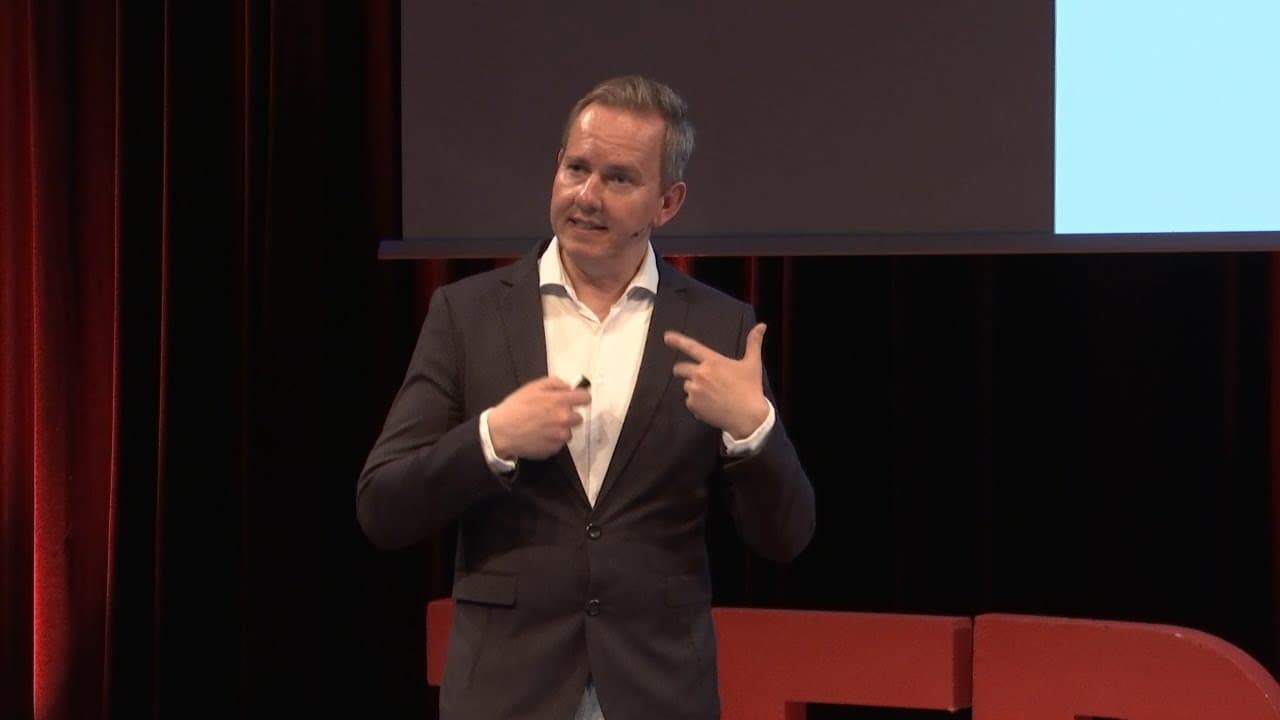
Circular Technologies to Enable a Circular Economy | Chris Slootweg | TEDxAUCollege
TL;DR
Circular economy mindset needed to address global waste problems, focusing on nutrient recycling opportunities.
Transcript
Transcriber: Vicky liu Reviewer: Emma Gon So I'd like to start with a shout out to the Ellen MacArthur Foundation, who is actively highlighting that we truly need a circular economy. And just before the Climate Conference in Egypt, the Ellen MacArthur Foundation published this picture that highlights that if you think of renewable energy, that is... Read More
Key Insights
- 🌐 Circular economy principles are crucial for addressing global waste challenges effectively.
- 😚 Nutrient recycling, particularly phosphorus and nitrogen, presents opportunities to close resource loops sustainably.
- 🗑️ Recovering resources from waste can not only mitigate environmental issues but also create local opportunities for resource production.
- 💚 Green and circular chemistry principles should guide technology development to align with circular economy goals.
- ❓ Historic practices, like Hennig Brand's discovery of phosphorus, offer insights into sustainable resource utilization.
- 🥺 Scaling up nutrient recovery processes can lead to impactful solutions for waste management.
- 🫵 Viewing waste as a resource can transform how we approach environmental sustainability.
Install to Summarize YouTube Videos and Get Transcripts
Explore YouTube Video Summarizer or Get YouTube Transcript Extractor
Questions & Answers
Q: How does the circular economy concept relate to addressing global waste problems?
The circular economy emphasizes minimizing waste by promoting resource recovery and recycling, offering sustainable solutions to environmental challenges.
Q: What are the key biogenic elements contributing to both sustaining life on Earth and causing waste problems?
Carbon, hydrogen, nitrogen, oxygen, phosphorus, and sulfur are essential for life but also play a role in climate change and biodiversity loss when mismanaged.
Q: How can recycling nutrients like phosphorus and nitrogen mitigate waste problems?
By recovering nutrients from sources like urine and converting them into high-value fertilizers, we can close the loop on essential elements and reduce waste.
Q: Why is it crucial to design products with circular principles in mind?
Designing products for recyclability ensures that resources can be reused efficiently, supporting a sustainable circular economy model for long-term environmental health.
Summary & Key Takeaways
-
Ellen MacArthur Foundation stresses the importance of the circular economy alongside renewable energy for sustainability.
-
Six essential biogenic elements (carbon, hydrogen, nitrogen, oxygen, phosphorus, sulfur) vital for life are also key contributors to global waste issues.
-
Addressing waste problems, such as the Dutch nitrogen dilemma, requires a shift towards circular thinking and nutrient recycling.
Read in Other Languages (beta)
Share This Summary 📚
Summarize YouTube Videos and Get Video Transcripts with 1-Click
Try YouTube Summary with ChatGPT & Claude or YouTube Transcript Generator
Explore More Summaries from TEDx Talks 📚






Summarize YouTube Videos and Get Video Transcripts with 1-Click
Try YouTube Summary with ChatGPT & Claude or YouTube Transcript Generator