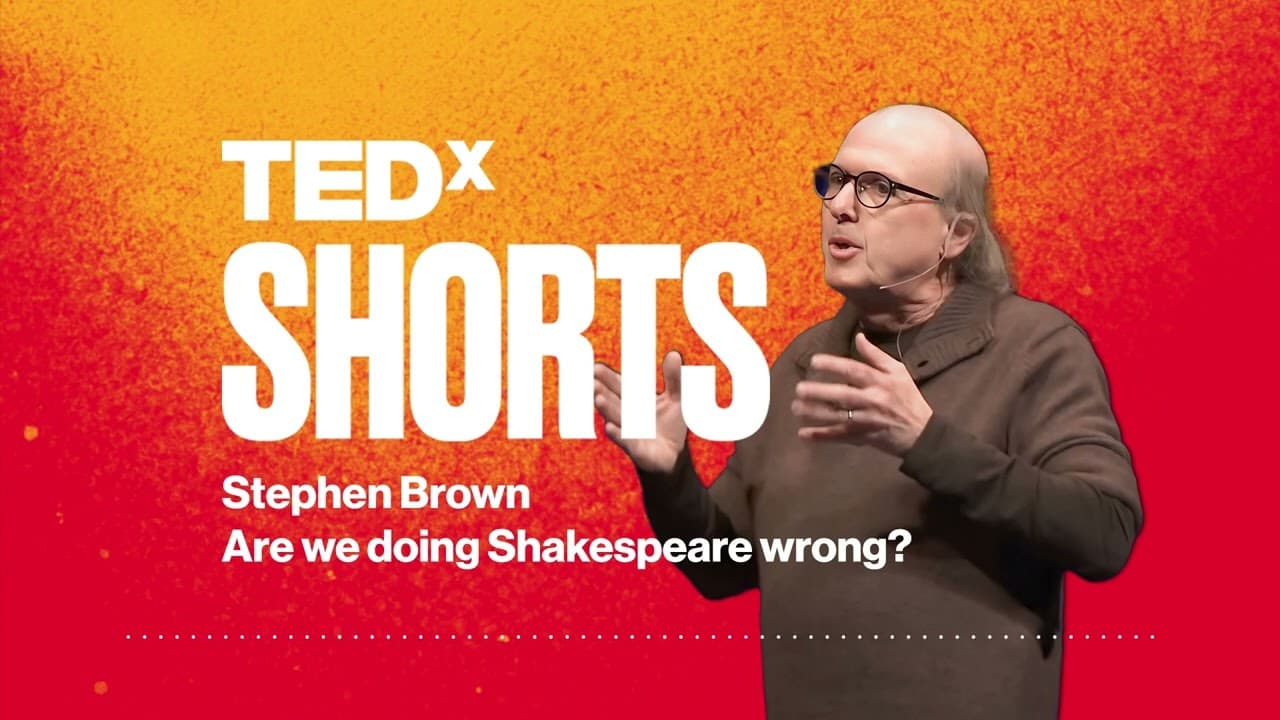
Are we doing Shakespeare wrong?
TL;DR
We may be doing Shakespeare wrong by treating his plays mainly as texts to read or movies to watch instead of voices to hear. More than 400 years after his death, his words still convey joy, sorrow, fear, love, and other experiences relevant to 21st-century lives. Steven Brown uses moments from Hamlet to show how listening reveals meaning and emotional gestures, giving readers a reason to explore the full discussion.
Transcript
a quick new idea daily from the world's greatest tedex TOS I'm your host atosa Leoni and this is tedex shorts over 400 years since his death and Shakespeare is still a huge part of our culture so why is there still doubt among many that Shakespeare's work can be relevant to our 21st first century lives Steven Brown is an English Professor whose man... Read More
Key Insights
- 🥹 Shakespeare's works, over 400 years after his death, still hold relevance in our modern society.
- 🖐️ The power of the human voice and its ability to convey emotions is a recurring theme in Shakespeare's plays.
- 👻 Understanding Shakespeare requires active listening and allowing the words to touch us on a deeper level.
- 🖐️ Movie adaptations often fail to capture the essence of live performances and the emotional impact of Shakespeare's plays.
- 🥰 Students' perception of Shakespeare can vary greatly, with some loving it and others feeling overwhelmed by the language.
- 🥹 Small moments and gestures in Shakespeare's works hold significant meaning and add depth to the characters' relationships.
- 🖐️ Shakespeare's plays explore universal human experiences and emotions that are still relatable to our 21st century lives.
Install to Summarize YouTube Videos and Get Transcripts
Explore YouTube Video Summarizer or Get YouTube Transcript Extractor
Questions & Answers
Q: Are we doing Shakespeare wrong?
Yes, if we approach Shakespeare mainly by reading for literal meaning or watching movie adaptations. Steven Brown argues that the plays are about hearing a human voice and witnessing a person endure the story for the audience.
Q: Why does Shakespeare still matter more than 400 years after his death?
His plays give voice to joy, sorrow, terror, and other emotions that still shape 21st-century lives. Theater lets audiences apprehend these experiences by hearing another person express and endure them.
Q: Why is listening crucial to understanding Shakespeare?
Listening helps audiences notice the small emotional details that can be missed when focusing only on definitions or plot. Brown says Shakespeare matters not because people should merely read him, but because they should listen and allow the words to touch them.
Q: What does the human voice contribute to Shakespeare’s plays?
The human voice makes the sounds of joy and sorrow for the audience and can console those who hear it. Brown argues that Shakespeare understood the importance of voice and made it central to the theatrical experience.
Q: Why are Shakespeare movies not enough to experience the plays fully?
Brown says Shakespeare is not primarily about watching a movie because a person needs to be present and endure the story for the audience. By witnessing that performance, viewers can be grasped by the emotions being experienced and grasp those emotions in turn.
Q: Why do some university students feel uncertain about Shakespeare?
Brown says most students entering his university classes report that Shakespeare was difficult in high school, while some say they loved the movies. He also notes that many probably used No Fear Shakespeare translations, reflecting an unnecessary fear of language that was already English.
Q: What does Gertrude’s gesture toward Hamlet reveal?
Near the end of Hamlet, Gertrude offers her napkin and tells Hamlet to wipe his brow because he looks tired. Earlier, Hamlet would not let her touch him because he was angry that she married his uncle, so her later gesture carries the familiar concern of a mother caring for her child.
Q: What does “unfold yourself” mean for approaching Hamlet?
At the beginning of Hamlet, Francisco tells Bernardo, “unfold yourself” when Bernardo asks who is there in the dark. Brown turns that phrase into advice: close the book, open yourself, listen, and allow life and literature to touch you instead of worrying only about meaning.
Summary & Key Takeaways
-
Shakespeare's plays, such as "Hamlet" and "Midsummer Night's Dream," showcase the importance of human voice and the emotions it conveys.
-
Many students have mixed feelings about Shakespeare, either loving it or feeling overwhelmed, but understanding the power of the human voice is key to appreciating his works.
-
Listening and allowing Shakespeare's plays to touch us is crucial in fully understanding their meaning and impact.
Read in Other Languages (beta)
Share This Summary 📚
Summarize YouTube Videos and Get Video Transcripts with 1-Click
Try YouTube Summary with ChatGPT & Claude or YouTube Transcript Generator
Explore More Summaries from TEDx SHORTS: short, eye-opening ideas from some of the world’s greatest TEDx speakers 📚





Summarize YouTube Videos and Get Video Transcripts with 1-Click
Try YouTube Summary with ChatGPT & Claude or YouTube Transcript Generator