How Does Anxiety Enhance Motor Learning?
TL;DR
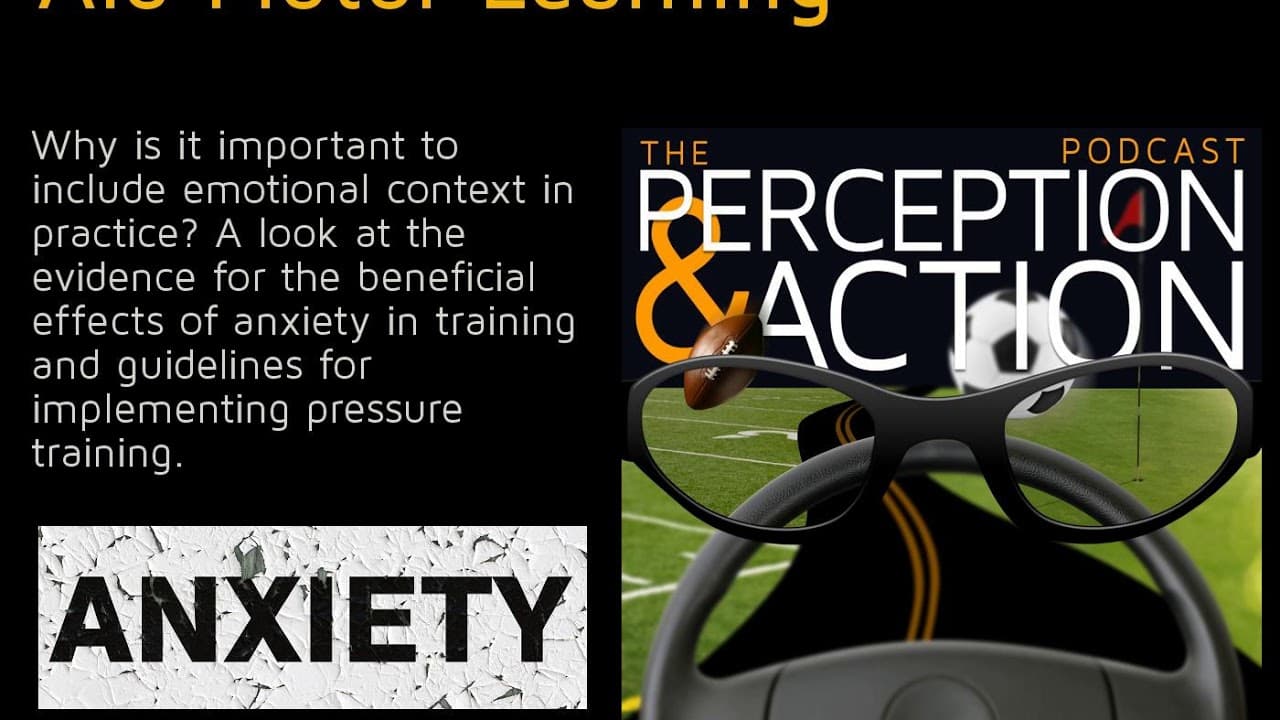
Including emotional context like anxiety in practice can improve motor learning by preparing athletes for real competition pressures. Studies show that training under anxiety helps athletes maintain performance under stress, but it's crucial to mix pressure levels and tailor training to individual needs to avoid negative expectations.
Transcript
today on the perception and action podcast the first in a two-part series looking at the role of emotion in skill acquisition why should we be taking it into account does adding pressure and anxiety to practice aid motor learning what is the best way to design effective practice so it's time for a call to action hi everyone this is Rob gray from Ar... Read More
Key Insights
- Emotion plays a crucial role in skill acquisition by adding pressure and anxiety to practice, aiding motor learning.
- Emotional context in practice helps create stable coordination patterns that can adapt to changes in environment and individual constraints.
- Training under high anxiety conditions can improve performance under similar conditions, supporting the specificity of practice hypothesis.
- Mixing low and high anxiety conditions during training helps maintain performance in both low and high anxiety test conditions.
- Adding emotional context to practice focuses on learning, not immediate performance, and prepares athletes for future competition.
- High anxiety training can reduce perceived anxiety in future situations, improving readiness and performance.
- Consequences like rewards and judgments create more pressure than demand manipulations in training.
- Anxiety manipulations in training should be tailored to individual athletes to maximize learning benefits.
Install to Summarize YouTube Videos and Get Transcripts
Explore YouTube Video Summarizer or Get YouTube Transcript Extractor
Questions & Answers
Q: How does anxiety affect motor learning?
Anxiety affects motor learning by preparing athletes to handle real competition pressures. Training under high anxiety conditions helps athletes maintain performance under similar stress, as it promotes the development of stable coordination patterns that can adapt to changes in environment and individual constraints. This approach supports the specificity of practice hypothesis, which suggests that practice should closely match the context of real action.
Q: Why is it important to include emotional context in practice?
Including emotional context in practice is important because it helps athletes develop the ability to perform under pressure, similar to real competition conditions. Emotional context, such as anxiety, aids in creating stable coordination patterns that are adaptable to changes. This preparation reduces the likelihood of performance decline under high-pressure situations, enhancing overall motor learning and skill acquisition.
Q: What are the benefits of training with high anxiety?
Training with high anxiety offers several benefits, including improved performance under similar stress conditions, reduced perceived anxiety in future situations, and enhanced readiness to perform. High anxiety training helps athletes develop self-regulatory processes and adapt to pressure, supporting the specificity of practice hypothesis. It also aids in creating stable coordination patterns that can withstand environmental and individual changes.
Q: How can pressure training be effectively implemented?
Effective pressure training involves mixing low and high anxiety conditions, tailoring anxiety manipulations to individual athletes, and focusing on learning rather than immediate performance. Coaches should use consequences like rewards and judgments to create pressure, while avoiding creating expectations of failure. It's important to adjust conditions to allow for successes and discuss training goals with athletes to ensure they understand the purpose of pressure training.
Q: What is the specificity of practice hypothesis?
The specificity of practice hypothesis proposes that the best performance results from training that closely approximates the context of real action. This occurs because performers develop movement plans specific to the information and constraints of their training environment, including emotional context. When placed in a different environment, these movement plans may need to be adjusted, highlighting the importance of matching practice conditions to real competition conditions.
Q: How does emotional context in practice improve performance?
Emotional context in practice improves performance by helping athletes develop stable coordination patterns that are adaptable to changes in environment and individual constraints. Training under anxiety prepares athletes to handle real competition pressures, reducing the likelihood of performance decline under stress. This preparation supports the specificity of practice hypothesis, which suggests that practice should closely match the context of real action.
Q: What are the challenges of pressure training?
Challenges of pressure training include the potential for initial performance decline, the need to tailor anxiety manipulations to individual athletes, and avoiding the creation of negative expectations. Coaches must balance pressure levels to prevent athlete burnout and ensure that training focuses on learning rather than immediate performance. Adjusting conditions to allow for successes and discussing training goals with athletes can help mitigate these challenges.
Q: Why should anxiety manipulations be tailored to individual athletes?
Anxiety manipulations should be tailored to individual athletes because each athlete responds differently to pressure and stress. Tailoring ensures that the training is effective in preparing them for real competition conditions, maximizing learning benefits. Individualized training helps create stable coordination patterns that can adapt to changes in environment and constraints, reducing the likelihood of performance decline under pressure.
Summary & Key Takeaways
-
Including emotional context in practice, such as pressure and anxiety, aids in motor learning by helping athletes maintain performance under stress. Studies suggest that practicing under high anxiety conditions can improve performance in similar situations, supporting the specificity of practice hypothesis. Mixing low and high anxiety conditions during training is beneficial for maintaining performance across different stress levels.
-
Pressure training should focus on learning rather than immediate performance, preparing athletes for future competition. High anxiety training can reduce perceived anxiety in future situations, improving readiness and performance. Consequences like rewards and judgments are more effective than demand manipulations in creating pressure.
-
Tailoring anxiety manipulations to individual athletes can maximize learning benefits. Emotional context helps create stable coordination patterns that can adapt to changes in the environment and individual constraints. Coaches should avoid creating expectations of failure by adjusting conditions to allow for some successes during pressure training.
Read in Other Languages (beta)
Share This Summary 📚
Summarize YouTube Videos and Get Video Transcripts with 1-Click
Try YouTube Summary with ChatGPT & Claude or YouTube Transcript Generator
Explore More Summaries from Rob Gray 📚
Summarize YouTube Videos and Get Video Transcripts with 1-Click
Try YouTube Summary with ChatGPT & Claude or YouTube Transcript Generator