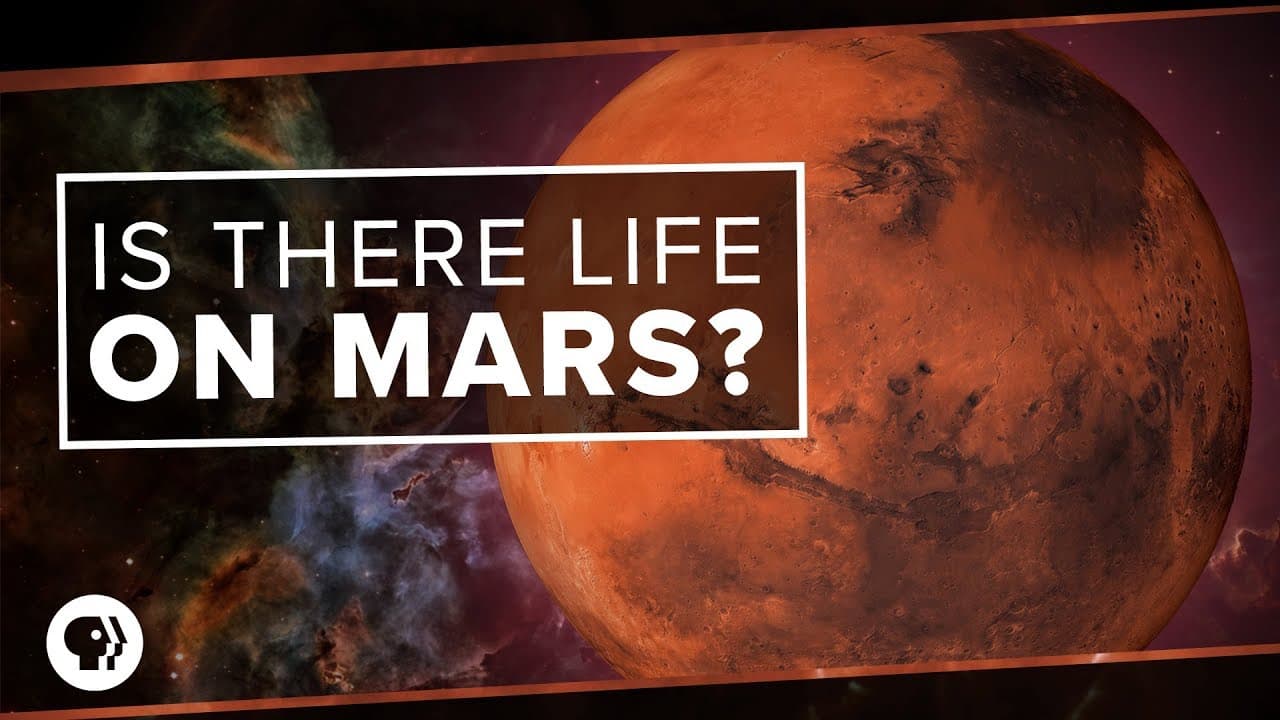
Is There Life on Mars?
TL;DR
Opportunity rover contributed significantly to the search for life on Mars.
Transcript
Has there ever been life on Mars? No. Probably not. Maybe? I don't know. There is no greater hero, in our search for life on mars, than a little robot named, Opportunity 15 years after it's mission began 57 times longer than it signed up for Opportunity has gone silent. Has we wait and hope on NASA (?) to re-establish contact we thought we would... Read More
Key Insights
- The Opportunity rover, a crucial figure in Mars exploration, exceeded its mission duration by 57 times, highlighting its resilience and importance.
- Recent discoveries, such as a giant underground lake, increase the possibility of life on Mars and shift focus from water to life detection.
- Upcoming missions by NASA and ESA in 2020 aim to intensify the search for Martian life, utilizing advanced Earth-bound technologies.
- Historically, the search for life on Mars dates back to the 17th century with Christiaan Huygens, who postulated the necessity of water for life.
- Opportunity's discoveries, including hematite concretions, provided evidence of Mars' wet past, solidifying theories of its liquid history.
- The rover's success was initially threatened by Martian dust accumulation on its solar panels, yet it continued to operate far beyond expectations.
- The search for life on Mars has been ongoing for over 300 years, with varying hypotheses and technological advancements shaping our understanding.
- Public support, including through platforms like Patreon, plays a vital role in funding and sustaining space exploration initiatives.
Install to Summarize YouTube Videos and Get Transcripts
Explore YouTube Video Summarizer or Get YouTube Transcript Extractor
Questions & Answers
Q: What was the Opportunity rover's mission duration and achievements?
The Opportunity rover was initially expected to operate for around 90 days, but it exceeded this duration by 57 times, showcasing its durability and the importance of its mission. It made significant discoveries, such as hematite concretions, indicating Mars' wet past, which is crucial for understanding the planet's potential for life.
Q: What recent discovery has increased the possibility of life on Mars?
A recent discovery of a giant underground lake beneath Mars' south pole has heightened the possibility of life on the planet. This finding shifts the scientific focus from merely searching for water to actively searching for signs of life, both past and present, on Mars.
Q: How do upcoming missions plan to search for life on Mars?
Upcoming missions by NASA and ESA in 2020 aim to intensify the search for life on Mars. These missions will utilize advanced Earth-bound technologies to analyze Martian soil samples, potentially providing definitive evidence of life. The focus is now on detecting life rather than just water.
Q: What historical figure contributed to the early search for life on Mars?
Christiaan Huygens, a Dutch polymath in the 17th century, made significant contributions to the early search for life on Mars. He improved Galileo's telescope, observed Mars' rotation, and postulated that liquid water is necessary for life, laying the groundwork for future explorations.
Q: What evidence did Opportunity find to suggest Mars' wet past?
Opportunity discovered hematite concretions, known as 'berries,' which formed in wet environments with dissolved iron. These findings, along with other geological evidence, suggest that Mars had a much wetter past, providing crucial insights into the planet's history and its potential to support life.
Q: How did Opportunity overcome challenges related to Martian dust?
Opportunity faced challenges from Martian dust accumulating on its solar panels, threatening its power supply. Despite this, the rover continued to operate far beyond its expected lifespan, demonstrating its resilience and the importance of its mission in Mars exploration.
Q: How long has the search for life on Mars been ongoing?
The search for life on Mars has been ongoing for over 300 years, beginning in the 17th century with Christiaan Huygens. Throughout history, various hypotheses and technological advancements have shaped our understanding of Mars and its potential to harbor life.
Q: What role does public support play in space exploration?
Public support, including contributions through platforms like Patreon, plays a vital role in funding and sustaining space exploration initiatives. This support helps organizations like PBS and NASA continue their work in exploring the cosmos, advancing scientific understanding, and inspiring future generations.
Summary & Key Takeaways
-
The Opportunity rover played a pivotal role in Mars exploration, operating far beyond its expected lifespan and providing significant insights into the planet's history and potential for life. Its discoveries, such as hematite concretions, suggest Mars had a much wetter past, bolstering the search for life.
-
Recent findings, including an underground lake, have shifted scientific focus from searching for water to searching for life on Mars. Upcoming missions by NASA and ESA aim to leverage advanced technologies to further investigate the possibility of life, emphasizing the importance of continued exploration.
-
The quest for understanding Mars' potential for life has a long history, dating back to the 17th century with Christiaan Huygens. This ongoing journey is supported by public contributions and technological advancements, reflecting humanity's enduring curiosity and dedication to space exploration.
Read in Other Languages (beta)
Share This Summary 📚
Summarize YouTube Videos and Get Video Transcripts with 1-Click
Try YouTube Summary with ChatGPT & Claude or YouTube Transcript Generator
Explore More Summaries from PBS Space Time 📚






Summarize YouTube Videos and Get Video Transcripts with 1-Click
Try YouTube Summary with ChatGPT & Claude or YouTube Transcript Generator