Products
Features
YouTube Video Summarizer
Summarize YouTube videos
Web & PDF Highlighter
Highlight web pages & PDFs
Chat with PDF
Ask any PDF questions with AI
Ask AI Clone
Chat with your highlights & memories
Audio Transcriber
Transcribe audio files to text
Glasp Reader
Read and highlight articles
Kindle Highlight Export
Export your Kindle highlights
Idea Hatch
Hatch ideas from your highlights
Integrations
Obsidian Plugin
Notion Integration
Pocket Integration
Instapaper Integration
Medium Integration
Readwise Integration
Snipd Integration
Hypothesis Integration
Apps & Extensions
Chrome Extension
Safari Extension
Edge Add-ons
Firefox Add-ons
iOS App
Android App
Discover
Discover
Ideas
Discover new ideas and insights
Articles
Curated articles and insights
Books
Book recommendations by great minds
Posts
Essays and notes from readers
Quotes
Inspiring quotes collection
Videos
Curated videos and summaries
Explore Glasp
Glasp Newsletter
Weekly insights and updates
Glasp Talk
Interview series with great minds
Glasp Blog
Latest news and articles
Glasp Use Cases
Learn how others use Glasp
Build & Support
Glasp API
Access Glasp's API for developers
MCP Connector
Connect Glasp to Claude & ChatGPT
Community
Glasp Reddit Community
Students
Student discount and benefits
FAQs
Frequently Asked Questions
AboutPricing
DashboardLog inSign up

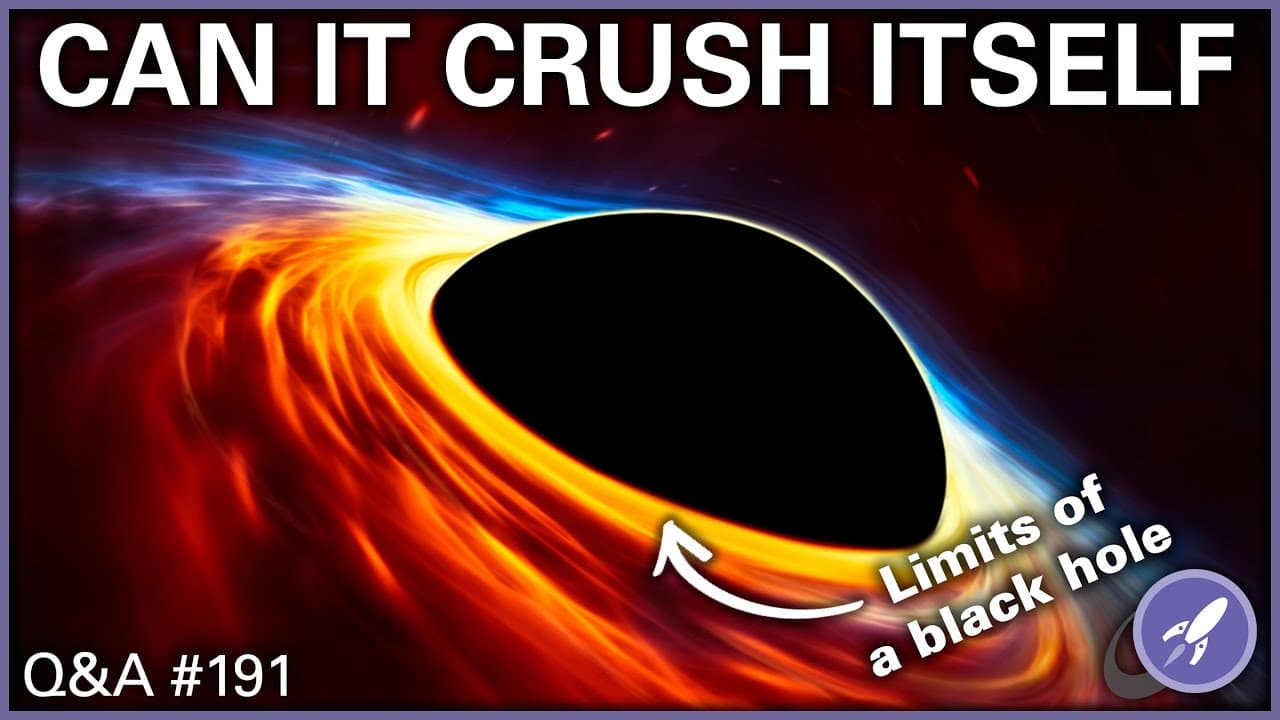
SpaceX VS NASA, AI for Space Science, Black Hole Crushing Itself | Q&A 191
47.0K views
•
September 14, 2022
by
Fraser Cain
YouTube video player
SpaceX VS NASA, AI for Space Science, Black Hole Crushing Itself | Q&A 191

TL;DR

The universe is expanding faster than light. SLS delays are expected. James Webb Telescope updates are slow. NASA's Lunar Gateway and SpaceX's Mars plans are uncertain. AI impacts space science. Testing astronauts in low G for Mars is an idea.

Transcript

Fraser Cain: Hi, everyone. I'm Fraser Cain, publisher of Universe Today, but it's based in astronomy journalist for over 20 years. This is the question show your questions my answers, we record this show every Monday at 5pm. Pacific Time Live. So you can come and ask your questions in the chat. I have no idea what's going to happen. And I will answ... Read More

Key Insights

  • 🙂 Universe expands faster than light, affecting galaxy observations.
  • 🚀 SLS delays prioritize safety and checks over rapid launches.
  • 🐢 James Webb Telescope's slow updates stem from scientific data processing delays.
  • 👾 Lunar Gateway serves as a space station for future exploration, impacting Artemis missions.
  • 👾 AI enhances space science efficiency through data processing and autonomous operations.
  • 😘 Simulating low gravity for returning astronauts may aid in Mars mission preparation.
  • 😀 SpaceX's Mars plans and NASA's Moon missions face uncertainties in timelines.

Install to Summarize YouTube Videos and Get Transcripts

Explore YouTube Video Summarizer or Get YouTube Transcript Extractor

Questions & Answers

Q: How does the expanding universe concept impact galaxy movement?

The universe's expansion results in galaxies moving away at varying speeds, with some moving faster than light due to spacetime distortion.

Q: Why is SLS facing delays, and how does it impact the aerospace industry?

SLS delays stem from safety concerns and thorough checks, highlighting the contrast between private sector agility and government regulations.

Q: How does AI contribute to space science advancements?

AI aids in processing vast astronomical data sets, enhancing observations of celestial bodies and supporting autonomous spacecraft operations.

Q: Can simulating low gravity on returning astronauts help prepare for Mars missions?

Testing astronauts in simulated Mars gravity post-return may aid in understanding long-term effects and transition from space to planetary surfaces.

Summary & Key Takeaways

  • The universe is expanding at speeds surpassing light, leading to galaxies fading away over time.

  • SpaceX's SLS faces delays due to complex development and high stakes, prioritizing safety over speed.

  • James Webb Telescope releases periodic images, with citizen scientists processing data for public access.


Read in Other Languages (beta)

English

Share This Summary 📚

Summarize YouTube Videos and Get Video Transcripts with 1-Click

Download browser extensions on:

Try YouTube Summary with ChatGPT & Claude or YouTube Transcript Generator

Explore More Summaries from Fraser Cain 📚
Are We Living in a Simulation? Understanding the Simulation Hypothesis thumbnail
Are We Living in a Simulation? Understanding the Simulation Hypothesis
Fraser Cain
Why Did Mars Lose Its Atmosphere? And How Can We Get It Back? thumbnail
Why Did Mars Lose Its Atmosphere? And How Can We Get It Back?
Fraser Cain
What's On The Far Side Of The Moon? thumbnail
What's On The Far Side Of The Moon?
Fraser Cain
Exploring Space Lava Tubes: How To Prepare For It thumbnail
Exploring Space Lava Tubes: How To Prepare For It
Fraser Cain / Universe Today Podcast
Why Isn't the Asteroid Belt a Planet? thumbnail
Why Isn't the Asteroid Belt a Planet?
Fraser Cain

Summarize YouTube Videos and Get Video Transcripts with 1-Click

Download browser extensions on:

Try YouTube Summary with ChatGPT & Claude or YouTube Transcript Generator

Apps & Extensions

  • Chrome Extension
  • Safari Extension
  • Edge Add-ons
  • Firefox Add-ons
  • iOS App
  • Android App

Key Features

  • YouTube Video Summarizer
  • Web & PDF Summarizer
  • Web & PDF Highlighter
  • Chat with PDF
  • Ask AI Clone
  • Audio Transcriber
  • Glasp Reader
  • Kindle Highlight Export
  • Idea Hatch

Integrations

  • Obsidian Plugin
  • Notion Integration
  • Pocket Integration
  • Instapaper Integration
  • Medium Integration
  • Readwise Integration
  • Snipd Integration
  • Hypothesis Integration

More Features

  • APIs
  • MCP Connector
  • Blog & Post
  • Embed Links
  • Image Highlight
  • Personality Test
  • Quote Shots

Company

  • About us
  • Blog
  • Community
  • FAQs
  • Job Board
  • Newsletter
  • Pricing
Terms

•

Privacy

•

Guidelines

© 2026 Glasp Inc. All rights reserved.