Why do we harvest horseshoe crab blood? - Elizabeth Cox
TL;DR
Horseshoe crabs' blue blood crucial for medical testing, but harvesting threatens their survival.
Transcript
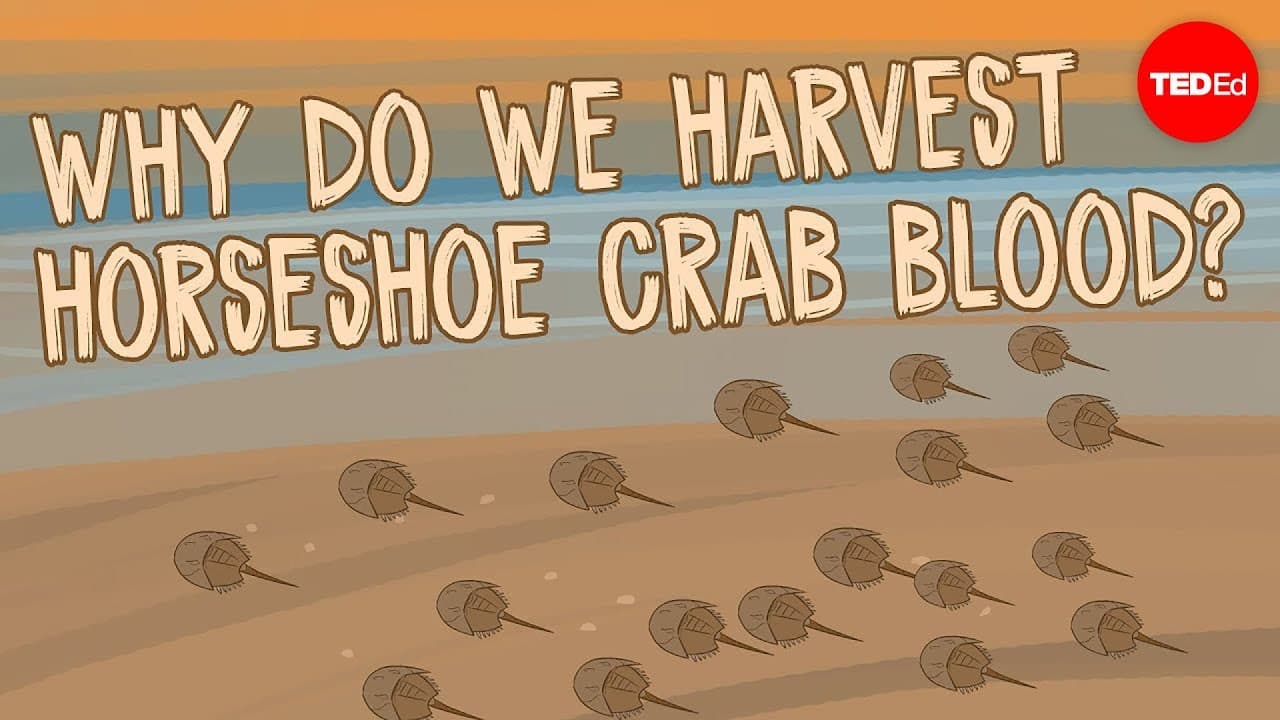
During the warmer months, especially at night during the full moon, horseshoe crabs emerge from the sea to spawn. Waiting for them are teams of lab workers who capture the horseshoe crabs by the hundreds of thousands, take them to labs, harvest their cerulean blood, then return them to the sea. Oddly enough, we capture horseshoe crabs on the beach... Read More
Key Insights
- 😷 Horseshoe crabs are harvested for their blue blood used in medical testing to detect bacterial endotoxins.
- 🤗 Their sensitive immune systems have evolved to protect against bacterial infections in their vulnerable open circulatory system.
- 🦀 Human impact through harvesting, coastal development, and fishing bait is threatening horseshoe crab populations.
- 💦 Researchers are working on synthesizing horseshoe crab blood to reduce their exploitation and protect their populations.
- 😀 Horseshoe crabs have survived mass extinction events but face significant disruptions from human activities.
- 🤨 Up to 15% of horseshoe crabs die during the blood harvesting process, raising concerns about sustainability.
- 🕵️♀️ The decline in female horseshoe crabs returning to spawn due to overharvesting poses a threat to their reproductive success.
Install to Summarize YouTube Videos and Get Transcripts
Explore YouTube Video Summarizer or Get YouTube Transcript Extractor
Questions & Answers
Q: Why do lab workers harvest horseshoe crabs at night during the full moon?
Lab workers harvest horseshoe crabs during the full moon night as that is when the crabs emerge from the sea to spawn, making them easier to capture.
Q: How does horseshoe crab blood protect against infections?
Horseshoe crab blood contains cells called amebocytes that form gels around invaders like bacteria, preventing the infection from spreading in the crab's body.
Q: Why is horseshoe crab blood used for testing medical devices and medicines?
Horseshoe crab blood is used to test for bacterial endotoxins that can contaminate medical products, ensuring their safety before they are used on humans.
Q: What are the threats to horseshoe crab populations apart from harvesting?
Apart from harvesting for their blood, horseshoe crabs face threats from coastal development destroying their spawning sites and being killed for fishing bait.
Summary & Key Takeaways
-
During full moons, lab workers harvest horseshoe crabs for their unique blue blood that contains cells protecting from infections.
-
Horseshoe crabs survived mass extinctions through sensitive immune systems, but human impact threatens their population.
-
Research aims to synthesize horseshoe crab blood to reduce harvesting and preserve these ancient creatures.
Read in Other Languages (beta)
Share This Summary 📚
Summarize YouTube Videos and Get Video Transcripts with 1-Click
Try YouTube Summary with ChatGPT & Claude or YouTube Transcript Generator
Explore More Summaries from TED-Ed 📚






Summarize YouTube Videos and Get Video Transcripts with 1-Click
Try YouTube Summary with ChatGPT & Claude or YouTube Transcript Generator