Products
Features
YouTube Video Summarizer
Summarize YouTube videos
Web & PDF Highlighter
Highlight web pages & PDFs
Chat with PDF
Ask any PDF questions with AI
Ask AI Clone
Chat with your highlights & memories
Audio Transcriber
Transcribe audio files to text
Glasp Reader
Read and highlight articles
Kindle Highlight Export
Export your Kindle highlights
Idea Hatch
Hatch ideas from your highlights
Integrations
Obsidian Plugin
Notion Integration
Pocket Integration
Instapaper Integration
Medium Integration
Readwise Integration
Snipd Integration
Hypothesis Integration
Apps & Extensions
Chrome Extension
Safari Extension
Edge Add-ons
Firefox Add-ons
iOS App
Android App
Discover
Discover
Ideas
Discover new ideas and insights
Articles
Curated articles and insights
Books
Book recommendations by great minds
Posts
Essays and notes from readers
Quotes
Inspiring quotes collection
Videos
Curated videos and summaries
Explore Glasp
Glasp Newsletter
Weekly insights and updates
Glasp Talk
Interview series with great minds
Glasp Blog
Latest news and articles
Glasp Use Cases
Learn how others use Glasp
Build & Support
Glasp API
Access Glasp's API for developers
MCP Connector
Connect Glasp to Claude & ChatGPT
Community
Glasp Reddit Community
Students
Student discount and benefits
FAQs
Frequently Asked Questions
AboutPricing
DashboardLog inSign up

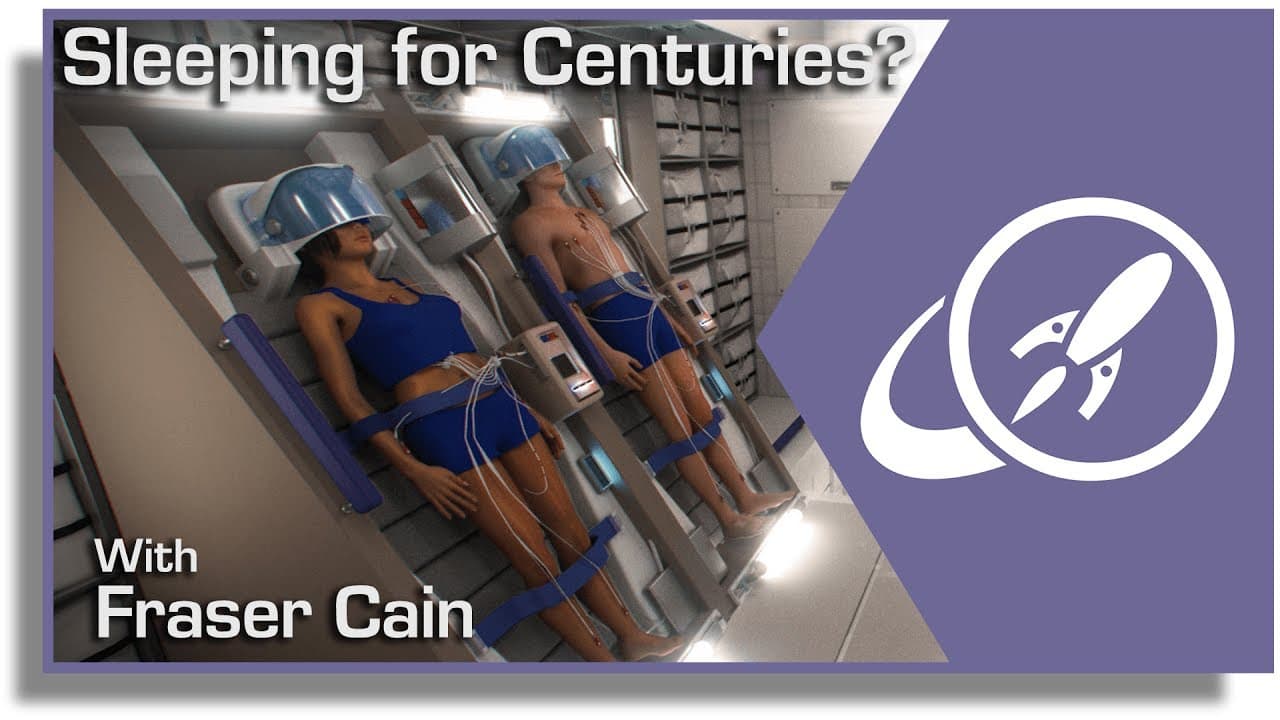
Is Human Hibernation Possible? Going to Sleep for Long Duration Spaceflight
541.6K views
•
June 21, 2017
by
Fraser Cain
YouTube video player
Is Human Hibernation Possible? Going to Sleep for Long Duration Spaceflight

TL;DR

Exploring the possibility of human hibernation for long-duration space travel to distant stars.

Transcript

We’ve spent a few episodes on the Guide to Space talking about just how difficult it’s going to be to travel to other stars. Sending tiny unmanned probes across the vast gulfs between stars is still mostly science fiction. But to send humans on that journey? That’s just a level of technology beyond comprehension. For example, the nearest star is Pr... Read More

Key Insights

  • 🤩 Space travel to distant stars is challenging due to vast distances.
  • 👾 Human hibernation could reduce resource needs and optimize long-duration space missions.
  • 🥰 Therapeutic hypothermia shows promise for aiding in heart attacks, strokes, and possibly space travel.
  • 🛰️ Rotating modules with artificial gravity can counteract the negative effects of weightlessness during hibernation.
  • 👾 NASA and ESA are actively researching human hibernation for space exploration.
  • 👾 Cryogenics research offers hope for long-term human preservation and space travel.
  • 😪 Sleep technology advancements may enable deep space exploration in the future.

Install to Summarize YouTube Videos and Get Transcripts

Explore YouTube Video Summarizer or Get YouTube Transcript Extractor

Questions & Answers

Q: How does hibernation benefit long-duration space travel?

Hibernation reduces metabolic rates, saving resources and improving astronaut well-being during the journey.

Q: What are the potential risks and challenges of human hibernation in space?

The fine line between torpor and death poses a challenge, but ongoing research aims to address any potential downsides.

Q: What are the current advancements in therapeutic hypothermia for space exploration?

Therapeutic hypothermia has shown promise in keeping individuals in torpor states for extended periods, potentially aiding in heart attacks, strokes, and disease progression.

Q: How do rotating modules with artificial gravity impact astronaut conditioning during hibernation?

Rotating modules can simulate Earth, Mars, or lunar gravity to maintain astronaut health despite being in torpor state, reducing the negative effects of weightlessness.

Summary & Key Takeaways

  • Sending humans to other stars is technologically challenging due to vast distances.

  • Human hibernation could optimize long-duration space travel by reducing resource needs.

  • NASA and ESA are researching therapeutic hypothermia for space missions.


Read in Other Languages (beta)

English

Share This Summary 📚

Summarize YouTube Videos and Get Video Transcripts with 1-Click

Download browser extensions on:

Try YouTube Summary with ChatGPT & Claude or YouTube Transcript Generator

Explore More Summaries from Fraser Cain 📚
Why Isn't the Asteroid Belt a Planet? thumbnail
Why Isn't the Asteroid Belt a Planet?
Fraser Cain
Are We Living in a Simulation? Understanding the Simulation Hypothesis thumbnail
Are We Living in a Simulation? Understanding the Simulation Hypothesis
Fraser Cain
Why Did Mars Lose Its Atmosphere? And How Can We Get It Back? thumbnail
Why Did Mars Lose Its Atmosphere? And How Can We Get It Back?
Fraser Cain
Exploring Space Lava Tubes: How To Prepare For It thumbnail
Exploring Space Lava Tubes: How To Prepare For It
Fraser Cain / Universe Today Podcast
What's On The Far Side Of The Moon? thumbnail
What's On The Far Side Of The Moon?
Fraser Cain

Summarize YouTube Videos and Get Video Transcripts with 1-Click

Download browser extensions on:

Try YouTube Summary with ChatGPT & Claude or YouTube Transcript Generator

Apps & Extensions

  • Chrome Extension
  • Safari Extension
  • Edge Add-ons
  • Firefox Add-ons
  • iOS App
  • Android App

Key Features

  • YouTube Video Summarizer
  • Web & PDF Summarizer
  • Web & PDF Highlighter
  • Chat with PDF
  • Ask AI Clone
  • Audio Transcriber
  • Glasp Reader
  • Kindle Highlight Export
  • Idea Hatch

Integrations

  • Obsidian Plugin
  • Notion Integration
  • Pocket Integration
  • Instapaper Integration
  • Medium Integration
  • Readwise Integration
  • Snipd Integration
  • Hypothesis Integration

More Features

  • APIs
  • MCP Connector
  • Blog & Post
  • Embed Links
  • Image Highlight
  • Personality Test
  • Quote Shots

Company

  • About us
  • Blog
  • Community
  • FAQs
  • Job Board
  • Newsletter
  • Pricing
Terms

•

Privacy

•

Guidelines

© 2026 Glasp Inc. All rights reserved.