Anti Bank-Fraud Technology - Computerphile
TL;DR
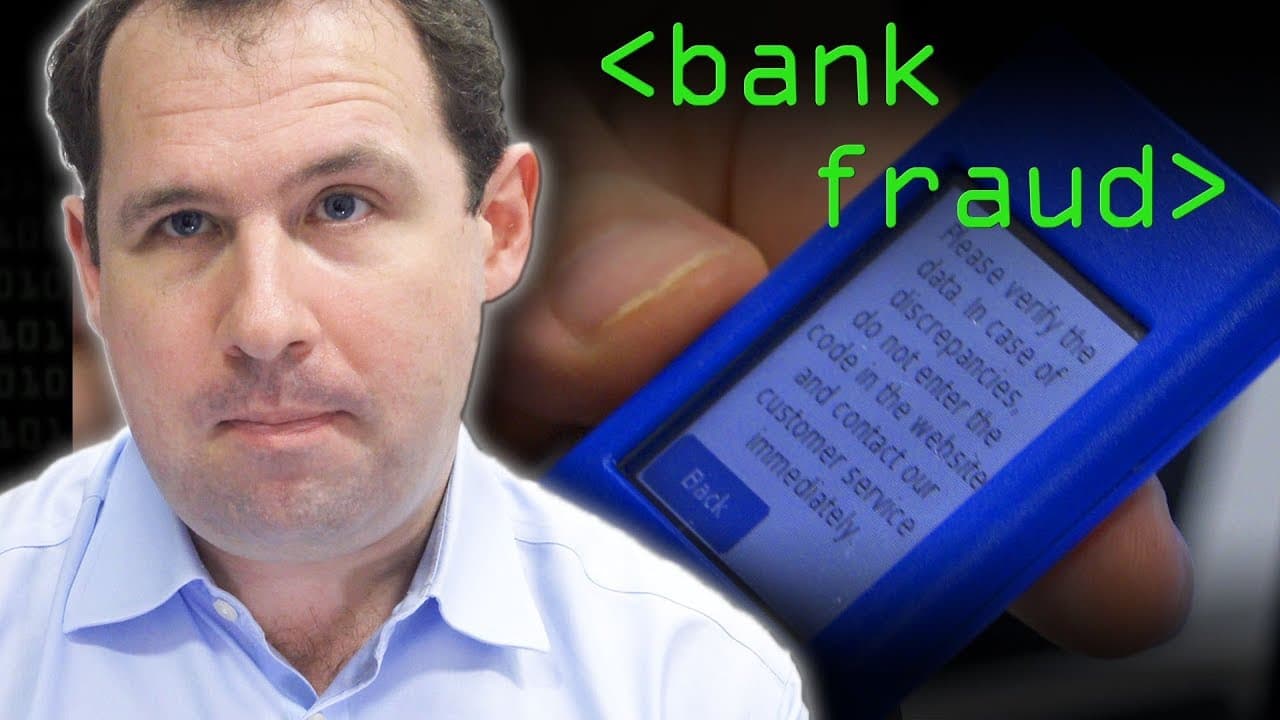
The article discusses the common man-in-the-browser attack, how banks designed defenses to combat it, and the varying levels of banking security in different countries.
Transcript
So i'm going to talk about one of my areas of research which is and banking fraud and the technology, that's used to prevent it But, also Understanding how it actually happens because unless you understand that it's not going to be possible to come up with techniques that will actually Prevent it effectively probably start, by looking at how You th... Read More
Key Insights
- 👊 The man-in-the-browser attack is a common banking fraud that occurs when adversaries manipulate transactions by installing malware on victims' computers.
- 🏦 Banks have implemented one-time passwords and transaction authentication to combat this type of fraud, with varying levels of adoption across countries.
- 🇲🇼 The US lags behind in banking security technology but benefits from consumer-focused banking laws that protect customers financially.
- 🌍 Europe and the UK have advanced banking technology but often shift the cost of fraud onto customers.
- 🌍 The Payment Services Directive aims to standardize banking security in Europe, but the technical details and implementation vary across countries.
- 🍂 The design and usability of banking security devices impact their effectiveness. Convenience and clear instructions can help customers avoid falling victim to scams.
- 👊 Phishing attacks combined with malware are a common tactic used by criminals to deceive customers into authorizing fraudulent transactions.
Install to Summarize YouTube Videos and Get Transcripts
Explore YouTube Video Summarizer or Get YouTube Transcript Extractor
Questions & Answers
Q: What is a man-in-the-browser attack?
A man-in-the-browser attack occurs when an adversary installs malware on a victim's computer, intercepts the victim's web browsing, and manipulates transactions between the victim and the bank.
Q: Why are one-time passwords and transaction authentication important in preventing fraud?
One-time passwords and transaction authentication ensure that the legitimate customer's intended transaction is carried out, even if there is interference from malware. It adds an extra layer of security by linking the password to the specific transaction.
Q: How does banking security in the US differ from that in Europe?
The US is behind in adopting advanced banking security measures; however, consumer-focused banking laws protect customers, even if they are deemed to have acted negligently. In Europe, customers often bear the cost of fraud.
Q: What is the Payment Services Directive and how does it impact banking security in Europe?
The Payment Services Directive is a European law that mandates more secure transaction authentication. While it lacks technical details, it ensures a minimum level of security across European countries.
Summary & Key Takeaways
-
The article explains how the man-in-the-browser attack occurs, where the adversary interferes with a victim's web browser to manipulate transactions.
-
Banks have implemented one-time passwords and transaction authentication to combat this type of fraud, but adoption differs across countries.
-
While the US lags behind in banking security technology, customers are protected by consumer-focused banking laws, whereas in Europe and the UK, customers often bear the cost of fraud.
Read in Other Languages (beta)
Share This Summary 📚
Summarize YouTube Videos and Get Video Transcripts with 1-Click
Try YouTube Summary with ChatGPT & Claude or YouTube Transcript Generator
Explore More Summaries from Computerphile 📚






Summarize YouTube Videos and Get Video Transcripts with 1-Click
Try YouTube Summary with ChatGPT & Claude or YouTube Transcript Generator