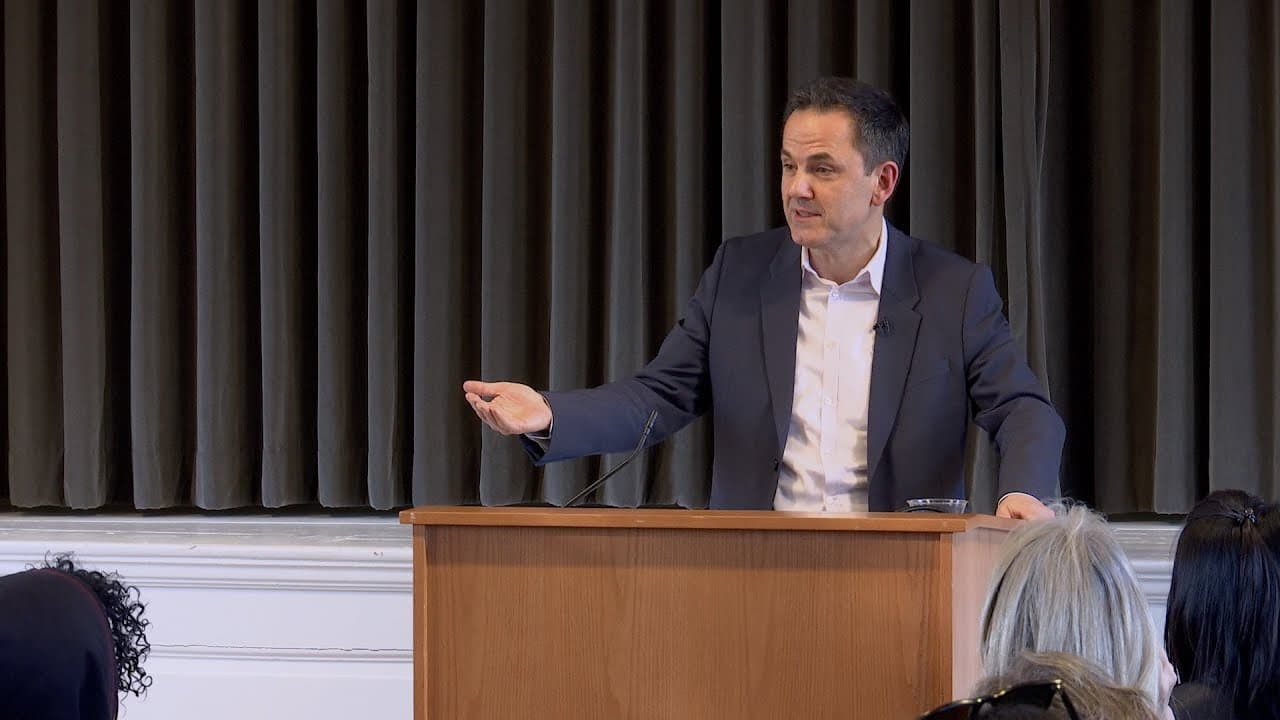
John Tasioulas | Human Rights || Radcliffe Institute
TL;DR
Human rights are universal moral rights that are possessed by all human beings, derived from their inherent dignity and interests.
Transcript
I'm very grateful to Judy and the other administrators at the Radcliffe Institute for their benevolent guidance throughout the year to my fellow fellows for their inspiration and the stimulus that they provide to my research partners for their youthful energy and enthusiasm and I just want to say it's been a fantastic experience doing human rights ... Read More
Key Insights
- 🗯️ Human rights are moral rights derived from universal human interests and the inherent value of being a human being.
- 🗯️ Human rights are not absolute and may be subject to exceptions or derogations in certain circumstances, but they are generally resistant to trade-offs or conflicts with other values.
- 🗯️ Human rights can evolve over time based on changes in circumstances and possibilities.
- 🗯️ The justification of human rights requires a combination of interests and dignity, and the understanding of human rights should be distinct from the interests they protect.
Install to Summarize YouTube Videos and Get Transcripts
Explore YouTube Video Summarizer or Get YouTube Transcript Extractor
Questions & Answers
Q: Are there any absolute human rights that can never be violated?
While some human rights may be subject to exceptions or derogations in certain circumstances, there are certain rights, such as the right not to be tortured, that are considered absolute and should never be violated under any circumstances.
Q: How do we justify human rights in the face of conflicting interests or national security emergencies?
Human rights are justified by a combination of universal human interests and the inherent value and dignity of being a human being. While there may be moments of conflict or derogation, these should be rare and subject to rigorous justification.
Q: Can human rights evolve over time?
Yes, human rights can evolve based on changes in circumstances, possibilities, and our understanding of human well-being. They are not fixed or immutable, but should be grounded in the objective values of human interests and dignity.
Q: Do animals have rights?
Animals can have rights based on their own interests and dignity. While the discussion in this content focused on human rights, it is important to recognize the rights and interests of animals as well.
Summary & Key Takeaways
-
Human rights are moral rights that exist for all human beings simply by virtue of their humanity, regardless of their preferences or desires.
-
These rights are derived from universal human interests and the inherent value of being a human being.
-
Human rights can evolve and change over time based on changes in circumstances and possibilities.
-
Conflicts between human rights and trade-offs among them are not as common as often portrayed, as human rights are highly resistant to trade-offs.
Read in Other Languages (beta)
Share This Summary 📚
Summarize YouTube Videos and Get Video Transcripts with 1-Click
Try YouTube Summary with ChatGPT & Claude or YouTube Transcript Generator
Explore More Summaries from Harvard University 📚




Summarize YouTube Videos and Get Video Transcripts with 1-Click
Try YouTube Summary with ChatGPT & Claude or YouTube Transcript Generator