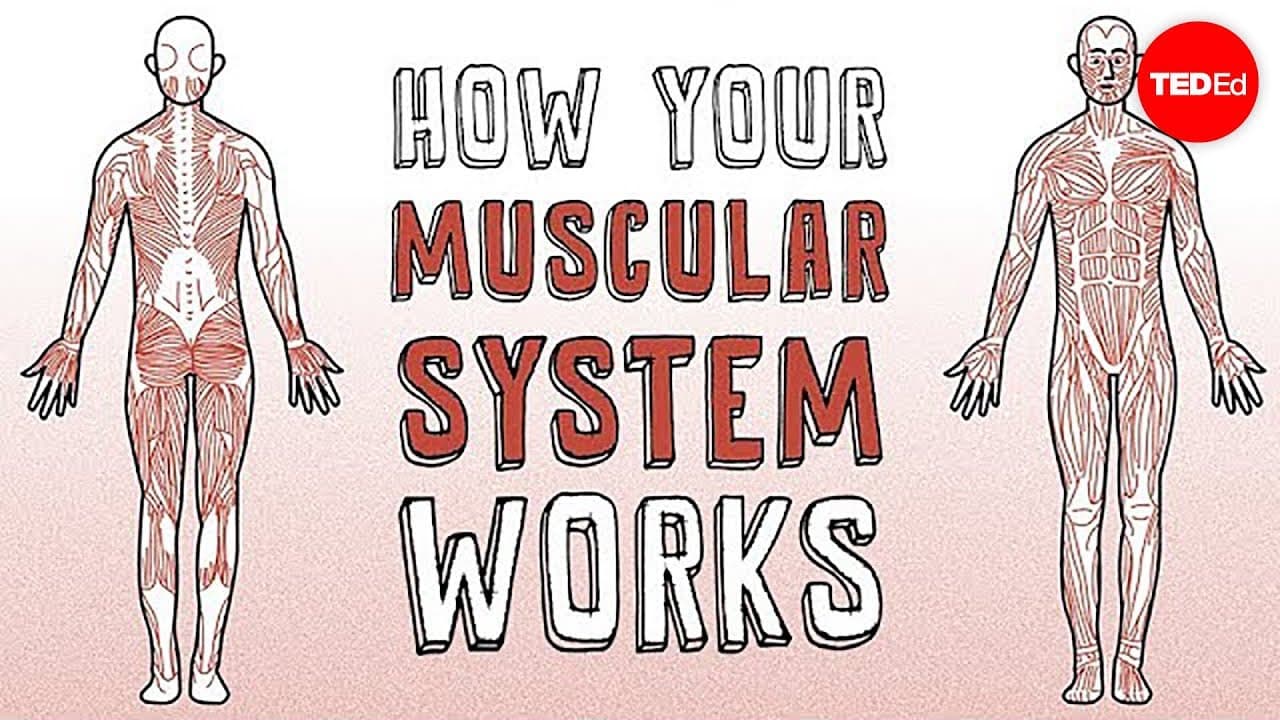
How your muscular system works - Emma Bryce
TL;DR
The muscular system consists of different muscle types that work together to facilitate movement and other bodily functions.
Transcript
Each time you take a step, 200 muscles work in unison to lift your foot, propel it forward, and set it down. It's just one of the many thousands of tasks performed by the muscular system. This network of over 650 muscles covers the body and is the reason we can blink, smile, run, jump, and stand upright. It's even responsible for the heart's depen... Read More
Key Insights
- 🧡 The muscular system consists of over 650 muscles and is responsible for a wide range of bodily movements.
- 💪 Muscle contraction can be categorized into three types: shortening, lengthening, and stabilizing contractions.
- 👻 Skeletal muscles make up a significant portion of the body's weight and allow for voluntary control and refined movements.
- 💨 Different muscle fibers, such as fast-twitch and slow-twitch, contribute to specific functions and endurance.
- 😟 The autonomic nervous system controls cardiac and smooth muscles, which are essential for vital bodily functions.
- 🥵 Muscles produce heat as a byproduct and contribute to maintaining the body's temperature.
Install to Summarize YouTube Videos and Get Transcripts
Explore YouTube Video Summarizer or Get YouTube Transcript Extractor
Questions & Answers
Q: What are the three main types of muscles in the muscular system?
The three main types of muscles are skeletal muscle, cardiac muscle, and smooth muscle. Skeletal muscles attach to bones, cardiac muscles are found only in the heart, and smooth muscles line blood vessels and certain organs.
Q: How do muscles generate force and motion?
Muscles generate force and motion through the contraction of muscle fibers. These fibers receive signals from the nervous system, causing them to shorten or lengthen, resulting in movements such as bending the arm or gripping an object.
Q: What is the role of skeletal muscles in the muscular system?
Skeletal muscles form the bulk of the muscular system and are responsible for generating most of the body's motion. They also allow us to maintain posture and have different types of muscle fibers for refined control and endurance.
Q: How do cardiac and smooth muscles differ from skeletal muscles?
Unlike skeletal muscles, cardiac and smooth muscles are not under our direct control. The autonomous nervous system manages these muscles. Cardiac muscles enable the heartbeat, while smooth muscles contract and relax to facilitate functions such as blood circulation, digestion, and childbirth.
Key Insights:
- The muscular system consists of over 650 muscles and is responsible for a wide range of bodily movements.
- Muscle contraction can be categorized into three types: shortening, lengthening, and stabilizing contractions.
- Skeletal muscles make up a significant portion of the body's weight and allow for voluntary control and refined movements.
- Different muscle fibers, such as fast-twitch and slow-twitch, contribute to specific functions and endurance.
- The autonomic nervous system controls cardiac and smooth muscles, which are essential for vital bodily functions.
- Muscles produce heat as a byproduct and contribute to maintaining the body's temperature.
- The muscular system plays a role in almost everything we do, from simple actions like blinking to complex movements like running.
Summary & Key Takeaways
-
The muscular system is composed of three main muscle types: skeletal, cardiac, and smooth muscles.
-
Muscle cells, also known as fibers, contract in response to signals from the nervous system, generating force and motion.
-
Skeletal muscles make up the majority of the muscular system, enabling voluntary movements and maintaining posture.
Read in Other Languages (beta)
Share This Summary 📚
Summarize YouTube Videos and Get Video Transcripts with 1-Click
Try YouTube Summary with ChatGPT & Claude or YouTube Transcript Generator
Explore More Summaries from TED-Ed 📚

Summarize YouTube Videos and Get Video Transcripts with 1-Click
Try YouTube Summary with ChatGPT & Claude or YouTube Transcript Generator