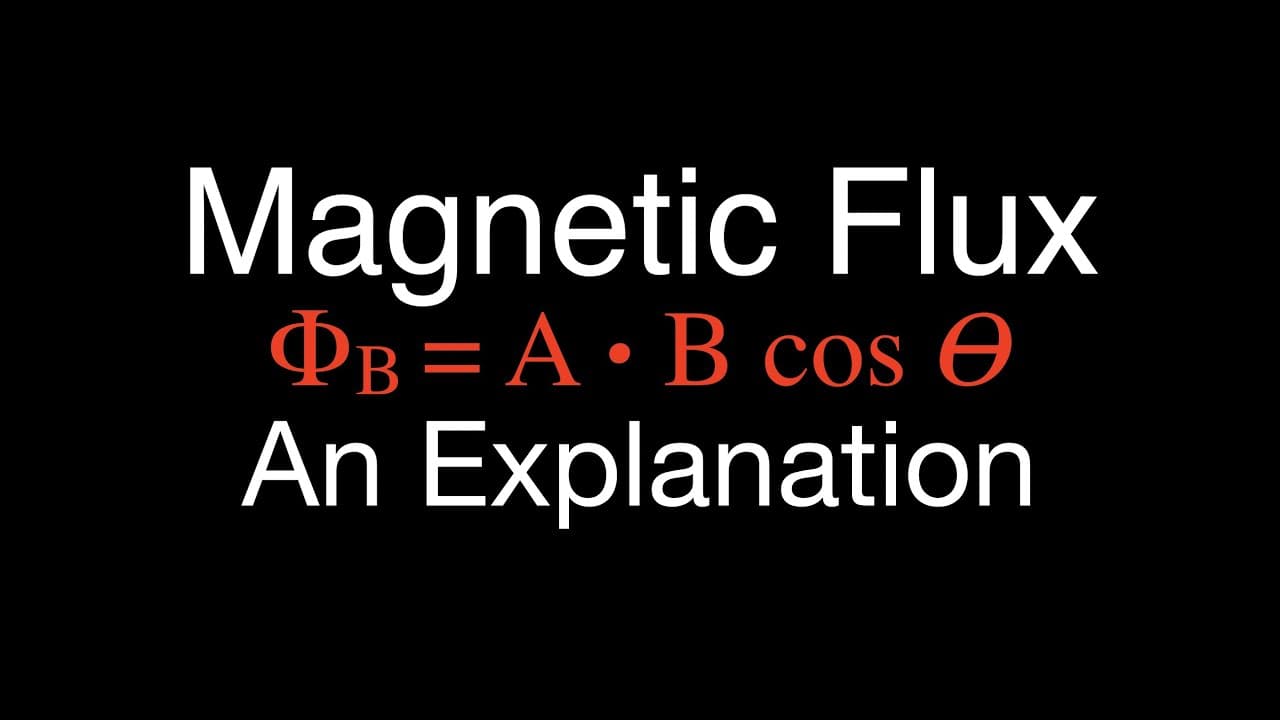
Electromagnetic Induction (2 of 15) Magnetic Flux, An Explanation
TL;DR
Magnetic flux is calculated using area, magnetic field strength, and angle; examples demonstrate the relationship.
Transcript
okay that's right you guessed it in today's video we are going to be talking about magnetic flux and as I'll be talking about in a moment this is the equation we use to calculate magnetic flux and you can see that the magnetic flux is related to the induced voltage in a coil of wire when we change the magnetic flux over time I just want to say it's... Read More
Key Insights
- 🔙 Magnetic flux is calculated using the equation magnetic flux = B * A * cos(θ), where B is magnetic field strength, A is the area, and θ is the angle.
- ✋ Changes in the area of the loop of wire impact the magnetic flux; larger areas result in higher flux.
- 🏑 The angle between the magnetic field and the loop affects the magnetic flux through the cosine function in the equation.
- 🖐️ Magnetic field strength plays a crucial role in determining the magnetic flux through a coil of wire.
- 💠 Examples provided in the content demonstrate how different scenarios impact the magnetic flux through various coil shapes.
- 🏑 Understanding the relationship between area, magnetic field strength, and angle is essential in calculating magnetic flux accurately.
- 🇦🇪 The units for magnetic flux are measured in Teslas, with area in square meters, and the standard unit is the Weber (WB).
Install to Summarize YouTube Videos and Get Transcripts
Explore YouTube Video Summarizer or Get YouTube Transcript Extractor
Questions & Answers
Q: What is magnetic flux and how is it calculated?
Magnetic flux is the amount of magnetic field passing through a loop of wire, calculated using the equation: magnetic flux = B * A * cos(θ). The area, magnetic field strength, and angle (θ) play crucial roles in determining the magnetic flux.
Q: How do changes in area impact magnetic flux?
Changes in the area of the loop directly affect the magnetic flux. Larger areas result in higher magnetic flux, while smaller areas lead to lower magnetic flux, assuming magnetic field strength and angle are constant.
Q: Why is the angle between the magnetic field and the loop important for magnetic flux?
The angle (θ) affects the magnetic flux through cosine in the equation. When the angle is 0 degrees (cosine 1), maximum magnetic flux occurs. As the angle deviates, the magnetic flux decreases accordingly.
Q: Can you explain the significance of magnetic field strength in determining magnetic flux?
Magnetic field strength directly influences magnetic flux. Higher field strengths lead to increased magnetic flux, while lower field strengths result in reduced magnetic flux, assuming area and angle are constant.
Summary & Key Takeaways
-
Magnetic flux is the amount of magnetic field passing through a loop of wire, calculated using the equation: magnetic flux = B * A * cos(θ).
-
Area, magnetic field strength, and angle (θ) between the magnetic field and the loop affect the magnetic flux.
-
Examples illustrate how changes in area, magnetic field strength, and angle impact the magnetic flux through different coil shapes.
Read in Other Languages (beta)
Share This Summary 📚
Summarize YouTube Videos and Get Video Transcripts with 1-Click
Try YouTube Summary with ChatGPT & Claude or YouTube Transcript Generator
Explore More Summaries from Step by Step Science 📚


Summarize YouTube Videos and Get Video Transcripts with 1-Click
Try YouTube Summary with ChatGPT & Claude or YouTube Transcript Generator