Can US Citizens Be Deported?
TL;DR
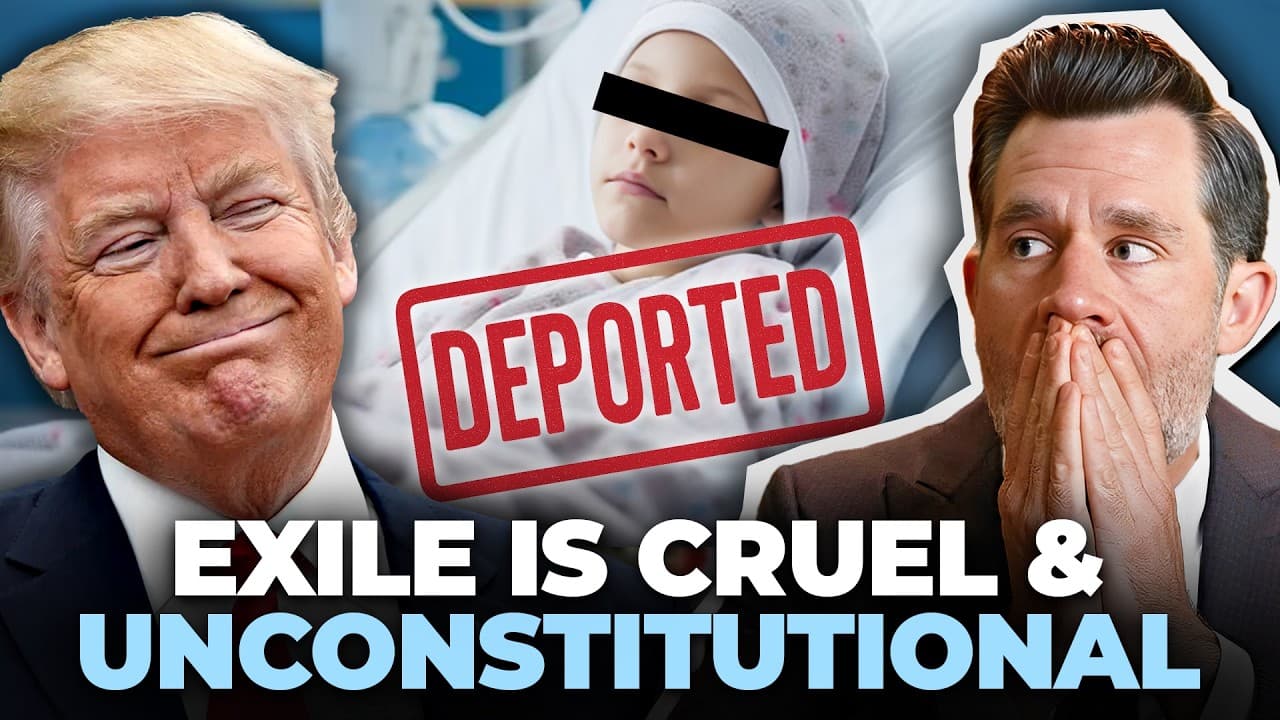
US citizens cannot be legally deported, as it violates constitutional protections like due process rights under the Fifth and Fourteenth Amendments. Recent actions by the Trump administration, involving deportation of citizen children, have sparked legal challenges. Courts have consistently upheld that citizens are entitled to remain in the US, and any attempt to deport them without due process is unconstitutional.
Transcript
So now they are deporting American citizen toddlers with cancer. I don't know which of those three things is the most horrific. And I'm not kidding. There are reports that the Trump administration has now deported at least three children ages 2, 4, and seven who are US citizens and at least one of whom was receiving cancer treatment. So by now you ... Read More
Key Insights
- US citizens cannot be deported without due process, protected by the Fifth and Fourteenth Amendments.
- The Trump administration's deportation of citizen children has faced legal challenges and court rebukes.
- Due process rights include notice of charges, opportunity to be heard, and impartial tribunal.
- The Non-Detention Act prohibits detaining citizens without an act of Congress.
- Historical use of exile as punishment is not practiced in the US for citizens.
- The First Step Act requires inmates to be housed close to home, complicating foreign imprisonment.
- Extradition treaties allow for legal transfer of citizens abroad, but require judicial hearings.
- Sending citizens to foreign prisons without due process violates constitutional and international law.
Install to Summarize YouTube Videos and Get Transcripts
Explore YouTube Video Summarizer or Get YouTube Transcript Extractor
Questions & Answers
Q: How can US citizens be protected from deportation?
US citizens are protected from deportation by constitutional rights, specifically the Fifth and Fourteenth Amendments, which guarantee due process. This includes the right to notice of charges, an opportunity to be heard, and an impartial tribunal. Additionally, the Non-Detention Act prohibits detention without an act of Congress, and the First Step Act mandates inmates be housed close to home.
Q: What legal actions have been taken against the deportation of US citizen children?
Legal actions against the deportation of US citizen children have included court challenges asserting violations of constitutional rights. Courts have rebuked the Trump administration's actions, affirming that citizens have an absolute right to remain in the US. Judges have issued orders to review these cases, emphasizing the need for due process and the protection of citizens' rights.
Q: What is the Non-Detention Act and how does it relate to deportation?
The Non-Detention Act prohibits the detention of US citizens without an act of Congress. It was enacted to prevent the government from detaining citizens without due process, a concern highlighted by historical abuses during the McCarthy era. This act is relevant in legal challenges against deportation, as it underscores the need for legislative authorization to detain citizens.
Q: How does the First Step Act impact the imprisonment of US citizens abroad?
The First Step Act requires that inmates be housed in facilities close to their homes, ideally within 500 miles. This provision complicates the potential imprisonment of US citizens abroad, as it mandates proximity to home. Any attempt to send citizens to foreign prisons would likely violate this act, unless justified by security reasons or other significant considerations.
Q: What role do extradition treaties play in the deportation of US citizens?
Extradition treaties allow for the legal transfer of US citizens to foreign countries for trial and imprisonment if they commit crimes abroad. However, this process requires a judicial hearing in the US to determine the credibility of the foreign country's accusations. This ensures that citizens' due process rights are upheld before any transfer occurs.
Q: Can the US government strip citizenship to facilitate deportation?
Stripping citizenship to facilitate deportation is highly unlikely and would face significant legal challenges. The 14th Amendment grants citizenship to those born or naturalized in the US, and courts have ruled that citizenship cannot be involuntarily removed. Any attempt to do so would likely be considered a violation of constitutional rights and face intense scrutiny.
Q: What international laws protect against deportation to countries with human rights abuses?
International laws, such as the Convention Against Torture, protect individuals from being deported to countries where they might face torture or inhumane treatment. This convention prohibits expelling, returning, or extraditing a person to another state where there are substantial grounds for believing they would be in danger of torture. The Trump administration's actions have raised concerns about compliance with these international obligations.
Q: How have courts responded to the Trump administration's deportation practices?
Courts have consistently rebuked the Trump administration's deportation practices, particularly those involving US citizens. Judges have emphasized that deporting citizens without due process is illegal and unconstitutional. Legal challenges continue to address these practices, with courts upholding the rights of citizens to remain in the US and receive due process before any deportation actions are taken.
Summary & Key Takeaways
-
US citizens have constitutional protections that prevent deportation without due process. Recent deportations of citizen children by the Trump administration have been challenged in court, highlighting violations of Fifth and Fourteenth Amendment rights. Courts affirm that citizens have the right to remain in the US, and any attempt to deport them without legal proceedings is unconstitutional.
-
The Non-Detention Act and the First Step Act further protect citizens from being detained or imprisoned abroad without due process. Historical practices of exile are not applicable to US citizens today. Extradition treaties allow legal transfer to foreign prisons but require judicial review, ensuring due process rights are upheld.
-
International law, such as the Convention Against Torture, prohibits sending individuals to countries where they might face torture. The Trump administration's actions have raised concerns about violations of these laws, as well as the ethical implications of such deportations. Legal challenges continue to address these constitutional and human rights issues.
Read in Other Languages (beta)
Share This Summary 📚
Summarize YouTube Videos and Get Video Transcripts with 1-Click
Try YouTube Summary with ChatGPT & Claude or YouTube Transcript Generator
Explore More Summaries from LegalEagle 📚






Summarize YouTube Videos and Get Video Transcripts with 1-Click
Try YouTube Summary with ChatGPT & Claude or YouTube Transcript Generator