What Is Macbeth's Predestination Debate?
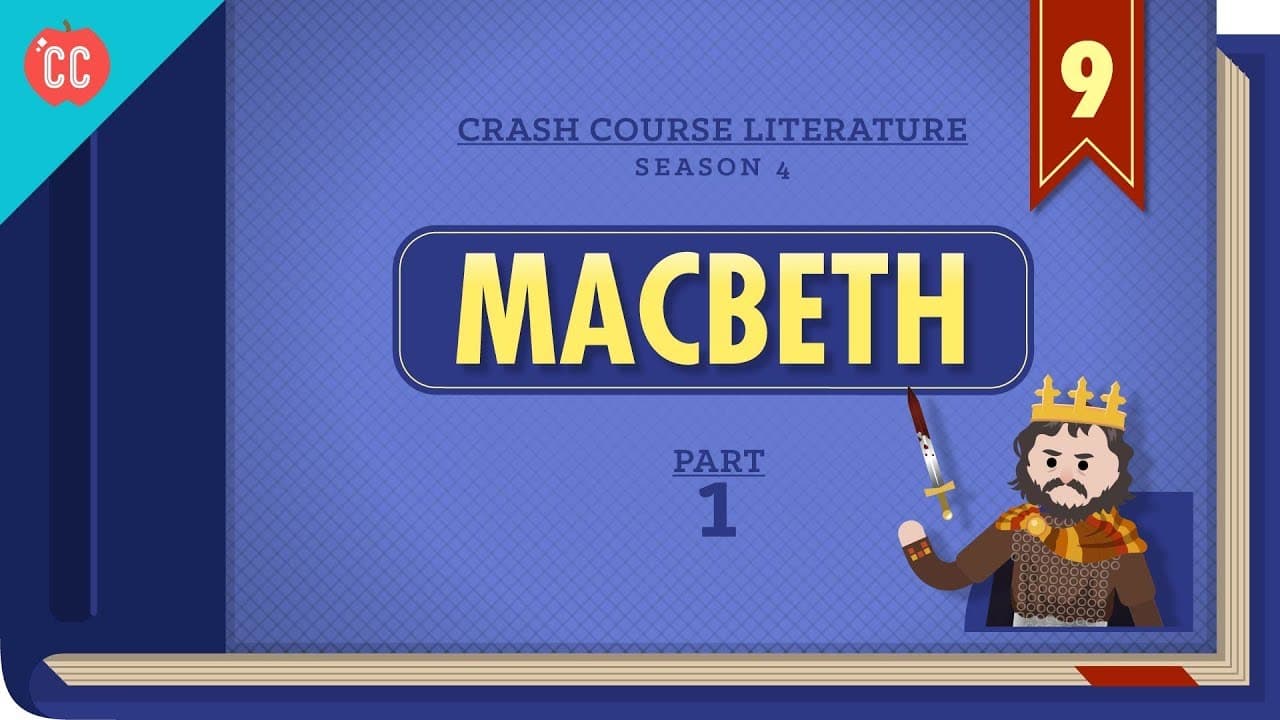
TL;DR
Macbeth explores themes of ambition, prophecy, and free will. The play questions whether Macbeth's actions were predestined or a result of his choices. Set against the backdrop of political and supernatural influences, Macbeth's tragic downfall is a complex interplay of fate and personal ambition, highlighting the consequences of unchecked desires.
Transcript
Hi, I’m John Green, this is Crash Course Literature and today we’ll be discussing Macbeth. Some people... ...call it the Scottish play or the Bard’s play because allegedly, back in the 17th century a coven of witches cursed the play to punish Shakespeare for including their spells. But that’s just not credible. So I’m going to call it by it’s real ... Read More
Key Insights
- Macbeth is both a tragedy and a history play, based on historical sources but with artistic liberties taken by Shakespeare.
- The play explores themes of ambition, prophecy, and the tension between fate and free will.
- Shakespeare altered historical accounts for political reasons, as King James I, his patron, traced lineage back to Banquo.
- The supernatural elements in Macbeth, such as the witches, reflect King James I's interest in witchcraft.
- The witches' prophecies raise questions about predestination and whether Macbeth's actions are fated or chosen.
- Macbeth's psychological ambivalence is central to the play, as he is torn between ambition and moral conflict.
- The concept of equivocation, or ambiguous speech, is a key theme, reflecting both religious and personal conflicts.
- The play's enduring appeal lies in its exploration of complex human emotions and moral dilemmas.
Install to Summarize YouTube Videos and Get Transcripts
Explore YouTube Video Summarizer or Get YouTube Transcript Extractor
Questions & Answers
Q: How does Macbeth explore the theme of free will versus fate?
Macbeth explores the tension between free will and fate through the witches' prophecies and Macbeth's subsequent actions. The play questions whether Macbeth's rise and fall were predestined or a result of his choices. While the prophecies suggest a predetermined fate, Macbeth's ambition and decisions drive the narrative, highlighting the complex interplay between destiny and personal agency.
Q: What role do the witches play in Macbeth's downfall?
The witches in Macbeth serve as catalysts for Macbeth's ambition and eventual downfall. Their prophecies spark Macbeth's desire for power, leading him to commit regicide and other atrocities. While the witches' true nature and intentions are ambiguous, their influence on Macbeth underscores the theme of supernatural manipulation and the dangers of succumbing to dark desires.
Q: Why did Shakespeare alter historical accounts in Macbeth?
Shakespeare altered historical accounts in Macbeth to suit the political climate of his time and to please his patron, King James I. By portraying Banquo, an ancestor of James, as virtuous and omitting his involvement in regicide, Shakespeare flattered the king. Additionally, the play's themes of divine right and the consequences of regicide aligned with James's beliefs, making it politically expedient.
Q: What is the significance of the theme of equivocation in Macbeth?
Equivocation, or ambiguous speech, is significant in Macbeth as it reflects both the religious tensions of Shakespeare's time and the characters' moral conflicts. The witches' half-truths and Macbeth's internal struggle highlight the dangers of deceptive language and ambiguous morality. Equivocation serves as a metaphor for the characters' psychological ambivalence and the play's exploration of truth and deception.
Q: How does Macbeth's character evolve throughout the play?
Macbeth's character evolves from a celebrated war hero to a paranoid and tyrannical ruler. Initially conflicted about his ambition, the prophecies and Lady Macbeth's influence drive him to murder King Duncan. As he becomes increasingly consumed by guilt and paranoia, Macbeth's moral compass deteriorates, leading to his eventual downfall. His tragic arc illustrates the destructive power of unchecked ambition.
Q: What historical sources did Shakespeare use for Macbeth?
Shakespeare primarily used Holinshed's Chronicles as the historical source for Macbeth. The Chronicles provided the basic framework of the story, including the characters of Macbeth and Duncan. However, Shakespeare took artistic liberties, altering events and character motivations to explore themes of ambition, prophecy, and fate, while also considering the political context of his time.
Q: Why is the supernatural an important element in Macbeth?
The supernatural is an important element in Macbeth as it reflects the era's fascination with witchcraft and the divine right of kings. The witches' prophecies and Macbeth's visions contribute to the play's exploration of fate and free will. The supernatural also serves to amplify the psychological tension, as Macbeth grapples with the moral implications of his actions and the consequences of his ambition.
Q: How does Macbeth address the concept of ambition?
Macbeth addresses the concept of ambition by illustrating its destructive potential. Macbeth's unchecked desire for power, fueled by the witches' prophecies and Lady Macbeth's encouragement, leads him to commit heinous acts. The play examines the moral and psychological consequences of ambition, highlighting how the pursuit of power can corrupt and ultimately destroy an individual, serving as a cautionary tale about the dangers of overreaching ambition.
Summary & Key Takeaways
-
Macbeth is a complex exploration of ambition, prophecy, and free will, questioning whether Macbeth's actions were predestined or chosen. Shakespeare takes artistic liberties with historical sources to explore these themes, influenced by the political context of King James I's reign and his interest in the supernatural.
-
The play highlights the consequences of unchecked ambition, as Macbeth's desire for power leads to his tragic downfall. The witches' prophecies and the theme of equivocation reflect the era's religious and political tensions, while also delving into Macbeth's psychological conflict.
-
Macbeth's enduring appeal lies in its exploration of timeless human emotions and moral dilemmas, as it challenges the audience to consider the interplay of fate and free will in shaping one's destiny. The play's rich language and complex characters continue to captivate audiences centuries after it was written.
Read in Other Languages (beta)
Share This Summary 📚
Summarize YouTube Videos and Get Video Transcripts with 1-Click
Try YouTube Summary with ChatGPT & Claude or YouTube Transcript Generator
Explore More Summaries from CrashCourse 📚




Summarize YouTube Videos and Get Video Transcripts with 1-Click
Try YouTube Summary with ChatGPT & Claude or YouTube Transcript Generator