Why I started making my own vinegars from scratch...
TL;DR
Learning to make homemade vinegars with fermentation for culinary opportunities and health benefits.
Transcript
this video is sponsored by pronamel i've been on a very interesting journey over the last two months diving deep into the world of homemade vinegars and you know i'm obsessed with all things fermentation and what i've realized is that every time i try one of these new fermentation projects well it ends up being so much better than the store-bought ... Read More
Key Insights
- ❓ Vinegar production involves a two-step fermentation process utilizing alcohol fermentation and acetic acid conversion.
- 🏪 Homemade vinegars provide quality, flavor, and cost advantages over store-bought options.
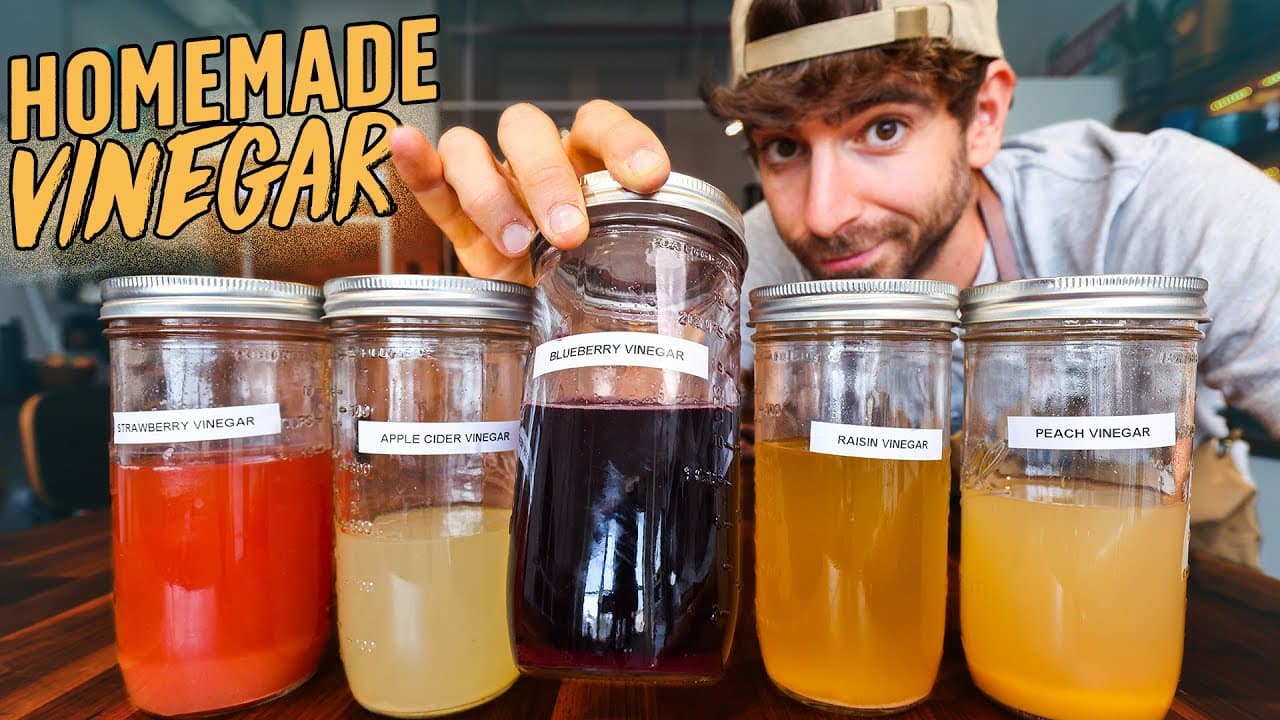
- 🍌 Experimentation with various fruits and dried fruit offers a diverse range of vinegar flavors and characteristics.
- 🇲🇩 Mold management during the fermentation process is essential for successful vinegar production.
- 🖐️ Proper sanitation and monitoring play a crucial role in the success of homemade vinegar making.
- 🛸 Culinary applications for homemade vinegars include vinaigrettes, sauces, tonics, and more, enriching dishes with unique flavors.
- 😋 Considerations for protecting tooth enamel from acidic foods like vinegars are addressed, highlighting the importance of dental care.
Install to Summarize YouTube Videos and Get Transcripts
Explore YouTube Video Summarizer or Get YouTube Transcript Extractor
Questions & Answers
Q: What is the basic process involved in making homemade vinegars?
Homemade vinegar involves a two-step fermentation process starting with alcohol fermentation and then converting alcohol to acetic acid through bacteria like acetobacter.
Q: Why is it important to expose the alcohol to oxygen for vinegar production?
Oxygen exposure allows acetobacter bacteria to thrive and convert alcohol into acetic acid, essential for creating vinegar during the fermentation process.
Q: What are the potential risks associated with homemade vinegar production, as highlighted in the video?
Mold growth on fruits during fermentation can be a concern, but it can be managed by proper sanitation and observation, ensuring the vinegar-making process proceeds successfully.
Q: How can homemade vinegars be incorporated into culinary creations?
Homemade vinegars can be used to make vinaigrettes, barbecue sauces, shrubs, teas, and more, adding unique flavors and acidity to dishes.
Summary & Key Takeaways
-
Exploring homemade vinegar making through fermentation offers better quality and cost savings compared to store-bought options.
-
Understanding the two-step fermentation process behind vinegar production with alcohol and acetic acid transformation.
-
Experimenting with various fruits and dried fruit for vinegar creation, showcasing culinary uses and health considerations.
Read in Other Languages (beta)
Share This Summary 📚
Summarize YouTube Videos and Get Video Transcripts with 1-Click
Try YouTube Summary with ChatGPT & Claude or YouTube Transcript Generator
Explore More Summaries from Pro Home Cooks 📚





Summarize YouTube Videos and Get Video Transcripts with 1-Click
Try YouTube Summary with ChatGPT & Claude or YouTube Transcript Generator