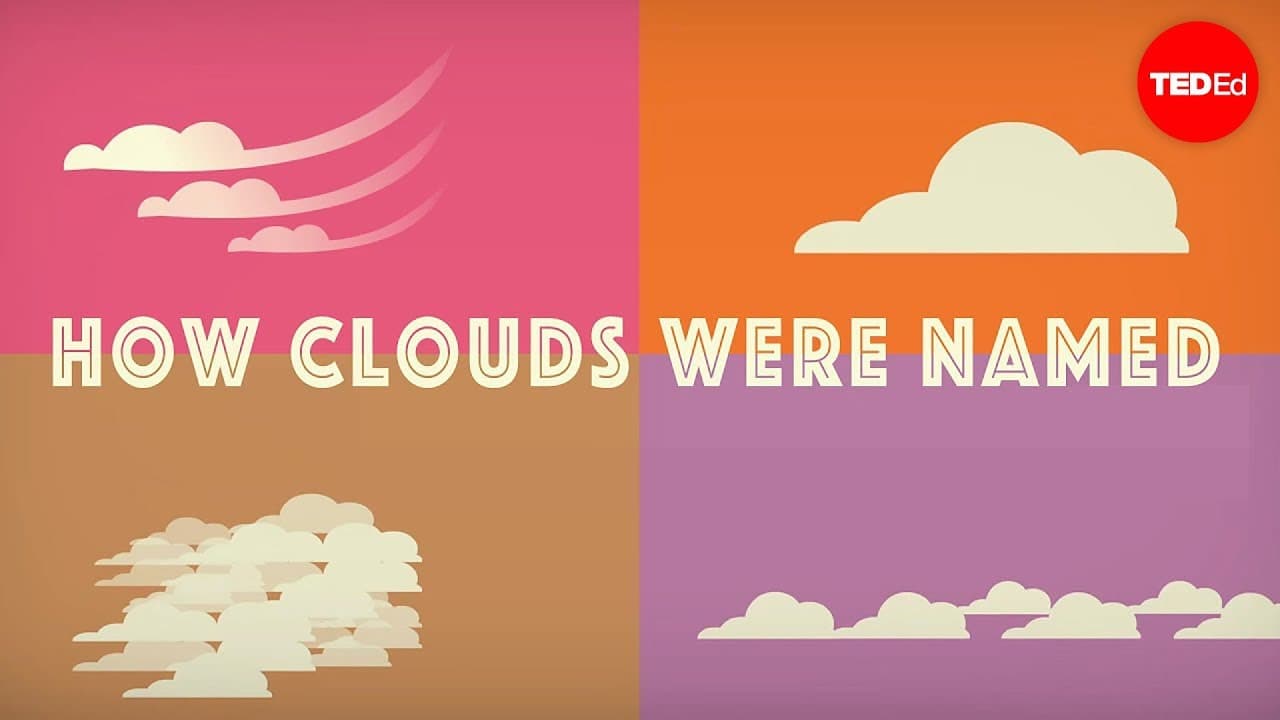
How did clouds get their names? - Richard Hamblyn
TL;DR
Luke Howard revolutionized meteorology by classifying clouds into distinct types, changing our understanding of the skies.
Transcript
The Naming of Clouds On a cold December evening in 1802, a nervous young man named Luke Howard stood before the assembled members of a London science club about to give a lecture that would change his life and go on to change humanity's understanding of the skies. Luke Howard was a pharmacist by profession, but he was a meteorologist by inclinati... Read More
Key Insights
- 😶🌫️ Luke Howard's classification of clouds revolutionized meteorology by providing a systematic way to understand and analyze cloud formations.
- 🥺 Cloud classification led to a deeper appreciation of atmospheric processes and weather patterns, showcasing the interconnectedness of nature.
- 😶🌫️ Artists and poets were inspired by Luke Howard's cloud naming system, integrating these unique cloud types into their creative works.
- ⛅ Understanding cloud behaviors and formations allowed scientists to make more accurate weather predictions and study climate dynamics.
- 😶🌫️ Luke Howard's cloud classification system paved the way for further advancements in meteorology and atmospheric science.
- 🫥 Clouds serve as visible indicators of invisible atmospheric processes, acting as journals in the sky for weather patterns.
- ⛅ The study of clouds, nephology, remains an essential aspect of meteorology, offering insights into the weather and climate systems.
Install to Summarize YouTube Videos and Get Transcripts
Explore YouTube Video Summarizer or Get YouTube Transcript Extractor
Questions & Answers
Q: How did Luke Howard's background as a pharmacist influence his work as a meteorologist?
Luke Howard's keen observational skills, combined with his scientific training, allowed him to identify and classify distinct cloud types, demonstrating a unique blend of knowledge in multiple fields.
Q: Why did Luke Howard's classification of clouds have such a significant impact on meteorology?
Howard's system provided a basis for understanding weather patterns, climate dynamics, and atmospheric processes, making it easier for scientists to analyze and predict changes in the skies.
Q: How did Luke Howard's naming system for clouds expand beyond the initial three main cloud types?
Howard introduced intermediate and compound cloud types to capture the fluid nature of cloud formations, enabling a more comprehensive categorization system for meteorologists to use.
Q: What cultural impact did Luke Howard's work have on art and literature?
Artists and poets, such as J.W. von Goethe and John Constable, were inspired by Howard's cloud classification, incorporating these distinct cloud types into their works of art and literature, reflecting the widespread fascination with clouds.
Summary & Key Takeaways
-
Luke Howard, a pharmacist turned meteorologist, introduced a classification system for clouds in 1802 that revolutionized the understanding of weather.
-
Howard identified three main cloud types: cirrus, cumulus, and stratus, along with intermediate and compound types to account for cloud transformations.
-
The naming of clouds by Howard led to a deeper understanding of atmospheric processes and weather patterns through visible cloud patterns.
Read in Other Languages (beta)
Share This Summary 📚
Summarize YouTube Videos and Get Video Transcripts with 1-Click
Try YouTube Summary with ChatGPT & Claude or YouTube Transcript Generator
Explore More Summaries from TED-Ed 📚





Summarize YouTube Videos and Get Video Transcripts with 1-Click
Try YouTube Summary with ChatGPT & Claude or YouTube Transcript Generator