How To Calculate The Stopping Distance of a Car - Calculus
TL;DR
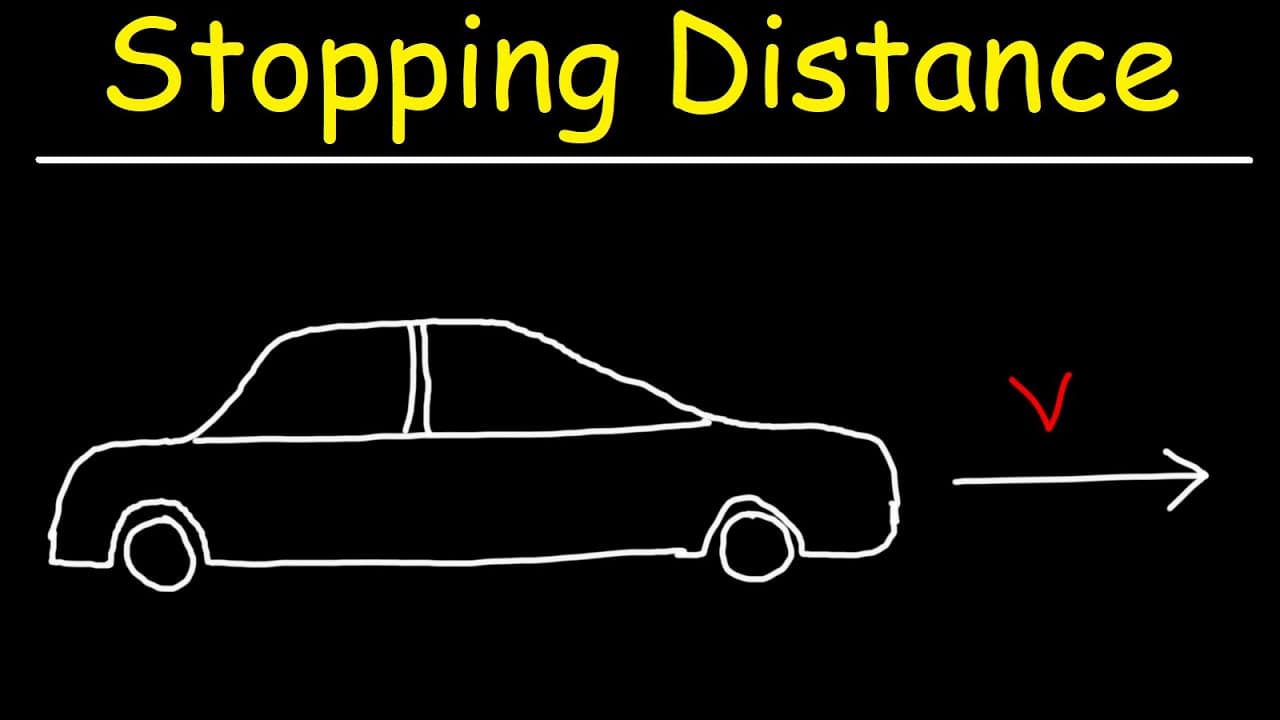
A car traveling at 45 feet per second applies its brakes, and using calculus, we can determine it takes 3 seconds to stop and the distance traveled during that time is 67.5 feet.
Transcript
a car is traveling at a rate of 45 feet per second when the brakes are applied and now we're given the position function and with this information how long will it take for the card to make a complete stop so what would you do to solve this problem feel free to pause the video if you want to try yourself so here we have an object that's moving it's... Read More
Key Insights
- 😨 A car decelerates when its brakes are applied, resulting in a negative acceleration.
- ⌛ Calculating the time it takes for a car to stop involves finding when the velocity function equals zero and solving for time.
- 😨 The displacement of a car during the stopping period is equal to the distance traveled since its direction remains unchanged.
- ✋ The distance traveled during the stopping period can be calculated using the displacement formula.
- 😨 The negative acceleration during the stopping period indicates the car's slowing down.
- 😨 The initial velocity of the car is given as 45 feet per second.
- 🧘 Calculus can be utilized to solve problems involving the position, velocity, and acceleration of a moving object.
Install to Summarize YouTube Videos and Get Transcripts
Explore YouTube Video Summarizer or Get YouTube Transcript Extractor
Questions & Answers
Q: How do you calculate the time it takes for the car to stop?
By finding when the velocity function equals zero and solving for time, we can determine it takes 3 seconds for the car to make a complete stop.
Q: What is the displacement of the car during the stopping period?
Since the car doesn't change direction during the stopping period, the displacement is the same as the distance traveled. The displacement is calculated as 67.5 feet.
Q: What is the significance of the negative acceleration?
The negative acceleration indicates deceleration or slowing down. It opposes the direction of motion and causes the car to eventually come to a stop.
Q: Can the distance traveled during the stopping period be calculated using calculus?
Yes, the distance traveled during the stopping period can be calculated using the displacement formula, which is the difference between the final and initial positions.
Summary & Key Takeaways
-
A car is decelerating with a negative acceleration, applying the brakes to come to a stop.
-
The time it takes for the car to stop can be calculated by finding when the velocity function equals zero.
-
The displacement of the car during this stopping period is equal to the distance traveled since its direction remains the same.
Read in Other Languages (beta)
Share This Summary 📚
Summarize YouTube Videos and Get Video Transcripts with 1-Click
Try YouTube Summary with ChatGPT & Claude or YouTube Transcript Generator
Explore More Summaries from The Organic Chemistry Tutor 📚


Summarize YouTube Videos and Get Video Transcripts with 1-Click
Try YouTube Summary with ChatGPT & Claude or YouTube Transcript Generator