Microscopy: How To Clean an Objective Lens (Kurt Thorn)
TL;DR
Proper cleaning of microscope optics is essential for maintaining image quality.
Transcript
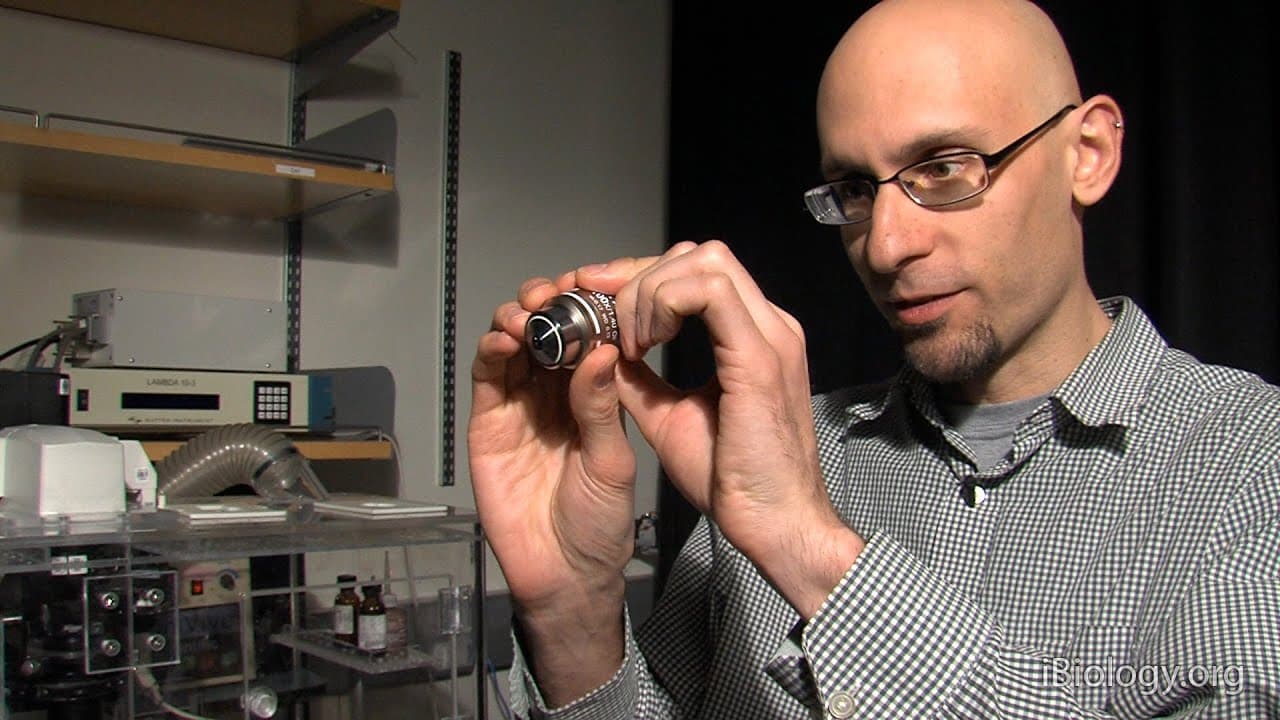
So today I'm going to talk about how to clean microscope optics, and in particular, how to clean objectives and optical filters. And this is something that is an important technique to know because it's pretty easy to get optics dirty. Particularly if you're using oil immersion objectives, as you tend to accumulate old oil on the objectives, you ca... Read More
Key Insights
- Cleaning microscope optics, especially objectives and filters, is crucial for maintaining clear image quality and preventing damage.
- Oil immersion objectives are prone to accumulating old oil, while air objectives can mistakenly get smeared with oil, both leading to dirt buildup.
- Different manufacturers have specific cleaning recommendations, including solvents and methods, so it's important to consult them before cleaning.
- Inspect objectives visually and use a magnifying technique with the microscope's eyepiece to detect dirt or oil on high magnification lenses.
- For cleaning, use lens paper with solvents like xylene or chloroform, followed by methanol, ensuring solvents are spectrophotometric grade.
- Recessed air lenses require cotton swabs for cleaning, and dust blowers can help remove loose particles to prevent scratches.
- For water-based dirt like tissue culture media, use water with soap, followed by distilled water and methanol for thorough cleaning.
- Filters require careful cleaning, with mounted filters needing cotton swabs and unmounted filters using lens paper and a drag mopping technique.
Install to Summarize YouTube Videos and Get Transcripts
Explore YouTube Video Summarizer or Get YouTube Transcript Extractor
Questions & Answers
Q: Why is it important to clean microscope optics?
Cleaning microscope optics is crucial because dirt and residue on the surfaces of objectives and filters can degrade image quality. Maintaining clean optics ensures clear and accurate imaging, which is essential for scientific observations and experiments. Proper cleaning also helps prevent damage to these expensive components.
Q: What are common sources of dirt on microscope objectives?
Common sources of dirt on microscope objectives include the accumulation of old oil on oil immersion objectives and the inadvertent smearing of oil on air objectives. These issues arise from improper handling or usage, leading to dirt buildup that can affect the clarity and quality of the images produced by the microscope.
Q: What should be considered before cleaning microscope objectives?
Before cleaning microscope objectives, it's important to check the manufacturer's recommendations, as different manufacturers may suggest specific solvents or cleaning methods. This ensures that the cleaning process is compatible with the objectives and avoids potential damage. Inspecting the objectives visually and using magnifying techniques can help identify dirt or oil.
Q: How can you inspect microscope objectives for dirt?
To inspect microscope objectives for dirt, first visually examine them. For low magnification objectives, look through them to spot dirt. For high magnification objectives, use a technique involving the microscope's eyepiece as a magnifying glass to closely inspect the front element for oil, dirt, or debris.
Q: What is the recommended method for cleaning microscope objectives?
The recommended method for cleaning microscope objectives involves using lens paper with solvents like xylene or chloroform, followed by methanol to remove any residue. It's important to use spectrophotometric grade solvents to ensure effective cleaning. Handle lens paper by the edges to avoid transferring fingerprints or oils onto the objectives.
Q: How are recessed air lenses cleaned?
Recessed air lenses are cleaned using cotton swabs, as lens paper may not reach the concave part of the lens. Use a clean cotton swab moistened with solvent, gently swiping across the surface of the lens. Repeat with methanol to remove any residue, ensuring each swipe uses a new surface of the swab.
Q: What is the procedure for cleaning filters?
For cleaning filters, unmounted filters can be cleaned using lens paper and a drag mopping technique with solvent. Mounted filters require cotton swabs, using a spiral motion from the center to the outside to remove dirt. Always use clean swabs to avoid transferring dirt between optics and blow off any dust before cleaning.
Q: How should water-based dirt be cleaned from microscope objectives?
For water-based dirt, such as tissue culture media, clean the microscope objectives using water with a little soap. Follow this with distilled water and methanol to ensure thorough cleaning. This method helps remove residues effectively, maintaining the clarity and performance of the objectives without causing damage.
Summary & Key Takeaways
-
Cleaning microscope optics, including objectives and filters, is essential for maintaining image quality. Oil immersion objectives often accumulate oil, while air objectives can get smeared with oil. Different manufacturers have specific cleaning recommendations, so consult them before cleaning. Inspect objectives visually and use a magnifying technique to detect dirt or oil.
-
Use lens paper with solvents like xylene or chloroform, followed by methanol, ensuring solvents are spectrophotometric grade. Recessed air lenses require cotton swabs for cleaning, and dust blowers can help remove loose particles to prevent scratches. Water-based dirt requires water with soap, followed by distilled water and methanol for thorough cleaning.
-
Filters require careful cleaning, with mounted filters needing cotton swabs and unmounted filters using lens paper and a drag mopping technique. Use clean swabs to avoid transferring dirt between optics. Proper cleaning of microscope optics is crucial for maintaining clear image quality and preventing damage to expensive components.
Read in Other Languages (beta)
Share This Summary 📚
Summarize YouTube Videos and Get Video Transcripts with 1-Click
Try YouTube Summary with ChatGPT & Claude or YouTube Transcript Generator
Explore More Summaries from iBiology Techniques 📚



Summarize YouTube Videos and Get Video Transcripts with 1-Click
Try YouTube Summary with ChatGPT & Claude or YouTube Transcript Generator