Have They Seen Us? | Space Time | PBS Digital Studios
TL;DR
Earth's radio signals may reach alien civilizations, but detecting them is challenging.
Transcript
[MUSIC PLAYING] A century of Earth's radio transmissions has now washed over thousands of other star systems, carrying with it some of our greatest broadcast masterpieces, as well as our worst reality TV. What are the chances that alien civilizations have detected and even decoded these signals? We are a young technological civilization. An advance... Read More
Key Insights
- Earth's radio transmissions have been spreading into space for over a century, potentially reaching thousands of star systems with habitable planets.
- Advanced alien civilizations could potentially detect Earth's radio bubble, but decoding the signal would require immense technological capabilities.
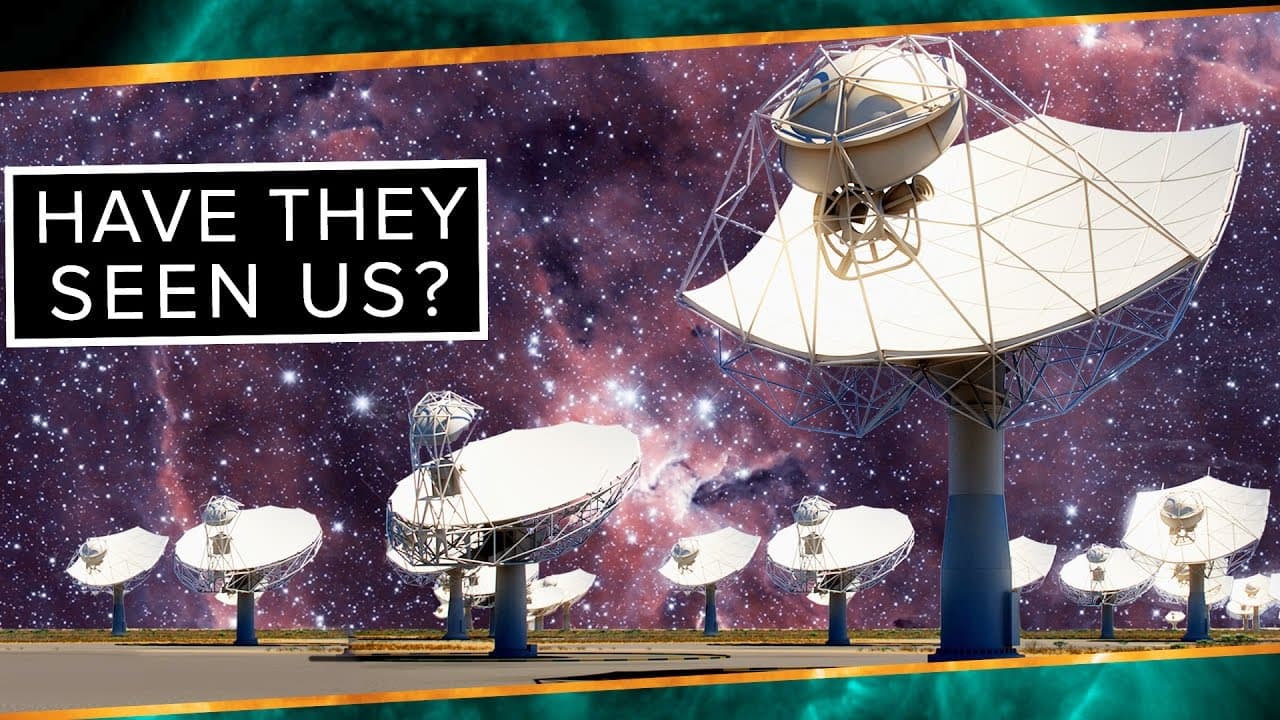
- The Square Kilometer Array (SKA) is a powerful radio telescope being built to study the early universe, but it could also detect alien signals.
- Interferometry is a technique used to filter out local radio noise, increasing the chances of detecting extraterrestrial signals.
- The SKA's sensitivity could potentially detect Earth's TV bubble from over 100 light years away, but decoding the signal remains a challenge.
- For aliens to watch Earth TV, they would need a telescope trillions of times larger than the SKA, which is unlikely.
- If a slightly more advanced civilization exists within our radio bubble, they may have already detected Earth's signals.
- Technological civilizations need to be common in the galaxy for us to have a chance of detecting one nearby, but this remains uncertain.
Install to Summarize YouTube Videos and Get Transcripts
Explore YouTube Video Summarizer or Get YouTube Transcript Extractor
Questions & Answers
Q: What is the significance of Earth's radio transmissions in space?
Earth's radio transmissions have been expanding into space for over a century, potentially reaching thousands of star systems with habitable planets. This spread of signals could alert advanced alien civilizations to our presence, marking Earth as an emerging technological civilization in the galaxy.
Q: What challenges exist in detecting alien signals?
Detecting alien signals is challenging due to the vast distances and the need for powerful telescopes. Interferometry can help filter out local radio noise, but decoding signals requires immense technological capabilities. The SKA telescope aims to enhance our ability to detect potential extraterrestrial signals.
Q: How does the Square Kilometer Array (SKA) contribute to the search for extraterrestrial life?
The SKA is a powerful radio telescope designed to study the early universe, but it could also detect alien signals. Its sensitivity and interferometry capabilities allow it to filter out local noise and potentially identify extraterrestrial signals, increasing the chances of detecting technological civilizations.
Q: Can aliens watch Earth's TV broadcasts?
For aliens to watch Earth's TV broadcasts, they would need a telescope trillions of times larger than the SKA, which is unlikely. While the SKA might detect the presence of Earth's TV bubble, decoding the signal requires a telescope of immense size, far beyond current technological capabilities.
Q: What is the potential for detecting alien civilizations within our radio bubble?
If a slightly more advanced civilization exists within our radio bubble, they may have already detected Earth's signals. However, technological civilizations need to be common in the galaxy for us to have a chance of detecting one nearby, which remains uncertain given our current understanding of the universe.
Q: What role does interferometry play in detecting extraterrestrial signals?
Interferometry is a technique used to filter out local radio noise, enhancing the ability to detect extraterrestrial signals. By using multiple radio telescopes separated by large distances, interferometry increases the spatial resolution and sensitivity of observations, making it a valuable tool in the search for alien signals.
Q: How does the SKA's sensitivity compare to existing telescopes?
The SKA's sensitivity and pinpoint resolving power will be vastly greater than any existing telescope. Its ability to detect radio emissions from the early universe and potentially identify alien signals makes it a groundbreaking tool in both cosmology and the search for extraterrestrial intelligence.
Q: What are the implications of detecting alien signals for humanity?
Detecting alien signals would have profound implications for humanity, confirming the existence of other technological civilizations and potentially leading to new scientific and philosophical insights. It would mark a significant milestone in our understanding of the universe and our place within it, opening up possibilities for future communication and exploration.
Summary & Key Takeaways
-
Earth's radio transmissions have been expanding into space for over a century, potentially reaching thousands of star systems. While advanced alien civilizations might detect these signals, decoding them requires significant technological advancements.
-
The Square Kilometer Array (SKA) is a powerful radio telescope designed to study the early universe. However, its capabilities may also allow it to detect alien signals by filtering out local radio noise using interferometry.
-
Detecting Earth's TV broadcasts from space is challenging. Aliens would need a telescope trillions of times larger than the SKA to watch our TV. If a more advanced civilization exists within our radio bubble, they might have already detected Earth's signals.
Read in Other Languages (beta)
Share This Summary 📚
Summarize YouTube Videos and Get Video Transcripts with 1-Click
Try YouTube Summary with ChatGPT & Claude or YouTube Transcript Generator
Explore More Summaries from PBS Space Time 📚





Summarize YouTube Videos and Get Video Transcripts with 1-Click
Try YouTube Summary with ChatGPT & Claude or YouTube Transcript Generator