Did Tom Homan Accept a $50,000 Bribe?
TL;DR
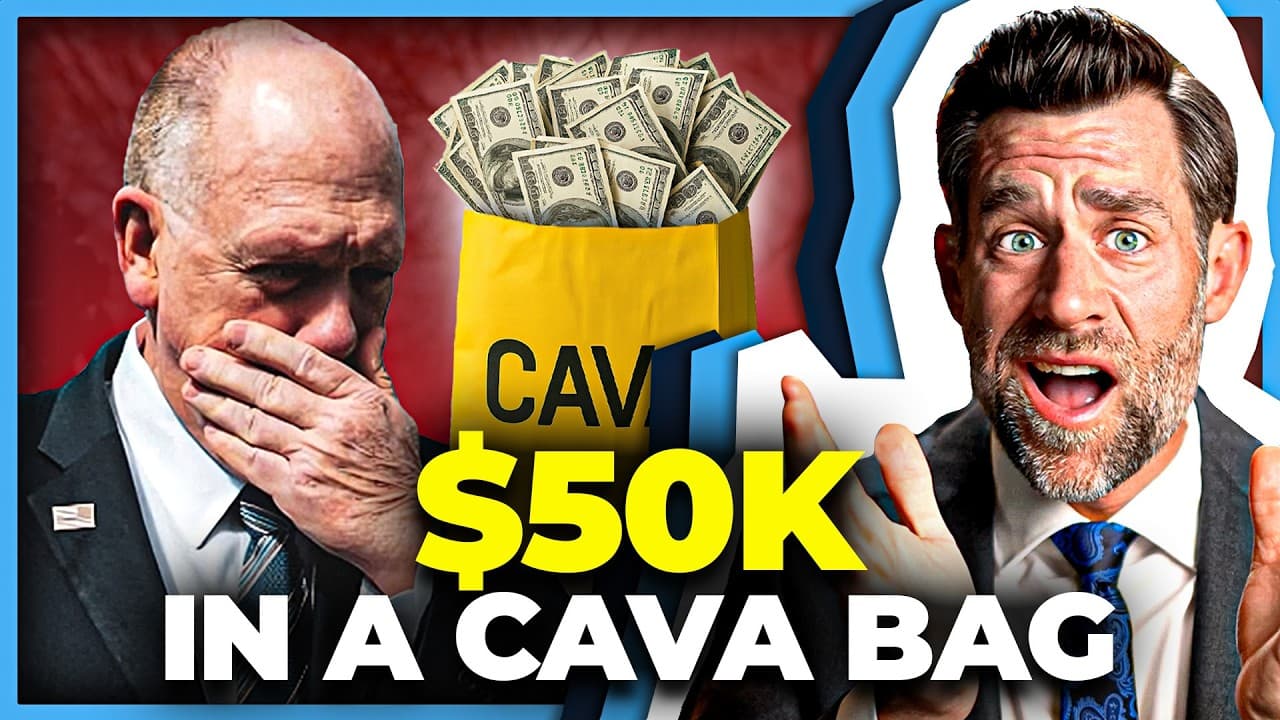
Tom Homan, former acting director of ICE, allegedly accepted a $50,000 bribe from undercover FBI agents with the promise of securing government contracts if Trump returned to power. Despite the apparent corruption, recent Supreme Court rulings make it difficult to prove bribery without evidence of a specific official act in exchange for the money.
Transcript
Now, remember in Looney Tunes when someone would rob a bank, they'd walk away with little bags with dollar signs on them? Well, that's basically what Tom Hman did. The corruption was that cartoonish because usually when you get a paper bag from a fast casual chain, they ask, "Do you want fries with that?" But when the FBI met Tom Hman in Texas, the... Read More
Key Insights
- Tom Homan allegedly accepted $50,000 from undercover FBI agents as part of a sting operation.
- The money was reportedly intended to secure government contracts once Homan returned to a government position.
- Supreme Court rulings have made proving bribery more challenging without a clear quid pro quo for an official act.
- Homan was not in a government position at the time of the alleged bribery, complicating legal proceedings.
- The investigation into Homan was halted, raising concerns about potential political motivations.
- Federal bribery laws require proof of corrupt intent and an official act, which can be difficult to establish.
- The case highlights the complexities of prosecuting corruption under current legal standards.
- Homan has denied any wrongdoing and claims he did nothing illegal.
Install to Summarize YouTube Videos and Get Transcripts
Explore YouTube Video Summarizer or Get YouTube Transcript Extractor
Questions & Answers
Q: Did Tom Homan accept a bribe for government contracts?
Tom Homan allegedly accepted $50,000 from undercover FBI agents, with the understanding that he would help secure government contracts if he returned to a position of power. The investigation into this alleged bribery was halted, raising concerns about the political motivations behind the decision.
Q: Why is it difficult to prosecute bribery cases like Tom Homan's?
Prosecuting bribery cases like Tom Homan's is challenging due to Supreme Court rulings that require proof of a clear quid pro quo for an official act. Without evidence that the money was exchanged for a specific, identifiable official act, it becomes difficult to secure a conviction under current legal standards.
Q: What role did the Supreme Court play in Tom Homan's case?
The Supreme Court's rulings, particularly in the McDonnell case, have narrowed the definition of what constitutes an official act in bribery cases. This has made it more challenging to prosecute individuals like Tom Homan without clear evidence of a quid pro quo involving a specific official act.
Q: What was the outcome of the investigation into Tom Homan?
The investigation into Tom Homan was ultimately halted, with officials citing insufficient evidence to prove criminal wrongdoing. This decision has been controversial, with some suggesting political motivations influenced the outcome, given Homan's connections to the Trump administration.
Q: How does the McDonnell case affect bribery prosecutions?
The McDonnell case affects bribery prosecutions by requiring that prosecutors prove a specific official act was promised or performed in exchange for a bribe. This narrower interpretation makes it more difficult to secure convictions in cases where the alleged act is not clearly defined or documented.
Q: What legal challenges exist in proving bribery against Tom Homan?
Legal challenges in proving bribery against Tom Homan include demonstrating that the $50,000 was given in exchange for a specific official act. At the time of the alleged bribery, Homan was not in a government position, complicating the establishment of a quid pro quo necessary for a conviction.
Q: What are the implications of halting the investigation into Tom Homan?
Halting the investigation into Tom Homan raises questions about the integrity of the process and potential political influences. It also highlights the difficulties in prosecuting corruption cases under current legal frameworks, where proving a quid pro quo for an official act is essential but often elusive.
Q: How does federal bribery law define an official act?
Federal bribery law defines an official act as any decision or action on a question, matter, cause, suit, proceeding, or controversy that may be pending or brought before a public official. The Supreme Court has interpreted this definition narrowly, requiring more than just meetings or introductions for a conviction.
Summary & Key Takeaways
-
Tom Homan, former ICE director, is accused of accepting a $50,000 bribe to secure future government contracts. Legal complexities arise from Supreme Court rulings that require a clear quid pro quo for an official act, complicating the case.
-
The investigation into Homan's actions was stopped, prompting questions about possible political interference. The legal standard for bribery involves proving corrupt intent and an official act, which remains challenging.
-
Homan denies wrongdoing, stating he acted within the law. The case underscores difficulties in prosecuting alleged corruption under current legal interpretations, especially when the official act is not clearly defined.
Read in Other Languages (beta)
Share This Summary 📚
Summarize YouTube Videos and Get Video Transcripts with 1-Click
Try YouTube Summary with ChatGPT & Claude or YouTube Transcript Generator
Explore More Summaries from LegalEagle 📚


Summarize YouTube Videos and Get Video Transcripts with 1-Click
Try YouTube Summary with ChatGPT & Claude or YouTube Transcript Generator