Imaging Exoplanets and Exocivilizations
TL;DR
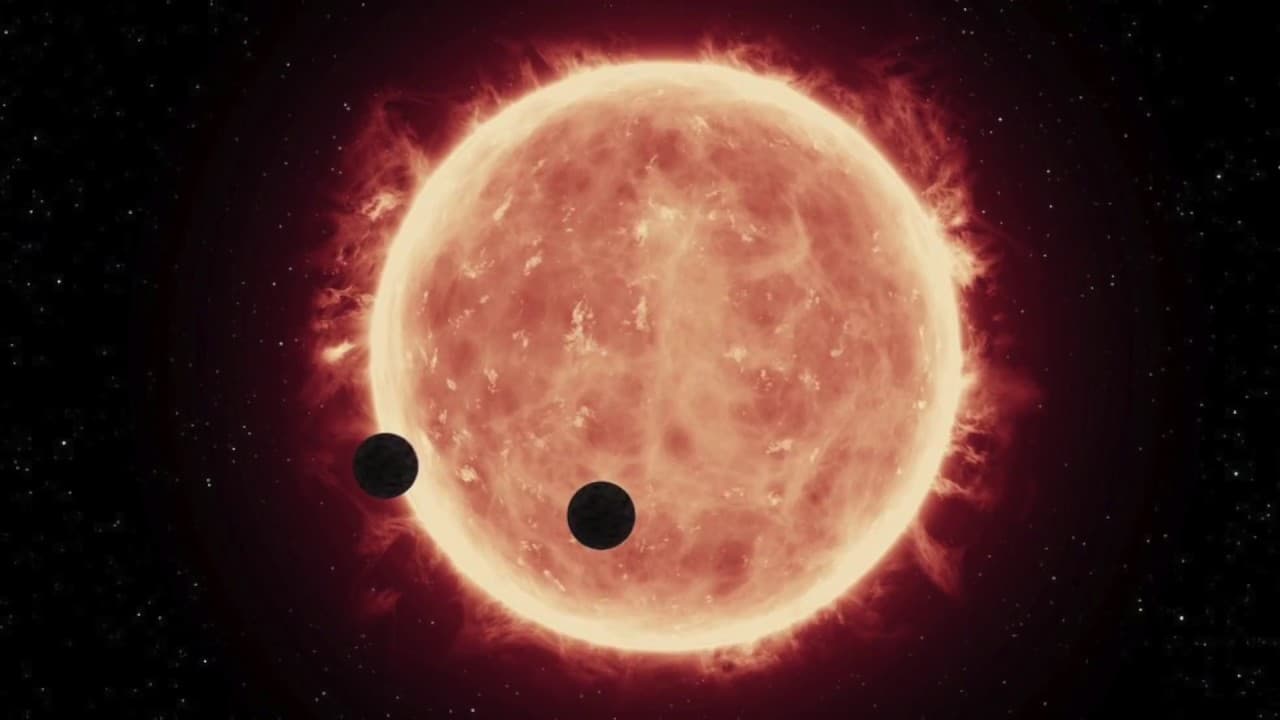
New instrumentation and advancements in technology may soon allow for direct observation of exoplanets and the potential detection of life forms on their surfaces.
Transcript
so far the biggest issue with studying exoplanets in general is that they are usually only indirectly study about astronomers may see the gravitational tug of an exoplanet on its parent star and work out things like the planets mass from that or even atmospheric data can be collected or inferred from methods like observing planetary transits but ov... Read More
Key Insights
- 🙂 Indirect methods, such as analyzing light curves, have been used for studying exoplanets and will be enhanced by the James Webb Space Telescope.
- ✋ Studying the albedo of rocky exoplanets can provide insights into their surface features, although high-resolution images are not currently achievable.
- 🧑💻 Techno signatures, such as photovoltaic systems, could potentially be detected as evidence of civilizations on exoplanets.
- 🪐 The future of exoplanet study may involve gravitational lensing, which could magnify planets behind the Sun and make them easier to study.
- 🛟 Earth plants' unsettling characteristics, such as their ability to reproduce from a distance and regenerate, serve as inspiration and reminders for the search for extraterrestrial life.
Install to Summarize YouTube Videos and Get Transcripts
Explore YouTube Video Summarizer or Get YouTube Transcript Extractor
Questions & Answers
Q: What is the biggest challenge in studying exoplanets?
The biggest issue in studying exoplanets is the difficulty of indirect observation methods. Astronomers usually rely on gravitational tugs or inferred data to gather information about exoplanets.
Q: How can the composition of exoplanet atmospheres help determine habitability?
Life profoundly affects atmospheric composition, and studying gases like oxygen and methane could indicate the presence of life on exoplanets. However, further analysis is needed to confirm the gases' origin.
Q: Is it possible to directly image the surface of exoplanets from a distance?
While detailed imaging is currently not feasible, distant direct imaging can provide insights into exoplanet characteristics such as cloud cover, seasons, and potentially even evidence of plant life through reflective properties.
Q: What are the potential methods for imaging exoplanets?
There are two approaches: direct and indirect imaging. Direct methods involve constructing larger telescopes or sending spacecraft to directly capture images. Indirect methods analyze light curves and variations in the light coming from exoplanets.
Summary & Key Takeaways
-
Direct observation of exoplanets has been challenging, but new instrumentation may change that, allowing for in-depth study and potential discovery of life analogs and civilizations.
-
Studying the composition of exoplanet atmospheres is currently the main way to determine their potential habitability.
-
Other methods, such as imaging the surface of exoplanets, studying atmospheric gases, and detecting techno signatures, could provide additional clues about exoplanet characteristics.
Read in Other Languages (beta)
Share This Summary 📚
Summarize YouTube Videos and Get Video Transcripts with 1-Click
Try YouTube Summary with ChatGPT & Claude or YouTube Transcript Generator
Explore More Summaries from John Michael Godier 📚

Summarize YouTube Videos and Get Video Transcripts with 1-Click
Try YouTube Summary with ChatGPT & Claude or YouTube Transcript Generator