Enceladus and the Conditions for Life
TL;DR
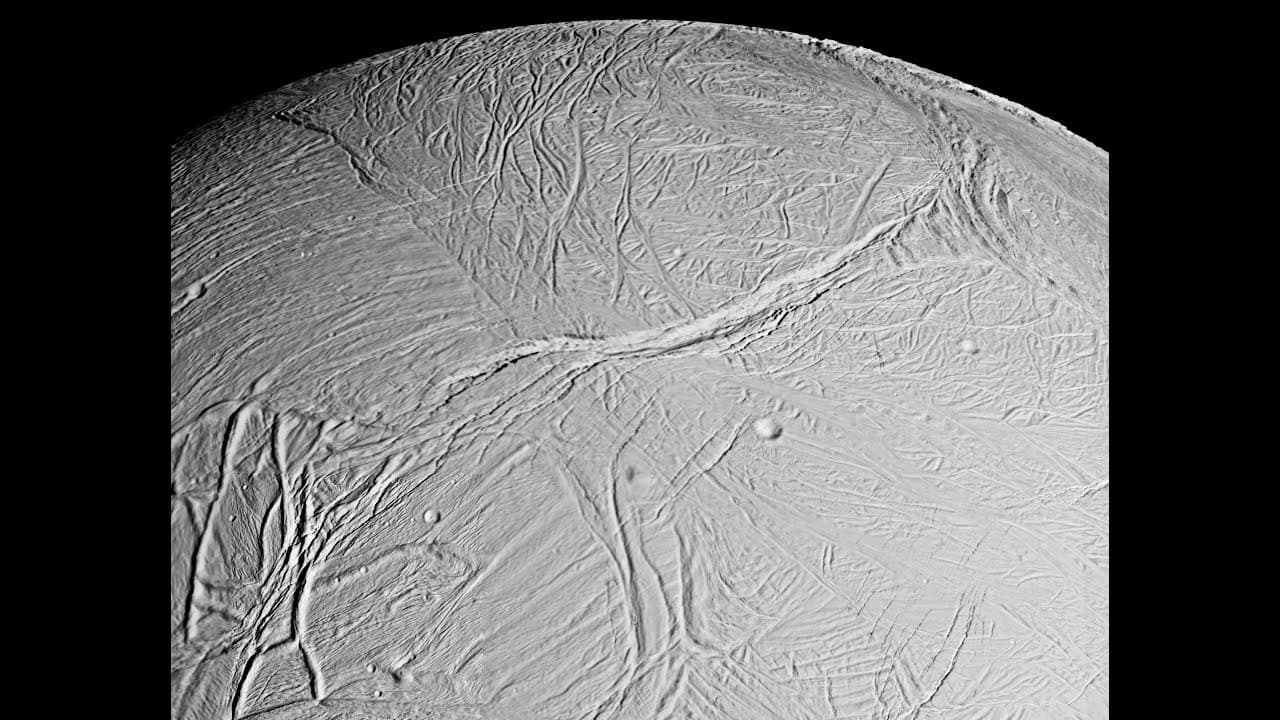
Recent studies suggest that Enceladus, one of Saturn's moons, has the potential to support microbial life due to its habitable waters, active geology, and the presence of organic compounds and chemicals associated with life.
Transcript
Our solar system has no shortage of liquid water. In addition to it hallmarking earth, it’s also thought to potentially exist in multiple other bodies in the solar system locked under ice shells. The most famous examples of this are Europa and Enceladus. Both have periodically been in the news lately because unlike some places, such as proxima B, t... Read More
Key Insights
- 🥮 Enceladus and Europa are two of the most discussed moons in our solar system for their potential to harbor life.
- 🥮 Evidence of active geology, such as volcanic vents, on these moons increases their chances of being habitable.
- 🕵️ Silicates, organics, molecular hydrogen, and methane detected on Enceladus hint at a potentially life-supporting environment.
- 👽 Specific earth microbes, methanogenic archaea, could survive in Enceladus' conditions, suggesting the possibility of similar, yet alien, microorganisms.
- ❓ The presence of methane in Enceladus' plumes could be geologically or biologically produced.
- 🤕 The age of Enceladus is still uncertain, leaving questions about the timeline for life's emergence.
- 🗯️ Rapid organic chemical reactions and the right conditions may promote the rapid emergence of microbial life.
Install to Summarize YouTube Videos and Get Transcripts
Explore YouTube Video Summarizer or Get YouTube Transcript Extractor
Questions & Answers
Q: What makes Enceladus a potential abode for life?
Enceladus has liquid water oceans under its icy shell, active geology with volcanic ocean vents, and the presence of organic compounds and chemicals associated with life.
Q: What evidence supports the idea of microbial life on Enceladus?
Studies have shown that earth microbes known as methanogenic archaea, which produce methane using hydrogen and carbon dioxide, could survive in Enceladus' hydrothermal vent environment.
Q: Could the methane observed in the plumes of Enceladus be produced by microbial life?
While methane can be produced geologically, the presence of methanogenic archaea and their potential to survive in Enceladus' conditions raises the possibility of microbial life contributing to the observed methane.
Q: How long would life have had to arise on Enceladus?
The age of Enceladus is not yet well constrained, but if it is a relatively young body, life would have had to arise rapidly once suitable conditions were present.
Summary & Key Takeaways
-
Enceladus, one of Saturn's moons, is believed to have liquid water under its icy shell, making it a potential abode for life.
-
Recent studies have shown evidence of active geology, such as volcanic ocean vents, on Enceladus, similar to those on Earth which support life.
-
Silicates, organics, molecular hydrogen, and methane have been detected in the plumes of water spraying from Enceladus, suggesting conditions conducive to life.
Read in Other Languages (beta)
Share This Summary 📚
Summarize YouTube Videos and Get Video Transcripts with 1-Click
Try YouTube Summary with ChatGPT & Claude or YouTube Transcript Generator
Explore More Summaries from John Michael Godier 📚

Summarize YouTube Videos and Get Video Transcripts with 1-Click
Try YouTube Summary with ChatGPT & Claude or YouTube Transcript Generator