How To Capture Black Holes
TL;DR
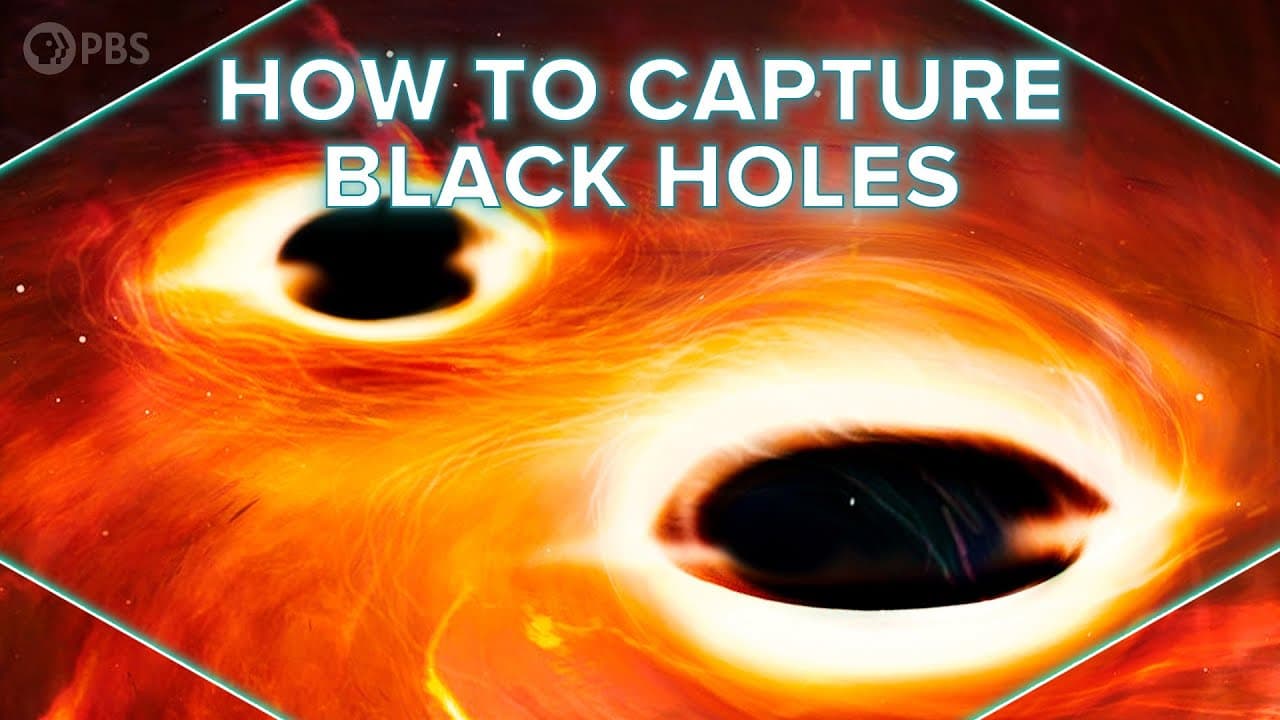
Black holes can merge and grow in quasars, challenging current astrophysical models.
Transcript
Sure black holes are awesome, but how about black holes being captured by the screaming vortex of a quasar, where they merge and grow like some monstrous version of a solar system. This insane hypothesis is getting closer to reality, at least according to the papers in today’s Space Time Journal club. In September 2015 the laser interferometer gra... Read More
Key Insights
- LIGO's detection of gravitational waves from black hole mergers has opened new avenues for astrophysical discoveries, revealing unexpected phenomena.
- Many black holes observed by LIGO are too massive to have formed from stellar core collapse, suggesting alternative formation processes.
- The hypothesis that black hole mergers occur in quasars is supported by recent papers, proposing that accretion disks accelerate mergers.
- Supermassive black holes at galaxy centers may host swarms of smaller black holes, potentially leading to frequent mergers.
- Accretion disks in quasars can facilitate black hole growth and mergers, similar to planet formation in protoplanetary disks.
- Migration traps within accretion disks can capture black holes, leading to increased merger rates and larger black hole masses.
- Direct evidence of these mergers may be visible as bursts of electromagnetic radiation, offering a potential observational test.
- Continued gravitational wave observations and electromagnetic follow-ups could confirm the quasar merger hypothesis.
Install to Summarize YouTube Videos and Get Transcripts
Explore YouTube Video Summarizer or Get YouTube Transcript Extractor
Questions & Answers
Q: What surprising discovery did LIGO make about black hole mergers?
LIGO discovered that many of the merging black holes were too massive to have been formed by the collapse of stellar cores. This surprising finding suggests that our understanding of stellar evolution may be incomplete and that alternative processes, such as mergers within quasars, might be responsible for creating these massive black holes.
Q: How do accretion disks in quasars facilitate black hole mergers?
Accretion disks in quasars can capture black holes and facilitate their mergers by providing a dense, rotating environment that accelerates their orbital decay. The gas in the disk transfers momentum to the black holes, causing them to lose energy and spiral together more quickly than they would in empty space. This process increases the likelihood of mergers and allows black holes to grow in mass.
Q: What role do migration traps play in black hole mergers within quasars?
Migration traps within accretion disks are regions where the local properties of the disk cause objects to stop migrating either inward or outward. Black holes captured by the disk can become trapped in these regions, where they are more likely to encounter other black holes and form binary pairs. This increases the chances of mergers and contributes to the growth of black holes in mass.
Q: What observational evidence could support the hypothesis of black hole mergers in quasars?
Observational evidence for black hole mergers in quasars could come from detecting bursts of electromagnetic radiation, such as ultraviolet light, associated with the mergers. These bursts would result from the interaction of the merged black hole with the surrounding accretion disk, creating shocks and causing gas to fall back into the black hole. Such observations would provide direct evidence supporting the hypothesis.
Q: How do black holes grow in mass within accretion disks?
Within accretion disks, black holes can grow in mass by accreting gas from the disk. As they pass through the disk, they drag gas along with them, which transfers momentum and slows their orbits. This causes the black holes to spiral inward, consuming more gas and increasing their mass. This process allows black holes to grow much faster than they would in less dense environments.
Q: What challenges exist in detecting electromagnetic signatures of black hole mergers?
Detecting electromagnetic signatures of black hole mergers is challenging due to the large area of the sky that gravitational wave observatories like LIGO can localize a source to. This area may contain numerous active galactic nuclei and galaxies, making it difficult to pinpoint the exact source of the merger. Additionally, the electromagnetic bursts are transient and may be faint, requiring coordinated and rapid follow-up observations with multiple telescopes.
Q: How does the hypothesis of black hole mergers in quasars relate to our understanding of stellar evolution?
The hypothesis of black hole mergers in quasars challenges our current understanding of stellar evolution by providing an alternative explanation for the formation of massive black holes. Traditional models suggest that black holes form from the collapse of stellar cores, but the high masses observed in some mergers indicate that other processes, such as mergers within quasars, may play a significant role in black hole formation and growth.
Q: What future observations could help confirm the quasar merger hypothesis?
Future observations that could help confirm the quasar merger hypothesis include continued gravitational wave detections of high-mass black hole mergers and coordinated electromagnetic follow-up observations to identify associated bursts of radiation. Improvements in the localization capabilities of gravitational wave observatories and advancements in telescope technology could enhance our ability to detect and study these events, providing further evidence for the hypothesis.
Summary & Key Takeaways
-
The discovery of gravitational waves by LIGO has revealed unexpected black hole mergers, challenging current models of stellar evolution. Some black holes are too massive to have formed from stellar core collapse, suggesting the possibility of mergers occurring in quasars.
-
Recent studies propose that black holes can merge and grow within the accretion disks of quasars. These disks can capture and accelerate black hole mergers, similar to the process of planet formation in protoplanetary disks.
-
Observational evidence of these mergers could be detected as bursts of electromagnetic radiation. Continued gravitational wave observations and follow-up studies are crucial to testing the hypothesis of black hole mergers in quasars.
Read in Other Languages (beta)
Share This Summary 📚
Summarize YouTube Videos and Get Video Transcripts with 1-Click
Try YouTube Summary with ChatGPT & Claude or YouTube Transcript Generator
Explore More Summaries from PBS Space Time 📚


Summarize YouTube Videos and Get Video Transcripts with 1-Click
Try YouTube Summary with ChatGPT & Claude or YouTube Transcript Generator