100 Years of Relativity + Challenge Winners!
TL;DR
Celebrating relativity's centenary and solving an asteroid challenge.
Transcript
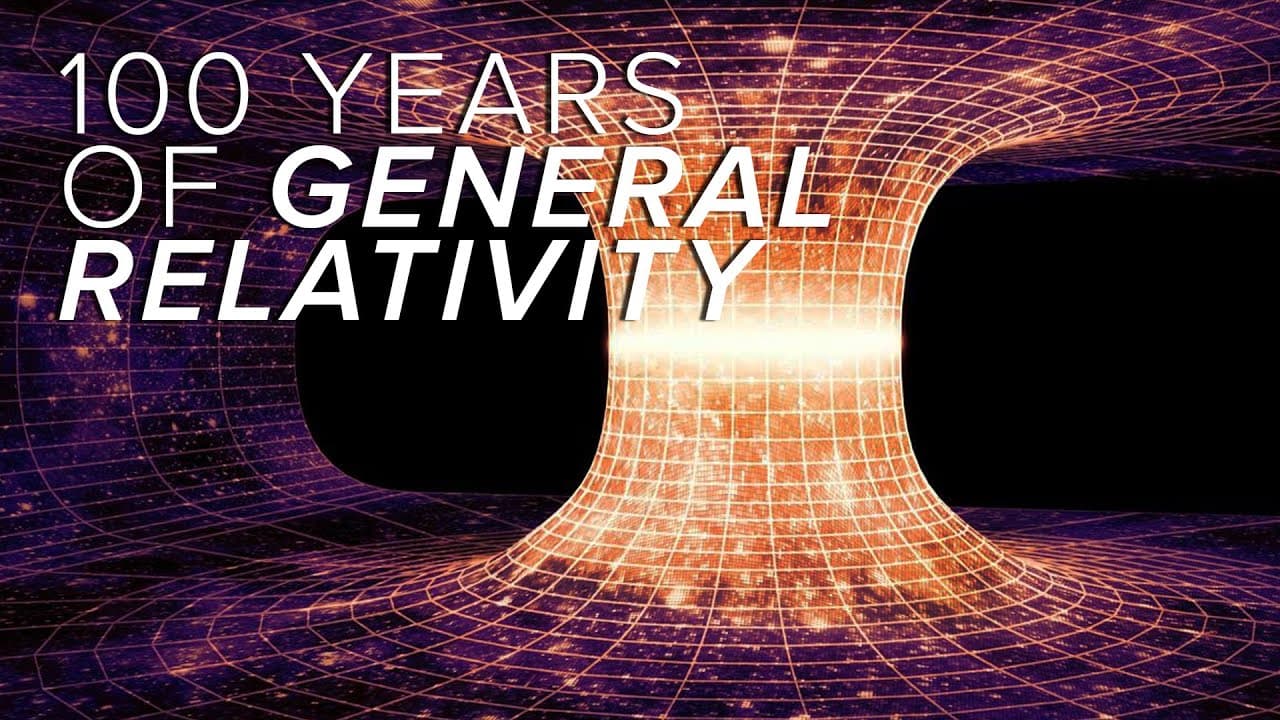
Today we have a solution to our killer asteroid challenge episode, but before we get to that there's something very special about today. [THEME MUSIC] November 25, 2015 is the hundredth birthday of space-time. Not the show, the fabric of the universe. On this day in 1915, Albert Einstein first presented his complete theory of general relativity to ... Read More
Key Insights
- Einstein's general relativity, presented in 1915, revolutionized our understanding of space-time, inspiring generations of physicists and enthusiasts alike.
- The theory's elegance and accuracy continue to captivate, influencing educational content and research in physics and cosmology.
- PBS Space Time celebrates the centenary of general relativity, emphasizing its significance in scientific exploration and education.
- A hypothetical asteroid challenge involved calculating the feasibility of diverting Apophis using a gravitational tractor with a fusion drive.
- The challenge required assessing the mass and fuel needed to alter Apophis's trajectory, demonstrating practical applications of physics principles.
- The gravitational tractor concept leverages Newtonian mechanics to calculate necessary mass and acceleration for asteroid deflection.
- Solutions involved calculating fuel mass using the rocket equation, highlighting the importance of exhaust velocity and fuel efficiency.
- Future episodes promise to delve into black holes and the nature of matter and time, continuing the exploration of cosmic phenomena.
Install to Summarize YouTube Videos and Get Transcripts
Explore YouTube Video Summarizer or Get YouTube Transcript Extractor
Questions & Answers
Q: What is the significance of November 25, 2015, in the context of the video?
November 25, 2015, marks the 100th anniversary of Albert Einstein presenting his complete theory of general relativity to the Prussian Academy of Sciences in Berlin. This theory fundamentally changed our understanding of space-time, influencing generations of physicists and inspiring educational content like PBS Space Time.
Q: What was the asteroid challenge mentioned in the video?
The asteroid challenge involved a hypothetical scenario where the asteroid Apophis would pass by Earth in 2029 and potentially hit it in 2036. Participants were tasked with determining the feasibility of using a gravitational tractor to alter Apophis's trajectory, requiring calculations of mass and fuel for the spacecraft.
Q: How does the gravitational tractor concept work in the asteroid challenge?
The gravitational tractor concept involves using the gravitational attraction between a spacecraft and an asteroid to alter the asteroid's trajectory. In the challenge, the spacecraft would intercept Apophis in 2029 and pull it 25,000 kilometers off its course using the gravitational force, calculated through Newtonian mechanics.
Q: What calculations were necessary to solve the asteroid challenge?
Solving the asteroid challenge required calculating the average mass of the spacecraft and fuel over seven years to achieve the necessary acceleration. The rocket equation was used to determine the fuel mass needed, considering the exhaust velocity and the ratio of fueled to unfueled spacecraft mass.
Q: How does the rocket equation apply to the asteroid challenge?
The rocket equation relates the total change in velocity (delta v) to the exhaust velocity of the fuel and the ratio of fueled to unfueled spacecraft mass. In the challenge, it was used to calculate the fuel mass needed to achieve the desired velocity change for deflecting Apophis.
Q: What are the implications of the asteroid challenge solution?
The solution to the asteroid challenge demonstrates the practical application of physics principles in addressing potential cosmic threats. It shows that, with the right technology and calculations, it is feasible to alter the trajectory of an asteroid like Apophis, preventing a catastrophic impact on Earth.
Q: What future topics does PBS Space Time plan to explore?
PBS Space Time plans to delve deeper into the mysteries of black holes and explore the nature of matter and time in future episodes. These topics continue the series' tradition of engaging scientific exploration, aiming to educate and inspire viewers about cosmic phenomena.
Q: Who were the winners of the asteroid challenge, and what did they receive?
The winners of the asteroid challenge were Baptiste Loreau, Florian Jungbluth, Patrick Hanrahan, Andrés Daniel Wiegold Segalés, and Degen Peter. They were randomly selected from those who successfully answered the challenge question and received PBS Digital Studios t-shirts as prizes.
Summary & Key Takeaways
-
PBS Space Time celebrates the 100th anniversary of Einstein's general relativity, highlighting its profound impact on our understanding of the universe. The episode also addresses a challenge regarding asteroid Apophis, exploring the feasibility of using a gravitational tractor to alter its course.
-
The hypothetical challenge involved calculating the mass and fuel requirements to deflect Apophis, using Newtonian mechanics and the rocket equation. The solution demonstrated the practical application of physics principles in addressing potential cosmic threats.
-
The episode announced winners of the challenge, who received PBS Digital Studios t-shirts. Future episodes will explore the mysteries of black holes and the nature of matter and time, continuing the series' tradition of engaging scientific exploration.
Read in Other Languages (beta)
Share This Summary 📚
Summarize YouTube Videos and Get Video Transcripts with 1-Click
Try YouTube Summary with ChatGPT & Claude or YouTube Transcript Generator
Explore More Summaries from PBS Space Time 📚
Summarize YouTube Videos and Get Video Transcripts with 1-Click
Try YouTube Summary with ChatGPT & Claude or YouTube Transcript Generator