Types of Energy - Basic Introduction
TL;DR
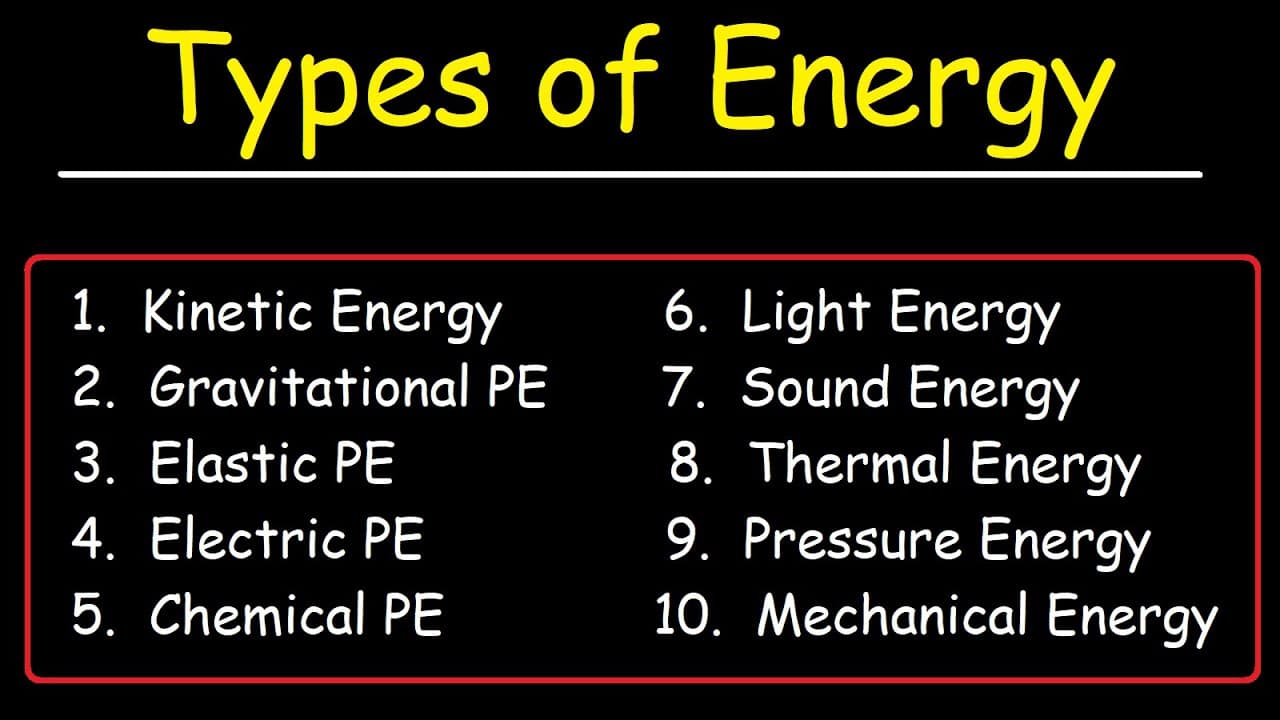
This content explains the different types of energy, including kinetic, potential, elastic, chemical, thermal, wind, sound, and light energy.
Transcript
let's talk about energy specifically the different kinds of energy that are out there the first one that we're going to talk about is kinetic energy any object that is moving has kinetic energy so for instance let's say if we have a block that is sliding across a horizontal surface if that block has some kind of speed attached to it it has kinetic ... Read More
Key Insights
- 💆 Kinetic energy is directly proportional to an object's mass and the square of its speed.
- 😣 Potential energy is stored energy in objects at rest, determined by their position.
- 💁 Different forms of potential energy include elastic, chemical, and gravitational potential energy.
- 🫢 Thermal energy is related to the vibrational energy in solids and the kinetic energy in gases.
- 🙂 Wind, sound, and light energy can all be harnessed and converted into other forms of energy.
- 🦾 Mechanical energy is the sum of kinetic and potential energy.
- 🙂 Waves, such as sound and light, can transfer energy.
Install to Summarize YouTube Videos and Get Transcripts
Explore YouTube Video Summarizer or Get YouTube Transcript Extractor
Questions & Answers
Q: What is kinetic energy and how is it related to the speed and mass of an object?
Kinetic energy is the energy of a moving object. It is directly proportional to the object's mass and the square of its speed. A heavier object or one with greater speed will have a higher kinetic energy.
Q: What is potential energy and how is it related to the position of an object?
Potential energy is stored energy in objects at rest. It is determined by the object's position relative to other objects. An object at a higher position will have more potential energy than an object at a lower position.
Q: How is electric potential energy similar to gravitational potential energy?
Electric potential energy, like gravitational potential energy, is determined by the relative positions of charged particles. Moving a charged particle opposite to the electric force or away from a positively charged plate increases its potential energy.
Q: What is the relationship between temperature and thermal energy in solids and gases?
In solids, thermal energy is related to the vibrational energy of molecules, while in gases, it is related to the kinetic energy of particles. Increasing temperature increases both the vibrational energy in solids and the speed of gas particles, leading to higher thermal energy.
Summary & Key Takeaways
-
Kinetic energy is the energy of a moving object, while potential energy is the stored energy in objects at rest, such as objects at a higher position.
-
Elastic potential energy is associated with compressed or stretched springs, while chemical potential energy is stored in batteries and food.
-
Thermal energy is the vibrational energy of molecules in solids and the kinetic energy of particles in gases, while wind energy is derived from the force of wind.
-
Sound energy is a pressure wave that transfers energy, and light energy is an electromagnetic wave that can be converted into electricity or chemical potential energy.
Read in Other Languages (beta)
Share This Summary 📚
Summarize YouTube Videos and Get Video Transcripts with 1-Click
Try YouTube Summary with ChatGPT & Claude or YouTube Transcript Generator
Explore More Summaries from The Organic Chemistry Tutor 📚


Summarize YouTube Videos and Get Video Transcripts with 1-Click
Try YouTube Summary with ChatGPT & Claude or YouTube Transcript Generator