Training Your Dog to LISTEN: The Fundamentals of Basic Obedience

TL;DR
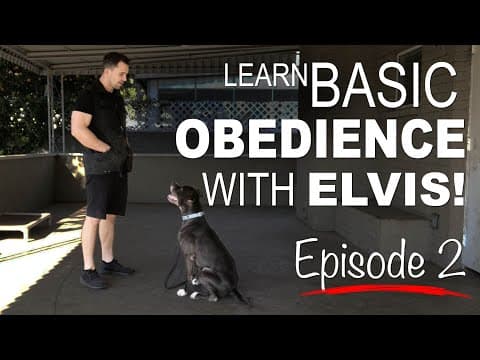
This video covers fundamental dog training techniques using engagement and consistent commands.
Transcript
the very first thing we're going to do this is known as engagement training there's a couple things that we're going to be focusing on in this step number one teaching her that there are certain sounds that mean she's going to get a reward you've probably seen this before people using a clicker often people really don't know what the clicker is and... Read More
Key Insights
- Engagement training is crucial for teaching dogs to focus and respond to commands, using consistent sounds or clickers as markers.
- The importance of consistency in sound markers ensures dogs understand and associate specific sounds with rewards.
- Conditioned reinforcers, like clickers or voice markers, help pinpoint correct behaviors, reinforcing the desired actions in dogs.
- Engagement training involves rewarding dogs for paying attention, which accelerates their learning process.
- Using a dog's name differs from a marker; the name grabs attention, while a marker signifies correct behavior deserving a reward.
- Markers like 'yes' and 'free' are used to communicate correct behaviors, with 'yes' indicating a reward and 'free' indicating release and reward.
- Classical conditioning involves using sounds to predict rewards, as demonstrated by Pavlov's experiments, ensuring dogs associate sounds with positive outcomes.
- Leash pressure training helps dogs learn to follow cues, using light pressure to guide them into desired positions, reinforcing correct responses.
Install to Summarize YouTube Videos and Get Transcripts
Explore YouTube Video Summarizer or Get YouTube Transcript Extractor
Questions & Answers
Q: What is engagement training in dog training?
Engagement training involves teaching dogs to focus and respond to specific cues or markers, ensuring they learn to associate certain sounds with rewards. This method accelerates the learning process by rewarding dogs for paying attention, making training sessions more effective and efficient.
Q: How does classical conditioning apply to dog training?
Classical conditioning in dog training involves using specific sounds to predict rewards, helping dogs associate these sounds with positive outcomes. This method, demonstrated by Pavlov's experiments, ensures that dogs understand the connection between the sound and the reward, reinforcing desired behaviors over time.
Q: What is the difference between using a dog's name and a marker?
Using a dog's name serves to grab the dog's attention, while a marker is a specific sound or word that signifies correct behavior deserving a reward. Markers are consistent and help pinpoint the exact moment a dog performs the desired action, reinforcing that behavior.
Q: Why is consistency important in using sound markers?
Consistency in using sound markers is crucial because it ensures dogs understand and associate specific sounds with rewards. Inconsistent sounds can confuse dogs, making it difficult for them to learn and respond correctly to commands, ultimately hindering the training process.
Q: What role does leash pressure play in dog training?
Leash pressure training helps dogs learn to follow cues by applying light pressure to guide them into desired positions. This method teaches dogs to respond to physical cues, reinforcing correct responses and making it easier for them to understand and follow commands during training sessions.
Q: How can you ensure a dog understands a command before adding verbal cues?
Before adding verbal cues, ensure a dog understands the physical cues by consistently using sound markers and rewards. Practice engagement training and leash pressure techniques to reinforce desired behaviors. Once the dog consistently responds to these cues, gradually introduce verbal commands to enhance understanding.
Q: What is the significance of the 'yes' and 'free' markers?
The 'yes' marker indicates a correct behavior deserving a reward, while the 'free' marker signifies both a release from a command and a reward. These markers help communicate to the dog what behavior is correct and when they can expect a reward, reinforcing training outcomes effectively.
Q: How does filming training sessions help improve training techniques?
Filming training sessions allows trainers to review their techniques and identify any mistakes they might not notice in real-time. By analyzing the footage, trainers can adjust their methods, ensuring consistency and accuracy in applying cues and rewards, ultimately improving the effectiveness of the training process.
Summary & Key Takeaways
-
The video covers engagement training, emphasizing consistency in using sound markers to reinforce correct dog behaviors. The trainer explains the difference between using a dog's name and a marker, highlighting the importance of predictability in training.
-
The trainer demonstrates classical conditioning techniques, using sounds to predict rewards, and explains how these methods help dogs associate specific sounds with positive outcomes. The video also covers leash pressure training to guide dogs into desired positions.
-
Viewers are encouraged to practice engagement training and leash pressure techniques, focusing on consistency and timing. The video concludes with guidance on gradually introducing commands and ensuring dogs understand physical cues before adding verbal commands.
Read in Other Languages (beta)
Share This Summary 📚
Summarize YouTube Videos and Get Video Transcripts with 1-Click
Try YouTube Summary with ChatGPT & Claude or YouTube Transcript Generator
Explore More Summaries from Nate Schoemer 📚




Summarize YouTube Videos and Get Video Transcripts with 1-Click
Try YouTube Summary with ChatGPT & Claude or YouTube Transcript Generator