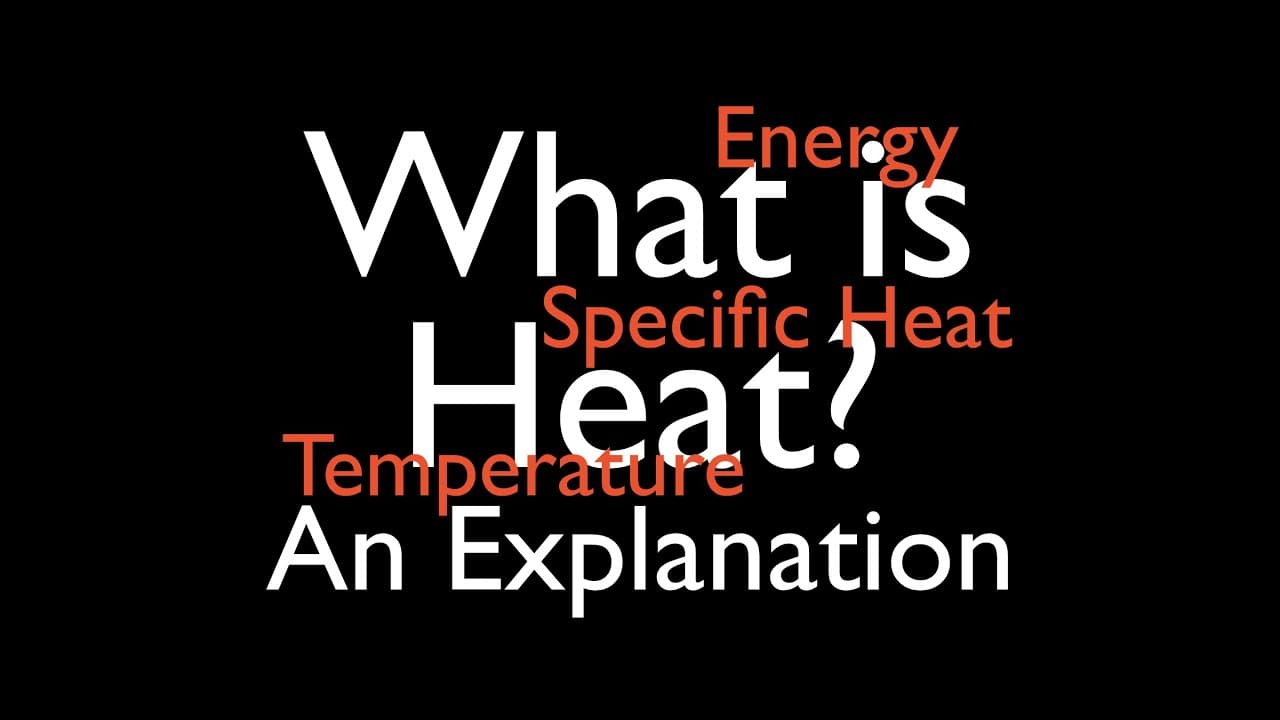
What is Heat? An Explanation
TL;DR
Heat is the transfer of energy from high to low temperature, explained through specific heat and temperature differences.
Transcript
so for today's video we're going to be talking about what is heat and we have a very specific physics definition for heat so we're gonna use the word correctly because in common everyday language heat is used in very different for different situations but for physics we have to be very careful how we use it and of course when you're talking about e... Read More
Key Insights
- 💐 Heat in physics is defined as the transfer of energy from high to low temperature areas, crucial for understanding energy flow.
- 🥵 Specific heat measures the amount of heat required to raise the temperature of a substance by one degree Celsius, varying for different materials.
- 🥵 The mechanical equivalent of heat, determined by Joule, demonstrates the conversion of mechanical work into heat energy.
- 🥵 Specific heat calculations involve mass, specific heat capacity, and temperature changes to determine energy transfer.
- ⏳ Heat flow occurs due to differences in temperature between objects, driving the transfer of energy from high-temperature objects to low-temperature ones.
- 🥵 Delta Q symbolizes changes in heat transfer, quantified in joules for energy calculations.
- 🥵 Heat units are typically measured in joules or calories, with a small calorie being the heat required to raise the temperature of one gram of water by one degree Celsius.
Install to Summarize YouTube Videos and Get Transcripts
Explore YouTube Video Summarizer or Get YouTube Transcript Extractor
Questions & Answers
Q: What is heat in physics?
Heat in physics refers to the transfer of energy from areas of high temperature to low temperature, essential for understanding temperature differences and specific heat capacities.
Q: How does heat transfer occur between objects?
Heat transfer occurs when there are differences in temperature between objects, prompting energy flow from high-temperature objects to lower-temperature ones.
Q: What is specific heat, and why is it significant?
Specific heat is the amount of heat required to raise the temperature of a substance by one degree Celsius, allowing calculations for energy changes based on mass and temperature.
Q: How does heat relate to the mechanical equivalent of heat?
The mechanical equivalent of heat is defined by James Prescott Joule, showcasing the energy transfer from mechanical systems to heat energy, quantified through joules.
Summary & Key Takeaways
-
Heat in physics is the flow of energy from high temperature to low temperature areas, facilitated by differences in temperature between objects.
-
Specific heat is the amount of heat needed to raise the temperature of a substance by one degree Celsius.
-
Heat transfer is crucial in changing object temperatures and is measured in joules.
Read in Other Languages (beta)
Share This Summary 📚
Summarize YouTube Videos and Get Video Transcripts with 1-Click
Try YouTube Summary with ChatGPT & Claude or YouTube Transcript Generator
Explore More Summaries from Step by Step Science 📚

Summarize YouTube Videos and Get Video Transcripts with 1-Click
Try YouTube Summary with ChatGPT & Claude or YouTube Transcript Generator