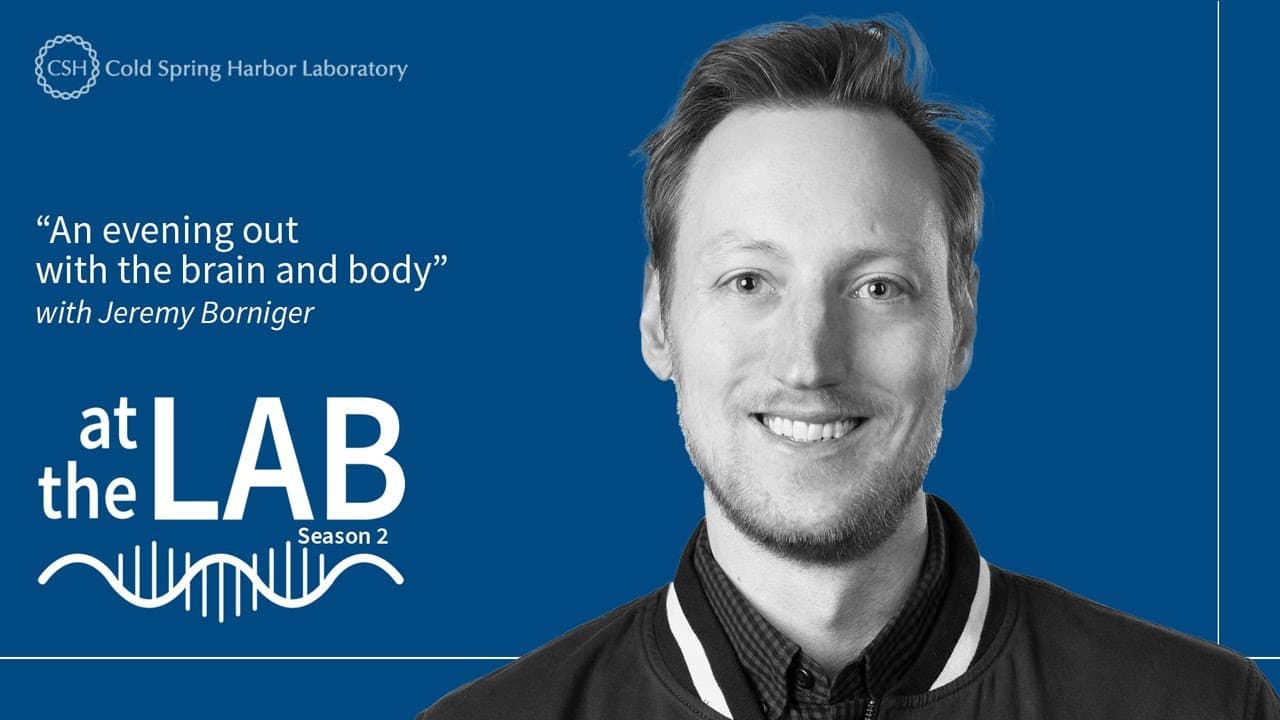
At the Lab: An evening out with the brain and body
TL;DR
Exploring brain-body communication through sensory and central sensing.
Transcript
[music] You’re now At the Lab with Cold Spring Harbor Laboratory. My name is Lorna Sheppard, and this week At the Lab, “An evening out with the brain and body.” [Gasp] Ever wake up from a deep sleep, gasping for breath? Maybe it was a bad dream. Maybe you simply needed to reposition for better oxygen intake. But how did your brain know when to wa... Read More
Key Insights
- The event, Cocktails & Chromosomes, focused on the intricate communication between the brain and body, emphasizing the significance of this connection in daily functions.
- The hypothalamus plays a crucial role in bidirectional communication, integrating body information and sending signals to regulate actions.
- Sensory receptors in the body provide the brain with information on external stimuli, such as spiciness and temperature, influencing immediate reactions.
- Central sensing allows the brain to detect hormones and nutrients in the bloodstream, regulating internal processes like hunger and metabolism.
- The brain's ability to sense both external and internal signals ensures it can make informed decisions on actions, like waking up or moving away from danger.
- The discussion highlighted the brain's sensitivity and its capability to operate independently of the body's nerve signals.
- Neural signals accumulate based on the intensity of inputs, prompting actions like pulling away from heat or adjusting sleep positions.
- The event aimed to make complex neuroscience topics accessible and engaging through sound effects and relatable scenarios.
Install to Summarize YouTube Videos and Get Transcripts
Explore YouTube Video Summarizer or Get YouTube Transcript Extractor
Questions & Answers
Q: What is the main focus of the Cocktails & Chromosomes event?
The main focus of the Cocktails & Chromosomes event is the exploration of the communication between the brain and body. It emphasizes the bidirectional nature of this communication, highlighting how the brain integrates sensory and central signals to regulate various bodily functions and actions.
Q: How does the hypothalamus contribute to brain-body communication?
The hypothalamus is a key brain region involved in brain-body communication. It integrates information from the body and sends signals to regulate actions. This process ensures that the body responds appropriately to various stimuli, maintaining homeostasis and coordinating functions like hunger, metabolism, and body temperature.
Q: What is central sensing, and why is it important?
Central sensing is the brain's ability to detect signals like hormones and nutrients circulating in the bloodstream. This capability is important because it allows the brain to regulate internal processes independently of sensory input from nerves, ensuring that the body maintains balance and responds effectively to internal changes.
Q: How do sensory receptors aid in brain-body communication?
Sensory receptors in the body provide the brain with information about external stimuli, such as temperature and spiciness. These receptors help the brain interpret the environment and prompt immediate reactions, like pulling away from a hot surface, ensuring safety and appropriate responses to external conditions.
Q: What role do neural signals play in determining actions?
Neural signals accumulate based on the intensity of sensory and central inputs. When these signals reach a certain threshold, they cue actions such as moving away from danger or adjusting one's position during sleep. This process ensures that the brain can make informed decisions about necessary actions based on the information received.
Q: How does the event make neuroscience engaging for the audience?
The event makes neuroscience engaging by using sound effects and relatable examples to illustrate complex topics. This approach helps demystify the intricate processes of brain-body communication, making the information accessible and entertaining, thereby enhancing audience understanding and interest in neuroscience.
Q: Why is the brain described as sensitive in the discussion?
The brain is described as sensitive because it can detect and process a wide range of signals, both from external sensory receptors and internal central sensing. This sensitivity allows the brain to respond quickly and effectively to changes in the environment and internal conditions, ensuring the body's proper functioning.
Q: What is the significance of the brain's independent sensing capability?
The brain's independent sensing capability is significant because it allows the brain to regulate internal processes without relying solely on sensory input from the body's nerves. This ability ensures that the brain can maintain homeostasis and respond to changes in hormone levels and nutrient availability, crucial for overall health and well-being.
Summary & Key Takeaways
-
The Cocktails & Chromosomes event explored the complex communication between the brain and body, focusing on the role of the hypothalamus in integrating and responding to sensory and central signals.
-
Central sensing allows the brain to detect blood-borne signals like hormones, aiding in the regulation of metabolism and body temperature, showcasing the brain's independent sensing capability.
-
The event's discussion made neuroscience engaging by using sound effects and relatable examples, illustrating the brain's ability to decide actions based on accumulated neural signals.
Read in Other Languages (beta)
Share This Summary 📚
Summarize YouTube Videos and Get Video Transcripts with 1-Click
Try YouTube Summary with ChatGPT & Claude or YouTube Transcript Generator
Explore More Summaries from Cold Spring Harbor Laboratory 📚




Summarize YouTube Videos and Get Video Transcripts with 1-Click
Try YouTube Summary with ChatGPT & Claude or YouTube Transcript Generator