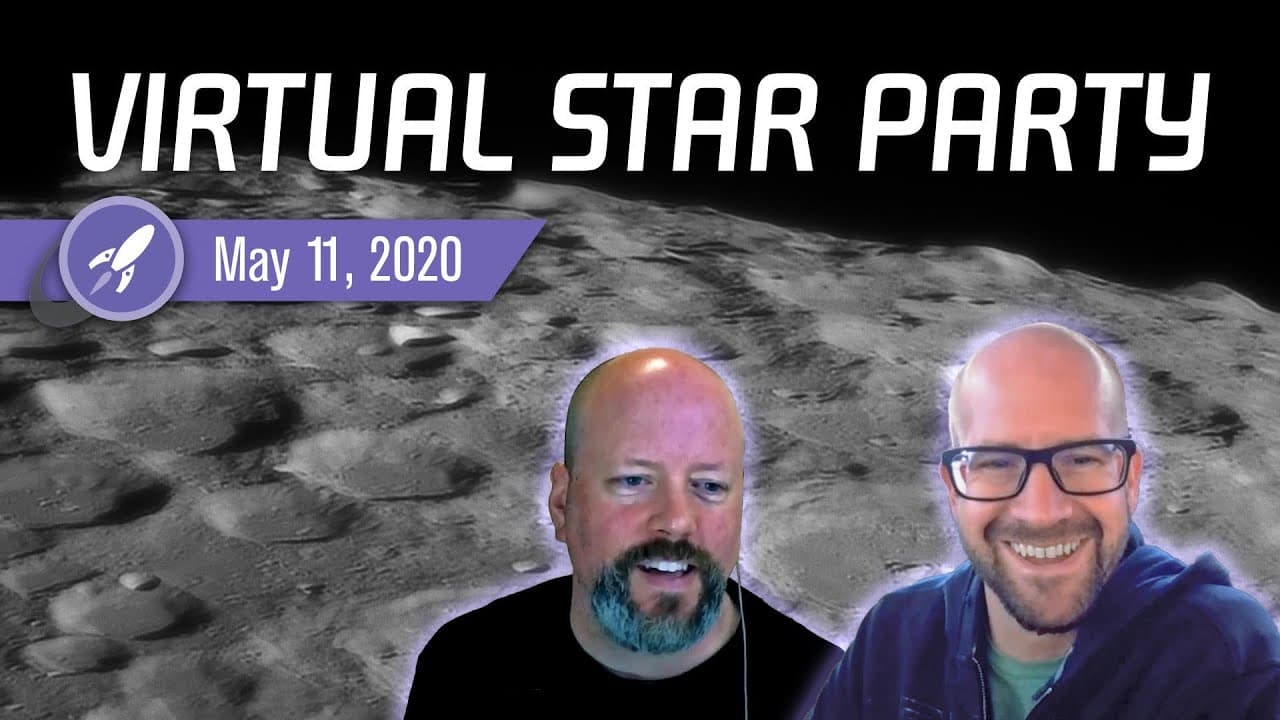
VSP1: The Return of the Virtual Star Party!
TL;DR
Astronomers host live observations of Jupiter, Saturn, and a comet with discussions on telescope technology.
Transcript
been thinking of either having just a camera aiming at my phone screen while it's doing its thing or yeah the trick the trick would be is when you're using your phone with it you have to use your Wi-Fi and then you can't do anything cuts off on connection so you're just Wi-Fi to the scope just to warn you guys we're live so just so you're okay so n... Read More
Key Insights
- 🤩 The virtual star party featured live observations of Jupiter, Saturn, and a comet with discussions on telescope technology and image processing.
- 🥃 Astronomers used different telescopes for planetary imaging and deep sky observation, showcasing the versatility of each instrument.
- ⛈️ Challenges such as cloud cover, wind speed, and light pollution impacted the quality of observations but did not hinder the excitement of the event.
Install to Summarize YouTube Videos and Get Transcripts
Explore YouTube Video Summarizer or Get YouTube Transcript Extractor
Questions & Answers
Q: What telescopes were used in the virtual star party?
The telescopes used were an 11-inch Raza and a 12-inch Ritchey telescope, providing views of Jupiter, Saturn, and a comet.
Q: How is planet imaging different from deep sky imaging?
Planetary imaging involves using monochrome cameras for short exposures, while deep sky imaging requires stacking multiple exposures over longer periods.
Q: Why is it challenging to capture comets through a telescope?
Comets require short exposures due to their motion against the stars, making it necessary to stack multiple frames to reveal their details.
Q: How do astronomers monitor celestial events like supernovae during live observations?
Astronomers upload images to online libraries for monitoring by planetary scientists to spot events like supernovae or impacts on planets.
Summary & Key Takeaways
-
Astronomers hosted a virtual star party showcasing live observations of Jupiter and Saturn from California and South Africa.
-
Telescopes used included an 11-inch Raza for deep sky work and a 12-inch Ritchey telescope for planetary imaging.
-
Guests discussed telescope technology, image stacking, and challenges of capturing celestial objects.
Read in Other Languages (beta)
Share This Summary 📚
Summarize YouTube Videos and Get Video Transcripts with 1-Click
Try YouTube Summary with ChatGPT & Claude or YouTube Transcript Generator
Explore More Summaries from Fraser Cain 📚




Summarize YouTube Videos and Get Video Transcripts with 1-Click
Try YouTube Summary with ChatGPT & Claude or YouTube Transcript Generator