How To Find The Range of a Function
TL;DR
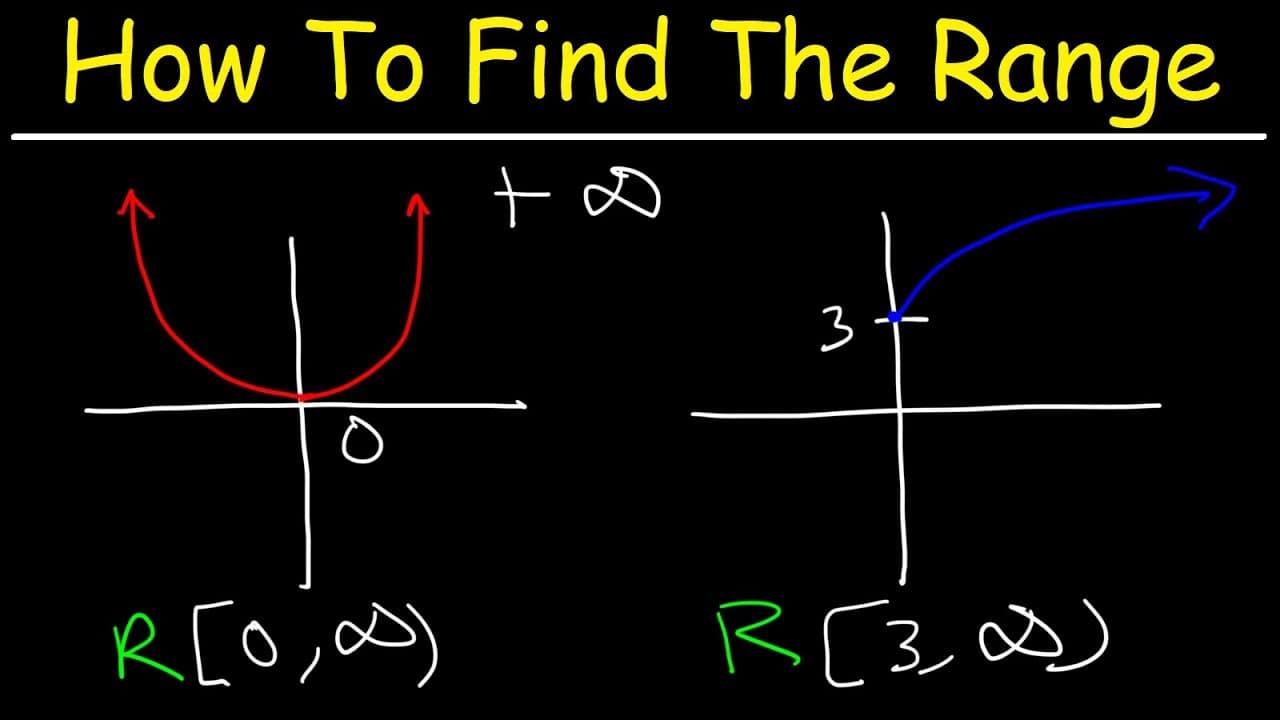
Understanding how to find the range of different functions based on their graphs and leading terms.
Transcript
in this video we're going to talk about how to find a range of a function so let's start with a linear function y equals x plus 3. the first thing that i would recommend doing is graphing a function so basically this graph is a straight-line graph but shifted up three units so the y-intercept is at three so this is a rough sketch of the graph let's... Read More
Key Insights
- ♾️ Linear functions have a range of negative infinity to infinity.
- 🥺 Quadratic functions with positive leading terms have a range from zero to infinity.
- ❎ Quadratic functions with negative leading terms have a range from negative infinity to a certain value.
- 🧡 Absolute value functions have a range that varies based on shifts and signs.
- 🧡 Radical functions have different ranges depending on shifts and signs.
- 🧡 Understanding how to graph functions helps in determining their range.
- ♾️ Continuous functions have a range from negative infinity to positive infinity.
Install to Summarize YouTube Videos and Get Transcripts
Explore YouTube Video Summarizer or Get YouTube Transcript Extractor
Questions & Answers
Q: How do you find the range of a linear function?
To find the range of a linear function, look at the y-values on the graph. The range will be from negative infinity to positive infinity.
Q: How does the range of a quadratic function with a positive leading term differ from one with a negative leading term?
A quadratic function with a positive leading term has a range from zero to infinity, while a quadratic function with a negative leading term has a range from negative infinity to a certain value.
Q: How does the range of an absolute value function change with shifts and signs?
The range of an absolute value function depends on shifts and signs. A positive outside the absolute value function opens the graph upward, while a negative opens it downward. Shifts can change the lowest and highest y-values.
Q: How do you determine the range of a radical function?
To find the range of a radical function, analyze the shifts and signs. Positive inside and positive outside open the graph upward, while negative inside and positive outside open it downward. The lowest and highest y-values vary based on the shifts.
Summary & Key Takeaways
-
Linear functions have a range of negative infinity to infinity, while quadratic functions with positive leading terms have a range from zero to infinity.
-
Quadratic functions with negative leading terms have a range from negative infinity to a certain value, and absolute value functions can have a range that varies depending on the shifts and signs.
-
Radical functions can have different ranges based on the shifts and signs.
Read in Other Languages (beta)
Share This Summary 📚
Summarize YouTube Videos and Get Video Transcripts with 1-Click
Try YouTube Summary with ChatGPT & Claude or YouTube Transcript Generator
Explore More Summaries from The Organic Chemistry Tutor 📚



Summarize YouTube Videos and Get Video Transcripts with 1-Click
Try YouTube Summary with ChatGPT & Claude or YouTube Transcript Generator