How to Create a Sinking Fund for Irregular Expenses
TL;DR
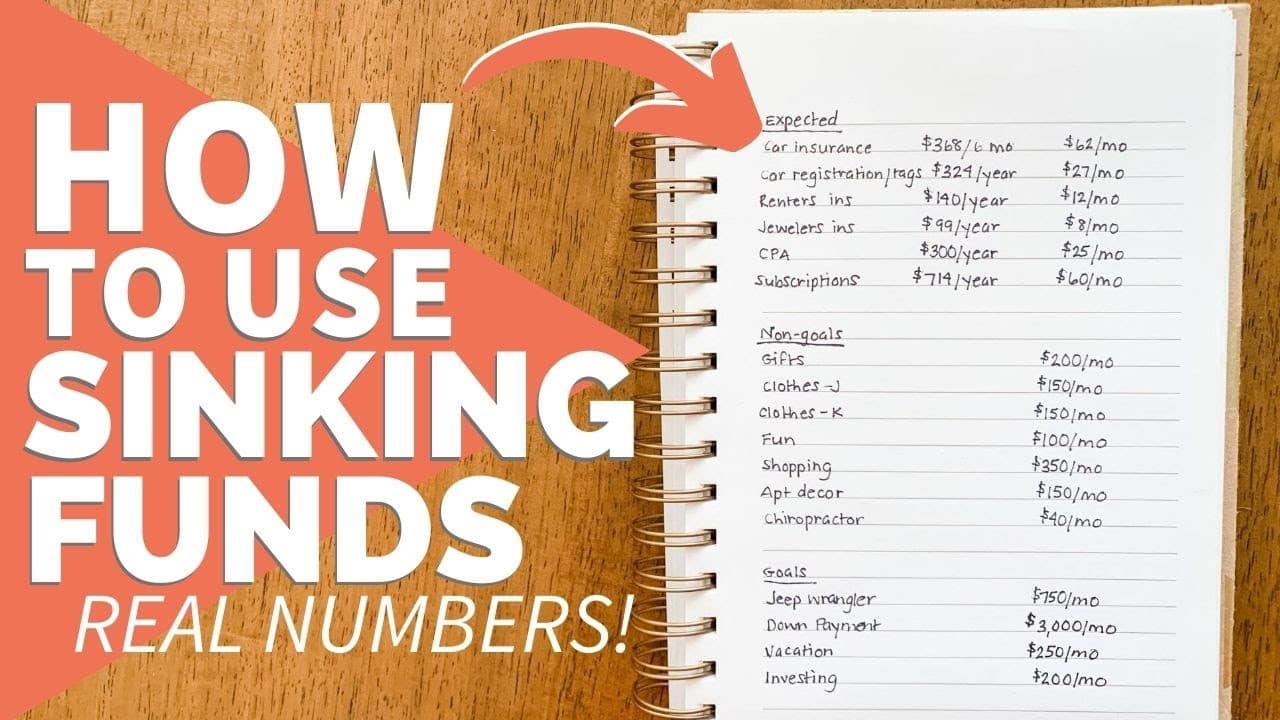
To set up a sinking fund, categorize your savings into three types: expected expenses (like insurance and subscriptions), non-goals (like gifts and clothing), and goals (such as a car down payment). Save a specific amount monthly for each category in a separate account to ensure you have the funds ready when needed, promoting better financial planning and stability.
Transcript
hey guys we're going to go ahead and jump right in to sinking funds and i'm going to be walking through a tutorial with you on the real sinking funds that me and my husband kyle have for our various goals and kind of expected expenses so what is a sinking fund basically a sinking fund is for purchases that you don't make regularly so you'll save mo... Read More
Key Insights
- 🆘 Sinking funds help in budgeting for irregular expenses, avoiding financial strain.
- 🥅 Categorizing sinking funds into expected expenses, non-goals, and goals aids in effective financial planning.
- 🤑 Earmarking money monthly for sinking funds but not spending until required ensures financial stability.
- 💾 Saving in a separate account like Ally or Capital One 360 helps in segregating funds for specific purposes.
- ⚾ Adjusting sinking fund amounts based on changing needs or goals is essential for successful financial management.
- ❓ Sinking funds are a proactive approach to financial planning, enabling smooth expense management.
- 😫 Managing sinking funds requires discipline and consistency in setting aside funds for future expenses.
Install to Summarize YouTube Videos and Get Transcripts
Explore YouTube Video Summarizer or Get YouTube Transcript Extractor
Questions & Answers
Q: What is the purpose of sinking funds?
Sinking funds are designed to save money monthly for irregular expenses to avoid financial strain when the expenses arise, ensuring you have the necessary funds set aside.
Q: How are sinking funds categorized?
Sinking funds are typically categorized into expected expenses (like insurance and subscriptions), non-goals (such as gifts and clothes), and goals (like saving for a car or a down payment).
Q: How can sinking funds be managed effectively?
Sinking funds should be budgeted monthly, setting aside specific amounts for each category and saving in a separate account to prevent spending the earmarked money on other expenses.
Q: Why is setting up sinking funds important for financial planning?
Sinking funds help in managing finances efficiently by preparing for irregular expenses, preventing financial stress, and ensuring funds are available when needed.
Summary & Key Takeaways
-
Sinking funds are for irregular purchases, saving monthly to cover expenses when due, rather than scrambling for funds last minute.
-
Three categories for sinking funds: expected expenses (insurance, subscription, etc.), non-goals (gifts, clothes, fun), and goals (saving for a car, down payment, vacation).
-
Money is earmarked monthly but not spent until needed, saved in a separate account to avoid accidental spending.
Read in Other Languages (beta)
Share This Summary 📚
Summarize YouTube Videos and Get Video Transcripts with 1-Click
Try YouTube Summary with ChatGPT & Claude or YouTube Transcript Generator
Explore More Summaries from Debt Free Millennials 📚




Summarize YouTube Videos and Get Video Transcripts with 1-Click
Try YouTube Summary with ChatGPT & Claude or YouTube Transcript Generator