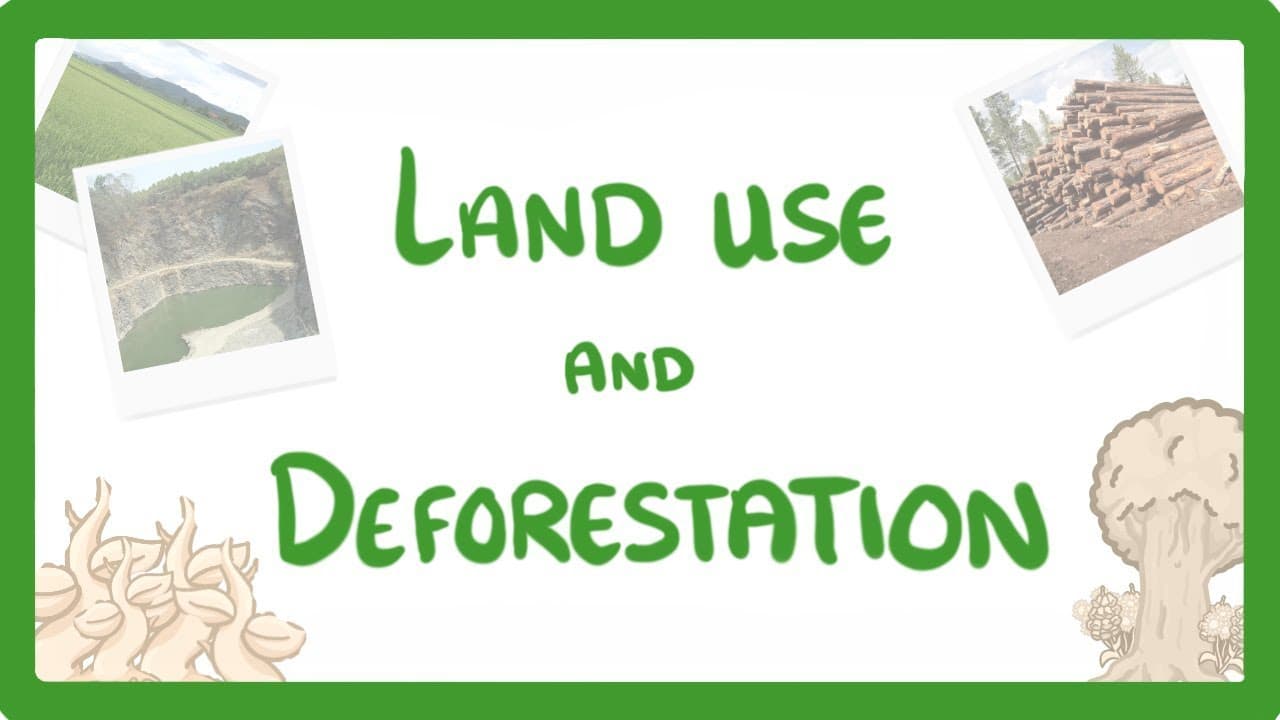
GCSE Biology - Land Use - Deforestation & Peat Bogs #92
TL;DR
Converting forests for farming, logging, and biofuel production leads to increased carbon dioxide in the atmosphere and loss of biodiversity. Draining and destroying peat bogs also releases stored carbon dioxide, contributing to global warming.
Transcript
land is perhaps the most important limited resource that humans have access to we use it for all sorts of things like building towns and cities quarrying to extract resources from the ground farming and even dumping our waste the problem though is that the more land that we use for ourselves the less of it that will be left for other organisms in a... Read More
Key Insights
- 🥺 Deforestation leads to increased levels of carbon dioxide in the atmosphere, contributing to global warming.
- 👱 Burning forests during deforestation releases carbon dioxide and has detrimental effects on air quality.
- ❓ Habitat destruction caused by deforestation reduces biodiversity and jeopardizes the survival of many species.
- 🌐 Peat bogs store carbon and help reduce global warming, but are being destroyed for agriculture and other purposes.
- 🌐 Draining peat bogs releases stored carbon dioxide, exacerbating global warming.
- 🥺 Destruction of peat bogs also leads to a loss of biodiversity and potential extinction of species.
- 😒 The conversion of land for human use has significant consequences for the environment and other organisms.
Install to Summarize YouTube Videos and Get Transcripts
Explore YouTube Video Summarizer or Get YouTube Transcript Extractor
Questions & Answers
Q: What is deforestation and why is it primarily done in tropical regions?
Deforestation is the cutting down of forests, primarily done to clear land for farming, logging, and biofuel production. It is common in tropical regions due to the presence of rainforests with diverse resources.
Q: How does deforestation contribute to global warming?
Deforestation reduces the number of trees available to absorb carbon dioxide through photosynthesis, leading to increased levels of this greenhouse gas in the atmosphere. Burning forests during deforestation also releases stored carbon dioxide, contributing to global warming.
Q: What is the impact of deforestation on biodiversity?
Deforestation destroys habitats that were once home to various animals and plants, leading to a significant reduction in biodiversity. As more forests are destroyed, entire species may become extinct.
Q: What are peat bogs and why are they important?
Peat bogs are acidic, waterlogged areas where organic materials build up over time and form peat. They store carbon, helping to reduce global warming.
Q: Why are peat bogs drained, and what are the consequences?
Peat bogs are often drained to convert the land for farming, releasing the stored carbon as carbon dioxide. This contributes to global warming. Draining peat bogs also destroys the habitats of organisms that depend on them, leading to a loss in biodiversity.
Key Insights:
- Deforestation leads to increased levels of carbon dioxide in the atmosphere, contributing to global warming.
- Burning forests during deforestation releases carbon dioxide and has detrimental effects on air quality.
- Habitat destruction caused by deforestation reduces biodiversity and jeopardizes the survival of many species.
- Peat bogs store carbon and help reduce global warming, but are being destroyed for agriculture and other purposes.
- Draining peat bogs releases stored carbon dioxide, exacerbating global warming.
- Destruction of peat bogs also leads to a loss of biodiversity and potential extinction of species.
- The conversion of land for human use has significant consequences for the environment and other organisms.
- The rapid destruction of forests and peat bogs is outpacing the formation of new ones, further depleting essential resources.
Summary & Key Takeaways
-
Forests are cut down for various reasons, including farming, logging, and biofuel production, leading to increased carbon dioxide in the atmosphere and loss of biodiversity.
-
Burning forests during deforestation releases carbon dioxide and contributes to global warming.
-
Peat bogs, important carbon sinks, are drained for agriculture and decomposed peat releases carbon dioxide, further exacerbating global warming.
Read in Other Languages (beta)
Share This Summary 📚
Summarize YouTube Videos and Get Video Transcripts with 1-Click
Try YouTube Summary with ChatGPT & Claude or YouTube Transcript Generator
Explore More Summaries from Cognito 📚



Summarize YouTube Videos and Get Video Transcripts with 1-Click
Try YouTube Summary with ChatGPT & Claude or YouTube Transcript Generator