What’s This Ridge on Iapetus?
TL;DR
Saturn's moons, like Titan, Enceladus, and Iapetus, exhibit unique features and mysteries in our solar system.
Transcript
paraphrase the British geneticist JBS Haldane in my suspicions the universe is not only stranger than we suppose it's stranger than we can suppose the context was life and evolution but he might as well be talking about Saturn's moons those teeny worlds are some of the strangest places we've ever seen Titan is a massive moon with an atmosphere thic... Read More
Key Insights
- 💦 Saturn's moons, particularly Titan, Enceladus, and Iapetus, exhibit remarkable features such as thick atmospheres, water geysers, and unique surface characteristics.
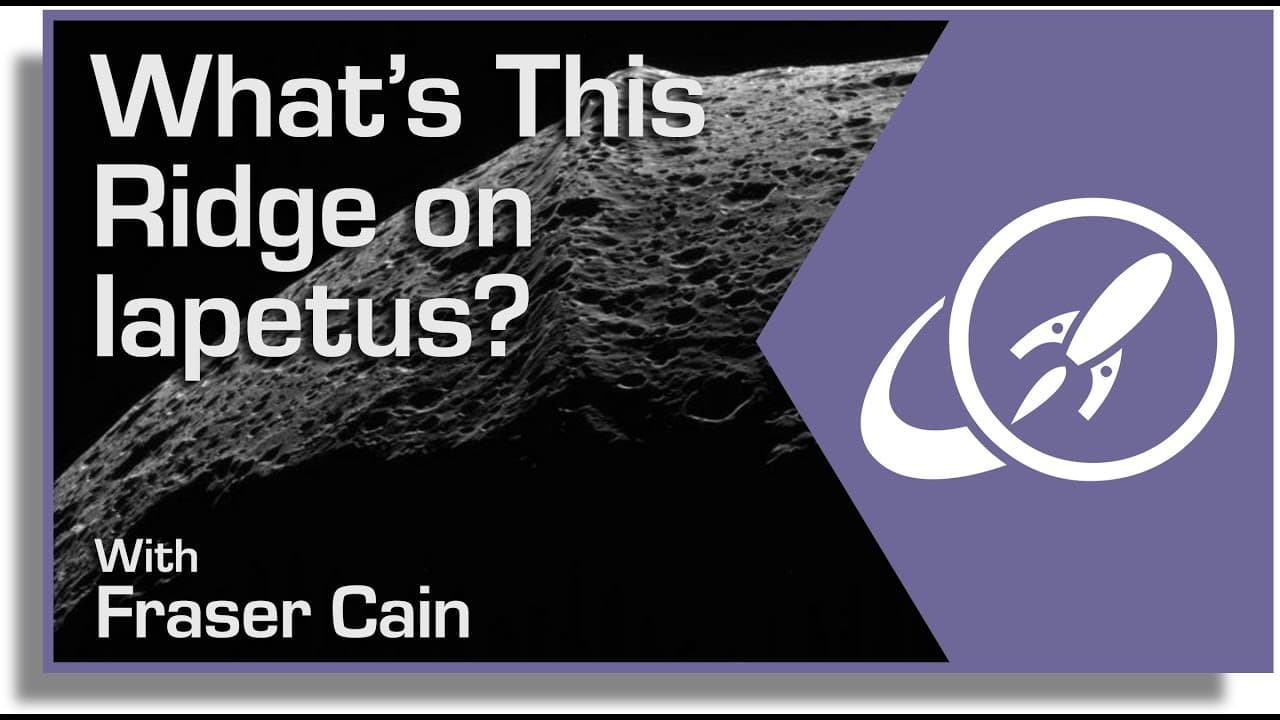
- 😋 Iapetus' equatorial ridge, along with similar features on moons like Atlas and Pan, hints at different formation mechanisms involving convective activity, ring material accretion, or ancient impacts.
Install to Summarize YouTube Videos and Get Transcripts
Explore YouTube Video Summarizer or Get YouTube Transcript Extractor
Questions & Answers
Q: What makes Titan unique among Saturn's moons?
Titan's atmosphere, thicker than Earth's, and bone-chilling cold make it an intriguing moon where one could theoretically fly with wings due to its atmospheric density.
Q: What sets Iapetus apart from other moons?
Iapetus stands out with its yin-yang surface coloration, icy white and brownish red areas, and a massive equatorial ridge that presents a mystery for astronomers.
Q: How do astronomers explain the formation of the equatorial ridge on Iapetus?
The equatorial ridge's origins on Iapetus may stem from convective activity, ring material accretion, or a massive asteroid impact that reshaped the moon's structure.
Q: Why is Iapetus a candidate for future exploration missions?
Iapetus' unusual features, including the equatorial ridge and unique surface, make it an intriguing target for future orbiters or landers to unravel its mysteries further.
Summary & Key Takeaways
-
Saturn's moons Titan, Enceladus, and Iapetus present intriguing features such as thick atmospheres, water geysers, and equatorial ridges.
-
Iapetus, known as Saturn's yin-yang moon, showcases a peculiar surface with icy white and brownish red regions, along with an equatorial ridge.
-
The equatorial ridge on Iapetus, Atlas, and Pan suggests possible explanations from convective activity, ring accretion, or asteroid impacts, presenting a cosmic puzzle.
Read in Other Languages (beta)
Share This Summary 📚
Summarize YouTube Videos and Get Video Transcripts with 1-Click
Try YouTube Summary with ChatGPT & Claude or YouTube Transcript Generator
Explore More Summaries from Fraser Cain 📚





Summarize YouTube Videos and Get Video Transcripts with 1-Click
Try YouTube Summary with ChatGPT & Claude or YouTube Transcript Generator