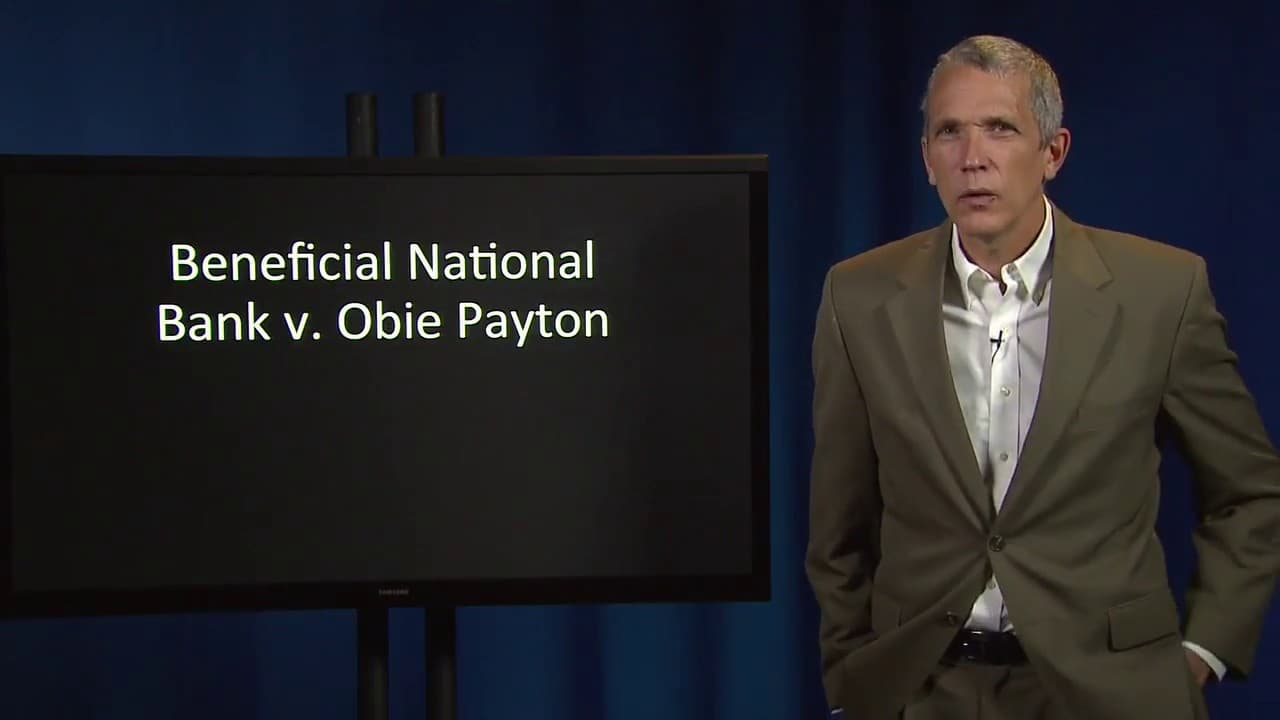
Contract Law 28 II Beneficial National Bank USA v Obie Payton (unilateral credit card change)
TL;DR
This content explores a court case that highlights how silence can be seen as acceptance in consumer credit contracts, discusses the use of arbitration clauses in contracts, and emphasizes the importance of reading contract terms carefully.
Transcript
many of you have probably got mail at one point or another telling you the terms and conditions of your cell phone contract your internet service or credit card that these terms have changed maybe some of you have diligently examined these changes but I'm guessing most of you haven't today we're going to look at beneficial National Bank versus Obi ... Read More
Key Insights
- 🫠 Consumers can be contractually bound by changes in contract terms, even if they never read or agreed to them.
- 🤪 Arbitration clauses offer an alternative dispute resolution method that is often preferred by companies over going to court.
- 🤫 The default rule in contract law is that silence does not operate as acceptance, but there are exceptions where silence can be seen as acceptance, particularly in consumer credit contracts.
- 😊 There are pros and cons to accepting modifications to contracts through silence, including increased fairness concerns and transaction costs.
Install to Summarize YouTube Videos and Get Transcripts
Explore YouTube Video Summarizer or Get YouTube Transcript Extractor
Questions & Answers
Q: How can consumers be bound by changes in contract terms they never agreed to?
The case of Beneficial National Bank vs. Obi Peyton shows that when a change of terms provision is included in the original agreement, customer silence can be interpreted as acceptance of modifications to the contract, even if they were not explicitly agreed upon.
Q: What are the benefits of using arbitration clauses in contracts?
Arbitration clauses provide a means for parties in a contract to resolve disputes in a private setting. It is often faster, cheaper, and results are typically not appealable. Companies also prefer arbitration because it allows them to avoid class-action lawsuits.
Q: What is the default rule for acceptance in contract law?
By default, silence is not considered acceptance in contract law. However, there are exceptions where silence can operate as acceptance, such as when the offeree takes the benefit offered, when previous dealings make it reasonable for the offeree not to reject the offer, or if there is a clear expression of intent to accept the offer.
Q: How does this case impact consumer credit contracts?
This case highlights the default rule that customer silence is seen as acceptance of modification offers in consumer credit contracts. It raises concerns about consumers being bound to terms they didn't agree to or were unaware of, emphasizing the importance of reading contract terms carefully.
Summary & Key Takeaways
-
The case of Beneficial National Bank vs. Obi Peyton demonstrates that consumers can be contractually bound by changes in terms, even if they never read or agreed to them.
-
Arbitration clauses, like the one introduced in Peyton's credit card agreement, provide a method for resolving disputes outside of court.
-
The default rule for acceptance in contract law is that silence does not operate as acceptance, but this case highlights an exception where customer silence can be seen as acceptance.
Read in Other Languages (beta)
Share This Summary 📚
Summarize YouTube Videos and Get Video Transcripts with 1-Click
Try YouTube Summary with ChatGPT & Claude or YouTube Transcript Generator
Explore More Summaries from YaleCourses 📚




Summarize YouTube Videos and Get Video Transcripts with 1-Click
Try YouTube Summary with ChatGPT & Claude or YouTube Transcript Generator