Electrostatic Machines Basic Principle - High Voltage Engineering
TL;DR
Electrostatic generators convert mechanical energy into electrical energy by moving electric charges against the force of electric fields.
Transcript
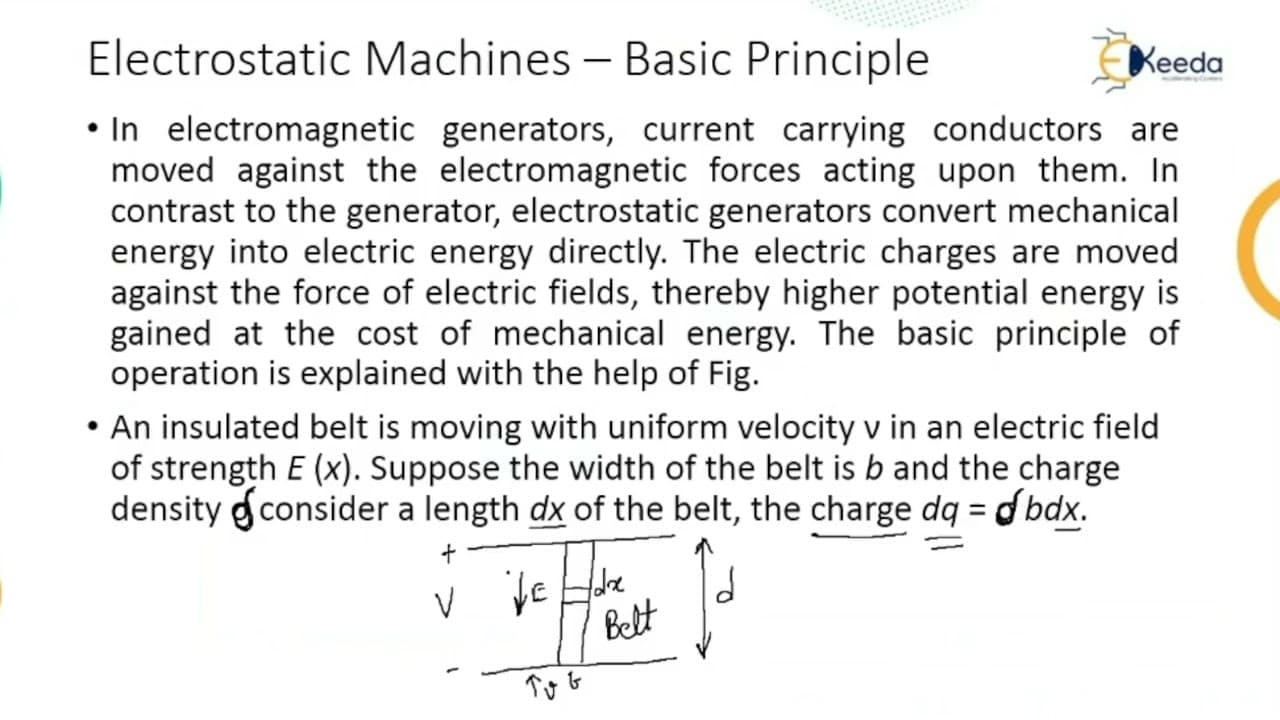
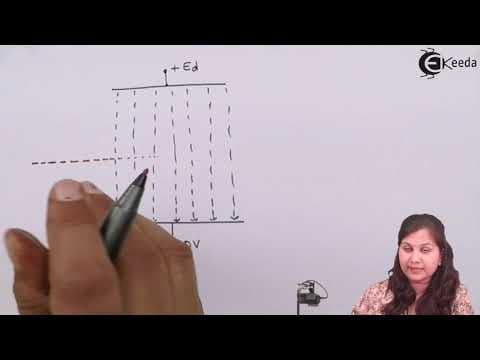
hello friends in this lecture i am going to discuss the basic principle of this electrostatic machine in electromagnetic generators current carrying conductors are moved against the electromagnetic forces acting upon them that is what the function or the principle of a generator in contrast to that electromagnetic generator electrostatic generators... Read More
Key Insights
- 🦾 Electromagnetic generators convert mechanical energy into electrical energy through the movement of current-carrying conductors against electromagnetic forces.
- 🔌 Electrostatic generators, on the other hand, convert mechanical energy into electrical energy by moving electric charges against the force of electric fields.
- 🥺 The accumulation of charges on the width of a moving insulated belt in an electrostatic generator leads to the production of electrical energy.
- 🈂️ The force experienced by the charges on the belt is given by the product of the electric field and the charge accumulation.
- ✊ The power required to move the belt in an electrostatic generator is equal to the force multiplied by the velocity.
- ✊ The power output of an electrostatic generator can be equal to the product of voltage and current, assuming no losses.
Install to Summarize YouTube Videos and Get Transcripts
Explore YouTube Video Summarizer or Get YouTube Transcript Extractor
Questions & Answers
Q: How do electromagnetic generators convert mechanical energy into electrical energy?
Electromagnetic generators convert mechanical energy into electrical energy by moving current-carrying conductors against electromagnetic forces acting upon them.
Q: How do electrostatic generators convert mechanical energy into electrical energy?
Electrostatic generators convert mechanical energy into electrical energy by moving electric charges against the force of electric fields, resulting in a gain of potential energy at the cost of mechanical energy.
Q: What determines the power required to move the belt in an electrostatic generator?
The power required to move the belt in an electrostatic generator is determined by the force experienced by the charges on the belt, which is equal to the electric field multiplied by the charge accumulation.
Q: What is the equation for current in an electrostatic generator?
The equation for current in an electrostatic generator is given by dq/dt = delta b * small velocity, where delta b is the charge density and small velocity is the speed of the charges on the belt.
Summary & Key Takeaways
-
Electromagnetic generators convert mechanical energy into electrical energy by moving current-carrying conductors against electromagnetic forces.
-
Electrostatic generators convert mechanical energy into electrical energy by moving electric charges against the force of electric fields.
-
The basic principle of operation involves a moving insulated belt with charges accumulating on its width, resulting in the production of electrical energy.
Read in Other Languages (beta)
Share This Summary 📚
Summarize YouTube Videos and Get Video Transcripts with 1-Click
Try YouTube Summary with ChatGPT & Claude or YouTube Transcript Generator
Explore More Summaries from Ekeeda 📚


Summarize YouTube Videos and Get Video Transcripts with 1-Click
Try YouTube Summary with ChatGPT & Claude or YouTube Transcript Generator