Discovery of the Electron: Cathode Ray Tube Experiment
TL;DR
JJ Thompson used a cathode ray tube experiment to discover electrons, disproving John Dalton's model of indivisible atoms.
Transcript
in this video we're going to talk about how JJ Thompson discovered the electron in 1897 using the cathode ray tube experiment so these days we think about atoms kind of like this they're made up of a variety of smaller subatomic particles but in the late 1800s it was all about John Dalton's model of the atom in the early 1800s John Dalton had propo... Read More
Key Insights
- 🙌 John Dalton's model of indivisible atoms was challenged by JJ Thompson's discovery of electrons through the cathode ray tube experiment.
- 🙌 Thompson's experiment demonstrated that cathode rays were made up of negatively charged particles, which he named electrons.
- 👻 Thompson's experiments allowed him to determine the size of electrons in comparison to atoms, concluding that electrons were a thousand times smaller.
- 🥺 The discovery of electrons led Thompson to propose the plum pudding model of the atom, where electrons were stuck in a positively charged dough-like structure.
Install to Summarize YouTube Videos and Get Transcripts
Explore YouTube Video Summarizer or Get YouTube Transcript Extractor
Questions & Answers
Q: How did JJ Thompson discover the existence of electrons?
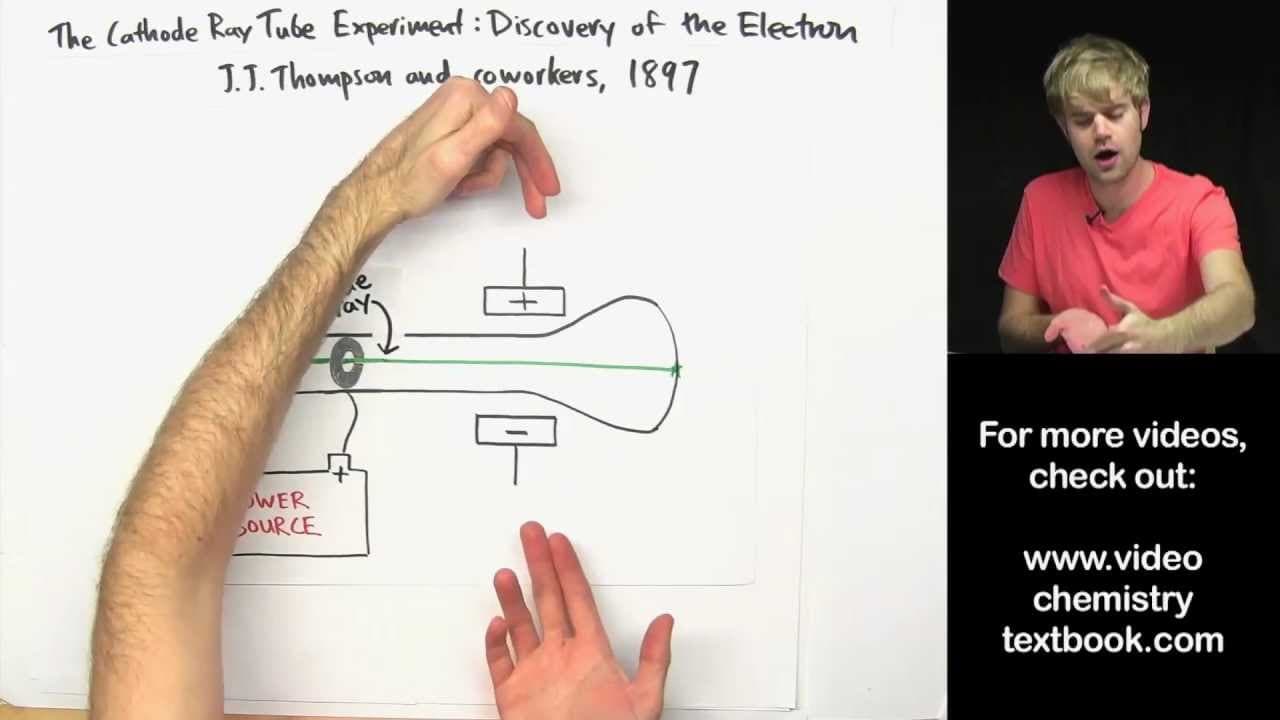
JJ Thompson used a cathode ray tube experiment, observing the behavior of cathode rays in the presence of electric charges and magnets. By observing the deflection of the cathode rays, he deduced the presence of negatively charged particles, which he named electrons.
Q: How did Thompson know that the cathode rays were made up of negatively charged particles?
Thompson conducted experiments where he placed two metal plates on either side of the cathode ray tube and applied an electric charge. He observed that the cathode rays were attracted to the positively charged plate, confirming their negative charge.
Q: What did Thompson conclude about the size of electrons compared to atoms?
Based on his experiments, Thompson concluded that the particles making up cathode rays (electrons) were a thousand times smaller than a hydrogen atom, suggesting that atoms were not indivisible.
Q: How did Thompson determine that electrons were present in all types of atoms?
Thompson swapped out different types of metal in the cathode tube but always observed the same cathode rays. This indicated that electrons were present in all atoms, regardless of the type of metal used.
Summary & Key Takeaways
-
In the late 1800s, John Dalton proposed that all matter is made up of indivisible atoms, but it remained unknown if atoms were truly indivisible or made of smaller particles.
-
JJ Thompson used a cathode ray tube experiment, observing the behavior of cathode rays in the presence of electric charges and magnets, to discover electrons.
-
Thompson's experiments led him to conclude that cathode rays were made of negatively charged particles, a thousand times smaller than a hydrogen atom, which he called electrons.
Read in Other Languages (beta)
Share This Summary 📚
Summarize YouTube Videos and Get Video Transcripts with 1-Click
Try YouTube Summary with ChatGPT & Claude or YouTube Transcript Generator
Explore More Summaries from Tyler DeWitt 📚



Summarize YouTube Videos and Get Video Transcripts with 1-Click
Try YouTube Summary with ChatGPT & Claude or YouTube Transcript Generator