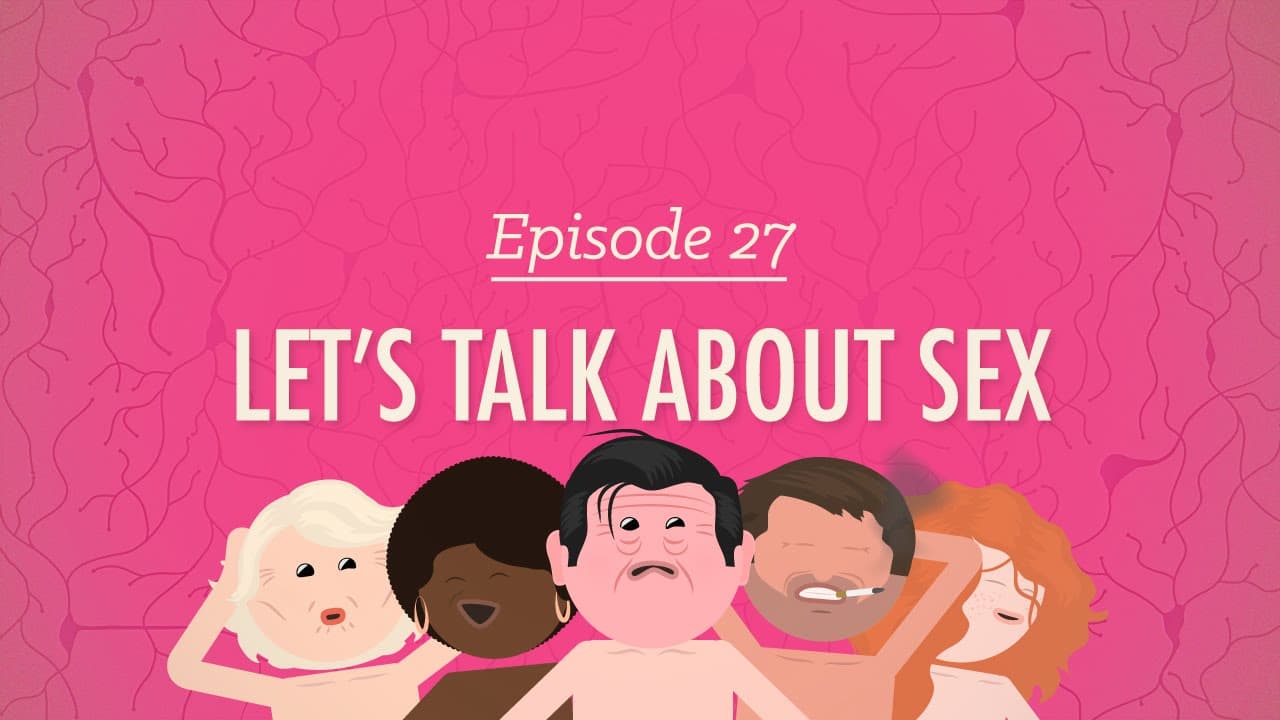
Let's Talk About Sex: Crash Course Psychology #27
TL;DR
Explores the complexities of sex, gender, and sexuality.
Transcript
People have been having sex and writing songs about it and carving statues of it and changing fashion for it since the dawn of humanity, but it wasn't until fairly recently in the 1940s that serious Western scientific study of sex began. And by most accounts you can thank one guy for that: Alfred Kinsey. Kinsey was born in 1894 in New Jersey, to po... Read More
Key Insights
- Alfred Kinsey pioneered the scientific study of human sexuality in the 1940s, challenging societal norms and perceptions.
- The Kinsey scale introduced a spectrum for sexual orientation, highlighting the diversity in human sexual preferences.
- Masters and Johnson's research in the 1960s detailed the physiological sexual response cycle, though it faced criticism for its linear model.
- Sex hormones like estrogen and testosterone influence physical development and sexual behavior, but their effects vary among individuals.
- Cultural and social factors heavily influence sexual attitudes and behaviors, shaping personal values and societal norms.
- Sexual orientation is not a choice but a naturally occurring variation, with no conclusive environmental determinants identified.
- Sexual intimacy serves multiple purposes beyond reproduction, including stress reduction, relationship maintenance, and emotional fulfillment.
- Psychological and social factors, combined with biological influences, create a complex landscape for human sexuality and identity.
Install to Summarize YouTube Videos and Get Transcripts
Explore YouTube Video Summarizer or Get YouTube Transcript Extractor
Questions & Answers
Q: Who was Alfred Kinsey and what was his contribution to the study of human sexuality?
Alfred Kinsey was a pioneering sex researcher in the 1940s who conducted extensive surveys on human sexual behavior. His work challenged societal norms by revealing the diversity of sexual practices and preferences. Kinsey introduced the Kinsey scale, which depicted sexual orientation as a spectrum, and wrote seminal texts on sexual behavior in males and females.
Q: What is the Masters and Johnson's four-stage sexual response cycle?
Masters and Johnson identified a four-stage sexual response cycle consisting of excitement, plateau, orgasm, and resolution. Their research in the 1960s involved recording physiological responses to sexual activity. Despite its influence, the model faced criticism for its linear approach and emphasis on orgasm, as sexual experiences can vary greatly among individuals.
Q: How do sex hormones influence human sexuality?
Sex hormones like estrogen and testosterone are crucial in developing biological sex characteristics and activating sexual behavior. While these hormones affect sexual desire, their influence varies among individuals. Hormonal changes throughout life, such as during puberty or aging, can impact libido, but psychological and social factors also play significant roles in sexual behavior.
Q: What role do cultural and social factors play in shaping sexual attitudes?
Cultural and social factors significantly shape sexual attitudes and behaviors. Societal norms, family values, religious beliefs, and media exposure influence how individuals perceive and engage in sexual activities. These influences can affect views on premarital sex, homosexuality, and public displays of affection, demonstrating the complex interplay between society and personal sexuality.
Q: How is sexual orientation understood in the context of the video?
Sexual orientation is presented as a naturally varying trait among humans, not a choice or influenced by environmental factors. The video emphasizes that orientations like heterosexuality, homosexuality, and bisexuality are not linked to mental health. Research suggests biological components may play a role, but a comprehensive understanding remains elusive.
Q: What are some purposes of sexual intimacy beyond reproduction?
Sexual intimacy serves several purposes beyond reproduction, including stress reduction, maintaining healthy relationships, social bonding, and expressing love. It contributes to emotional fulfillment and can enhance personal well-being. The video highlights that while sex can lead to procreation, its significance often extends to various aspects of human life and relationships.
Q: How do psychological and social factors interact with biological influences in human sexuality?
Psychological and social factors interact with biological influences to create a complex landscape for human sexuality. While hormones and physiological responses play roles, cultural norms, personal values, and individual experiences shape sexual attitudes and behaviors. This interplay highlights the multifaceted nature of sexuality, encompassing biological, psychological, and social dimensions.
Q: What misconceptions about sexuality are addressed in the video?
The video addresses misconceptions such as the belief that masturbation causes harm and that sexual orientation can be changed or chosen. It clarifies that sexual orientation is not linked to mental health and emphasizes the importance of understanding sexuality as a natural and diverse aspect of human life, free from unfounded stigma and judgment.
Summary & Key Takeaways
-
The video explores the history and science of human sexuality, beginning with Alfred Kinsey's groundbreaking research in the 1940s. It examines the physiological and psychological aspects of sex, including the work of Masters and Johnson, who identified the four-stage sexual response cycle.
-
Sex hormones play a crucial role in sexual development and behavior, but cultural and social influences are equally significant. The video discusses how societal norms and personal values shape sexual attitudes, while also addressing the complexities of gender identity and sexual orientation.
-
Sexual orientation is portrayed as a natural variation among humans, not influenced by environmental factors. The video emphasizes the multifaceted purposes of sex, from procreation to emotional bonding, highlighting the importance of intimacy in human relationships.
Read in Other Languages (beta)
Share This Summary 📚
Summarize YouTube Videos and Get Video Transcripts with 1-Click
Try YouTube Summary with ChatGPT & Claude or YouTube Transcript Generator
Explore More Summaries from CrashCourse 📚


Summarize YouTube Videos and Get Video Transcripts with 1-Click
Try YouTube Summary with ChatGPT & Claude or YouTube Transcript Generator