Nucleosides vs Nucleotides, Purines vs Pyrimidines - Nitrogenous Bases - DNA & RNA
TL;DR
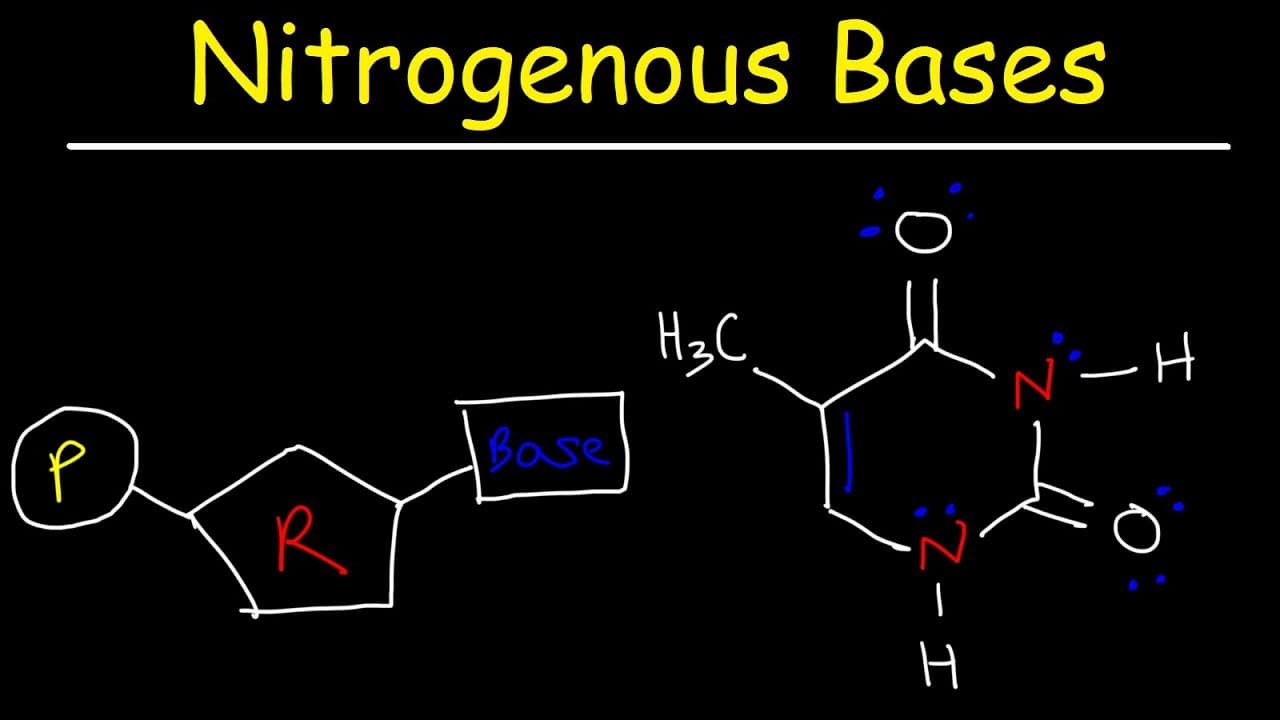
Nucleosides and nucleotides differ in their components, with nucleotides containing a phosphate group in addition to a ribose sugar and a nitrogenous base, while nucleosides only contain ribose sugar and a nitrogenous base. Purines have two rings, while pyrimidines have one ring.
Transcript
in this video we're going to talk about the difference between a nucleotide and a nucleoside and then we're going to talk about the difference between purines and pyrimidines so what is the difference between these two what is the difference between a nucleoside and a nucleotide what would you say a nucleoside has two components to it it contains a... Read More
Key Insights
- 👥 Nucleosides consist of a ribose sugar and a nitrogenous base, while nucleotides also have a phosphate group.
- 😋 Purines, such as adenine and guanine, have two rings, making them different from pyrimidines (cytosine, thymine, and uracil), which have one ring.
- 🧬 DNA contains thymine, while RNA replaces it with uracil.
- 👻 The structures of purines and pyrimidines allow for the formation of resonance structures, making them stable.
- 😋 Aromatic rings, like those found in pyrimidines, are highly stable due to their alternating single and double bonds.
- 👥 The difference between adenine and guanine is the presence of a carbonyl group in guanine.
- 👥 Thymine and uracil differ by the presence of a methyl group in thymine.
Install to Summarize YouTube Videos and Get Transcripts
Explore YouTube Video Summarizer or Get YouTube Transcript Extractor
Questions & Answers
Q: What is the difference between a nucleoside and a nucleotide?
A nucleoside consists of a ribose sugar and a nitrogenous base, while a nucleotide includes these components along with a phosphate group.
Q: How many nitrogenous bases are there?
There are five nitrogenous bases: adenine, guanine, thymine, cytosine, and uracil.
Q: What is the key difference between purines and pyrimidines?
Purines have two rings, while pyrimidines have only one ring.
Q: What is the difference between DNA and RNA in terms of nitrogenous bases?
DNA contains adenine, guanine, thymine, and cytosine, while RNA replaces thymine with uracil.
Summary & Key Takeaways
-
Nucleosides contain a ribose sugar and a nitrogenous base, while nucleotides also include a phosphate group.
-
Purines are nitrogenous bases with two rings, while pyrimidines have only one ring.
-
DNA contains adenine, guanine, thymine, and cytosine, while RNA replaces thymine with uracil.
Read in Other Languages (beta)
Share This Summary 📚
Summarize YouTube Videos and Get Video Transcripts with 1-Click
Try YouTube Summary with ChatGPT & Claude or YouTube Transcript Generator
Explore More Summaries from The Organic Chemistry Tutor 📚


Summarize YouTube Videos and Get Video Transcripts with 1-Click
Try YouTube Summary with ChatGPT & Claude or YouTube Transcript Generator