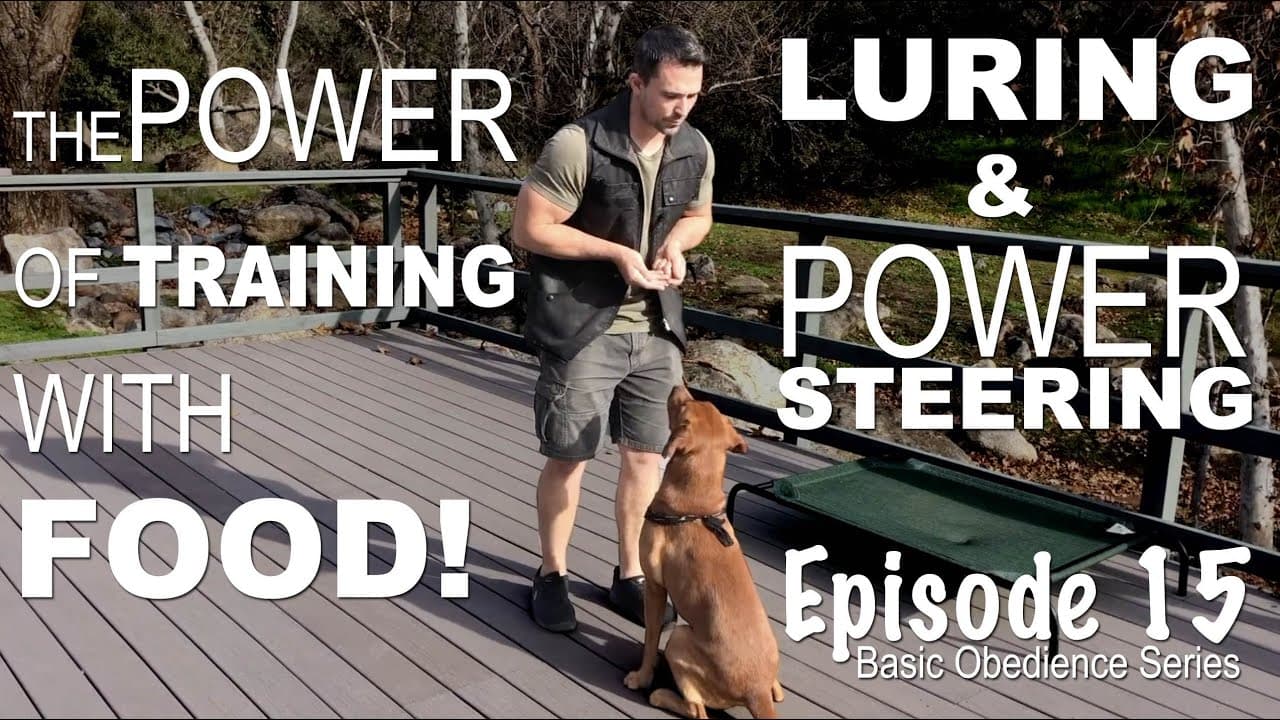
The Power of Training Your Dog with FOOD! Episode 15
TL;DR
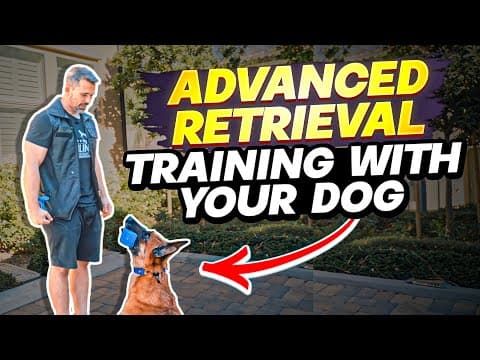
Learn how to teach your dog behaviors using food as a lure.
Transcript
once we have our dog's condition to our markers we want to start showing them the behaviors we want them to perform far too often somebody gets a dog and before they even have an opportunity to start communicating with their dog they start asking their dog to sit you probably done it yourself you have your dog in front of you and what do you do you... Read More
Key Insights
- Effective dog training requires clear communication using verbal and physical cues, especially when teaching new behaviors.
- The luring technique involves guiding a dog's movements with food to teach them specific behaviors without using verbal commands initially.
- Using terminal markers more frequently than continuation markers encourages dogs to perform behaviors quickly, making training more engaging.
- Physical cues are vital in training; for example, using a bell to teach a dog to ring it for going outside by placing food underneath.
- Power steering is a method to guide dogs into various positions by pivoting and using food as a lure, enhancing their spatial awareness.
- Initial training should involve continuous reinforcement, rewarding every correct behavior to establish a strong foundation.
- Verbal praise is essential in reinforcing good behavior and encouraging dogs during training sessions.
- Naming commands should only occur once a dog consistently performs the desired behavior correctly, ensuring effective communication.
Install to Summarize YouTube Videos and Get Transcripts
Explore YouTube Video Summarizer or Get YouTube Transcript Extractor
Questions & Answers
Q: What is the primary technique used for teaching new dog behaviors in this video?
The primary technique discussed in the video for teaching new dog behaviors is the luring technique. This involves using food to guide the dog's movements, helping them learn new behaviors without relying on verbal commands initially. The technique focuses on physical cues to encourage the desired behavior.
Q: How does the trainer encourage dogs to perform behaviors quickly?
The trainer encourages dogs to perform behaviors quickly by using terminal markers more frequently than continuation markers. This approach rewards dogs immediately upon completing a behavior, motivating them to perform the actions faster to receive their reward, making training more engaging and effective.
Q: What is the role of physical cues in dog training according to the video?
Physical cues play a crucial role in dog training as they provide clear guidance for the dog to follow. The video emphasizes using physical cues, such as luring with food or guiding movements, to teach behaviors initially. This approach helps dogs understand what is expected of them without relying solely on verbal commands.
Q: What is power steering in the context of dog training?
Power steering in dog training refers to a technique where the trainer uses food and body movements to guide the dog into different positions. By pivoting and using food as a lure, the trainer enhances the dog's spatial awareness and responsiveness, making it easier to train them for various commands and positions.
Q: When should commands be named during dog training?
Commands should be named during dog training only once the dog consistently performs the desired behavior correctly. Naming commands too early can lead to confusion if the dog has not yet mastered the behavior. Waiting ensures that the dog associates the command with the correct action, solidifying the training.
Q: How does continuous reinforcement benefit early dog training?
Continuous reinforcement benefits early dog training by rewarding every correct behavior, helping the dog associate positive outcomes with their actions. This approach establishes a strong foundation for learning, as the dog learns to repeat behaviors that lead to rewards, reinforcing the desired actions effectively.
Q: Why is verbal praise important in dog training?
Verbal praise is important in dog training as it reinforces good behavior and encourages the dog during training sessions. Praise provides positive feedback, boosting the dog's confidence and motivation to perform the desired behaviors. It complements other training techniques, such as luring, to create a supportive learning environment.
Q: What example does the video give for using physical cues to teach a behavior?
The video provides an example of using physical cues to teach a dog to ring a bell to go outside. By placing food underneath the bell, the dog is encouraged to paw at it. Once the bell rings, the dog receives the reward, teaching them the desired behavior through a physical cue.
Summary & Key Takeaways
-
The video discusses the importance of using food as a lure to teach dogs new behaviors effectively. The trainer demonstrates various techniques, emphasizing the use of physical cues over verbal commands initially. The goal is to encourage quick and accurate behavior performance by the dog.
-
The concept of power steering is introduced, a method to guide dogs into different positions using food lures and body movements. This technique enhances the dog's spatial awareness and responsiveness, making it easier to train them for various commands and positions.
-
Continuous reinforcement and verbal praise are crucial in the early stages of training, ensuring that dogs associate correct behaviors with positive outcomes. Naming commands comes later, once the dog consistently performs the behavior as desired, solidifying the training process.
Read in Other Languages (beta)
Share This Summary 📚
Summarize YouTube Videos and Get Video Transcripts with 1-Click
Try YouTube Summary with ChatGPT & Claude or YouTube Transcript Generator
Explore More Summaries from Nate Schoemer 📚


Summarize YouTube Videos and Get Video Transcripts with 1-Click
Try YouTube Summary with ChatGPT & Claude or YouTube Transcript Generator