How Much YouTube ACTUALLY Pays You for 1,000 Views in 2024
TL;DR
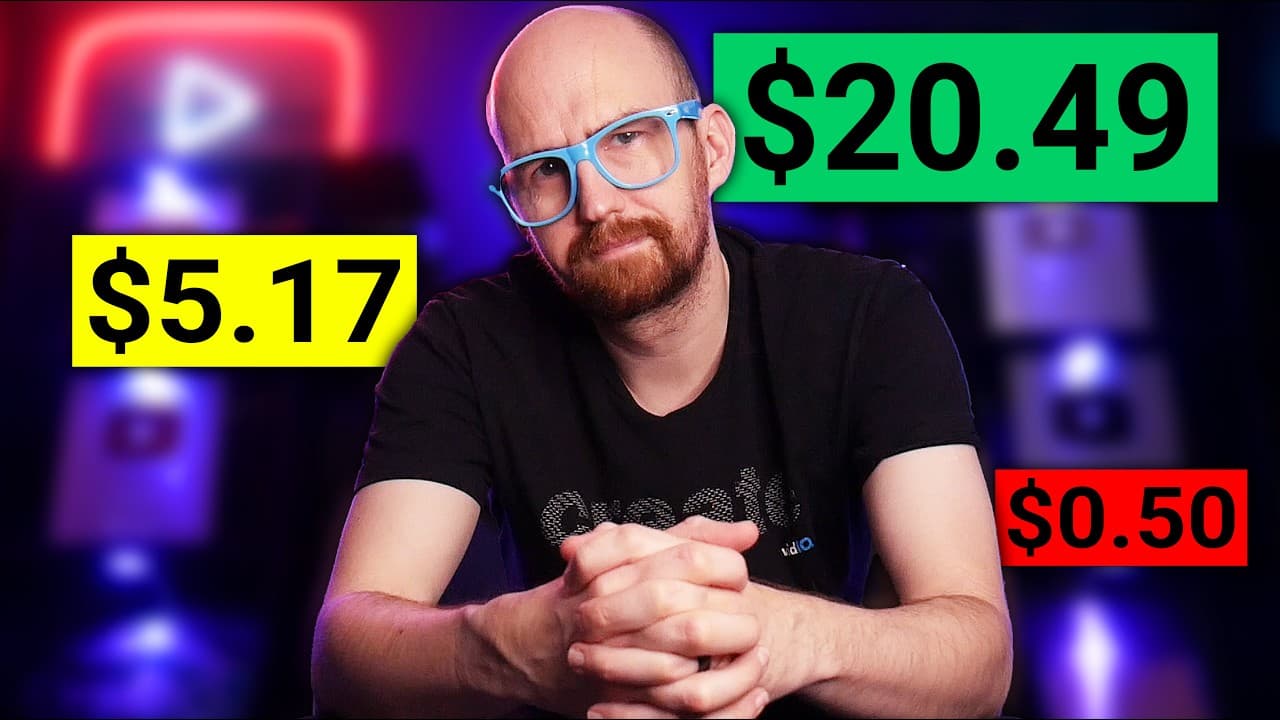
YouTube does not pay one fixed amount for 1,000 views; earnings vary with monetization sources, viewer location, video length, and niche. RPM represents creator take-home revenue per 1,000 views, and the transcript compares videos from the same channel and month with RPMs of $3.38 and $164. Videos longer than 8 minutes can also include mid-roll ads. Read on to understand each factor and why adding more ads can backfire.
Transcript
so how much does YouTube pay for 1,000 views well all of these guesses yeah they're correct that sounds a little crazy doesn't it and this is just the beginning for example how much money you make doesn't always depend on your Niche this is a video from our Channel which is all about YouTube education and it has an RPM of $3... Read More
Key Insights
- YouTube's RPM (Revenue per mille) includes all monetization sources, unlike CPM, which only accounts for ad revenue.
- Location of the viewer significantly affects CPM and RPM due to regional economic differences.
- Video length influences revenue potential, with videos over eight minutes allowing for more ad placements.
- Niche plays a crucial role in RPM, with finance and digital marketing often yielding higher returns.
- Creators should focus on diversifying income streams beyond ad revenue to maximize earnings.
- High RPM does not guarantee high earnings; creators should balance content passion and profitability.
- Fan funding and direct community engagement are valuable strategies for creators to increase revenue.
- YouTube provides tools for creators to monetize their audience, highlighting the importance of audience engagement.
Install to Summarize YouTube Videos and Get Transcripts
Explore YouTube Video Summarizer or Get YouTube Transcript Extractor
Questions & Answers
Q: How much does YouTube actually pay for 1,000 views in 2024?
There is no single payment for 1,000 views because RPM varies by monetization sources, viewer location, video length, and niche. The transcript gives two videos from the same channel and month with RPMs of $3.38 and $164, showing that results can differ substantially even within one channel.
Q: What is the difference between YouTube RPM and CPM?
CPM, or cost per 1,000 views, estimates what advertisers pay for ad revenue. RPM, or revenue per 1,000 views, estimates the creator’s take-home revenue after YouTube’s cut and includes ads, channel memberships, Super Chats, and YouTube Premium revenue.
Q: What percentage of YouTube revenue does the average creator receive?
According to the transcript, the average creator typically receives 55% of ad revenue. For fan-funding revenue, the creator typically receives 70%.
Q: Does the viewer’s location affect YouTube earnings?
Yes, the viewer’s location matters because advertisers’ willingness to pay varies across markets. The transcript specifically says earnings are affected by where the viewer watches, not by the channel settings or the location where the creator publishes the video.
Q: How does video length affect YouTube revenue?
Longer videos can generate more watch time and create more opportunities for ads, but they can also be harder to keep engaging. The recommended balance is to make a video as long as possible while keeping it as short as necessary.
Q: Why is the 8-minute mark important for YouTube monetization?
YouTube allows more ads when a video is longer than 8 minutes. Creators can use mid-roll ads and may place them manually at selected points, although YouTube can place them automatically as well.
Q: Will adding more mid-roll ads always increase YouTube revenue?
No, additional ad placements do not guarantee that every ad will be shown to viewers. The speaker tested excessive placements and found that revenue went down, so trying to abuse the system can be counterproductive.
Q: How does a channel’s niche influence its YouTube RPM?
Niche can significantly affect RPM because different topics attract different audiences and advertiser demand. The transcript cites an RPM of $264 for a sports channel and 50 cents for the football channel Nutmeg, while identifying cooking, reaction, fitness, and music channels as low earners.
Summary & Key Takeaways
-
YouTube's RPM includes revenue from ads, memberships, super chats, and premium views, while CPM only reflects ad revenue. The platform retains a percentage of earnings, but it offers a vast audience reach for creators.
-
Video length impacts revenue, with videos over eight minutes allowing more ad placements. However, creators must balance video length with viewer engagement to maintain audience interest.
-
Niche significantly affects earnings, with finance and digital marketing channels often seeing higher RPMs. Creators are encouraged to diversify income streams beyond ad revenue for financial sustainability.
Read in Other Languages (beta)
Share This Summary 📚
Summarize YouTube Videos and Get Video Transcripts with 1-Click
Try YouTube Summary with ChatGPT & Claude or YouTube Transcript Generator
Explore More Summaries from vidIQ 📚




Summarize YouTube Videos and Get Video Transcripts with 1-Click
Try YouTube Summary with ChatGPT & Claude or YouTube Transcript Generator