Gutting the Wolf
TL;DR
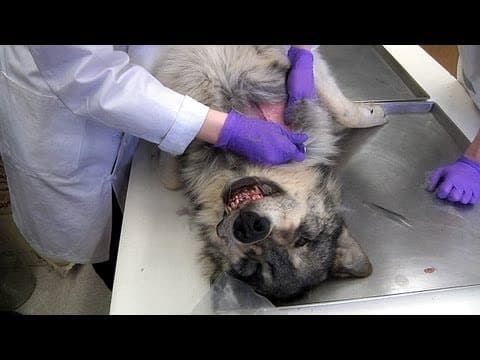
In this video, a wolf that was hit by a car is dissected in order to release gases and remove organs, providing a unique insight into the anatomy and physiology of the animal.
Transcript
This is day two of the wolf prep, um, this is the wolf that we got, it was hit by a car. The reason we moved him underneath the fume hood today is because he's got a little bit of gas in here. I got this scalpel and we're gonna try and release the gases today. And hope that I don't vomit. Okay. Oh my god. Oh, I've never done anything like this befo... Read More
Key Insights
- 👻 Dissecting a wolf allows for a unique understanding of its anatomy and physiological processes.
- 🫢 The dissection process often involves releasing trapped gases and removing organs for examination.
- 💪 The strong smell encountered during the dissection can be challenging to handle.
- 💁 The dissection provides valuable information about the wolf's diet and digestive system.
- 🐺 Different vertebrae in the wolf's spine have specific functions and connections to other regions of the body.
- ❣️ The liver of a wolf can be a significant and heavy organ.
- 😋 Fur and partially digested food found in the stomach provide insights into the wolf's feeding habits.
Install to Summarize YouTube Videos and Get Transcripts
Explore YouTube Video Summarizer or Get YouTube Transcript Extractor
Questions & Answers
Q: Why was the wolf moved underneath the fume hood during the dissection?
The wolf had built-up gases in its body, so it was moved to release them in a controlled environment.
Q: How is the structure of the wolf's spine described?
The wolf's spine consists of different vertebrae, with the atlas and axis supporting the head. Other vertebrae connect to the thoracic and lumbar regions.
Q: What was found inside the wolf's stomach during the dissection?
Fur and partially digested food were discovered in the stomach, providing insight into the wolf's diet.
Q: How was the wolf prepared after the dissection?
After removing organs, the wolf's body was cleaned and prepared for further study or display, allowing for closer examination of the anatomy.
Summary & Key Takeaways
-
The wolf is dissected to release gases trapped inside its body.
-
Several organs, including the head, limbs, and intestines, are removed for examination.
-
The dissectors encounter a strong smell throughout the process.
Read in Other Languages (beta)
Share This Summary 📚
Summarize YouTube Videos and Get Video Transcripts with 1-Click
Try YouTube Summary with ChatGPT & Claude or YouTube Transcript Generator
Explore More Summaries from thebrainscoop 📚


Summarize YouTube Videos and Get Video Transcripts with 1-Click
Try YouTube Summary with ChatGPT & Claude or YouTube Transcript Generator