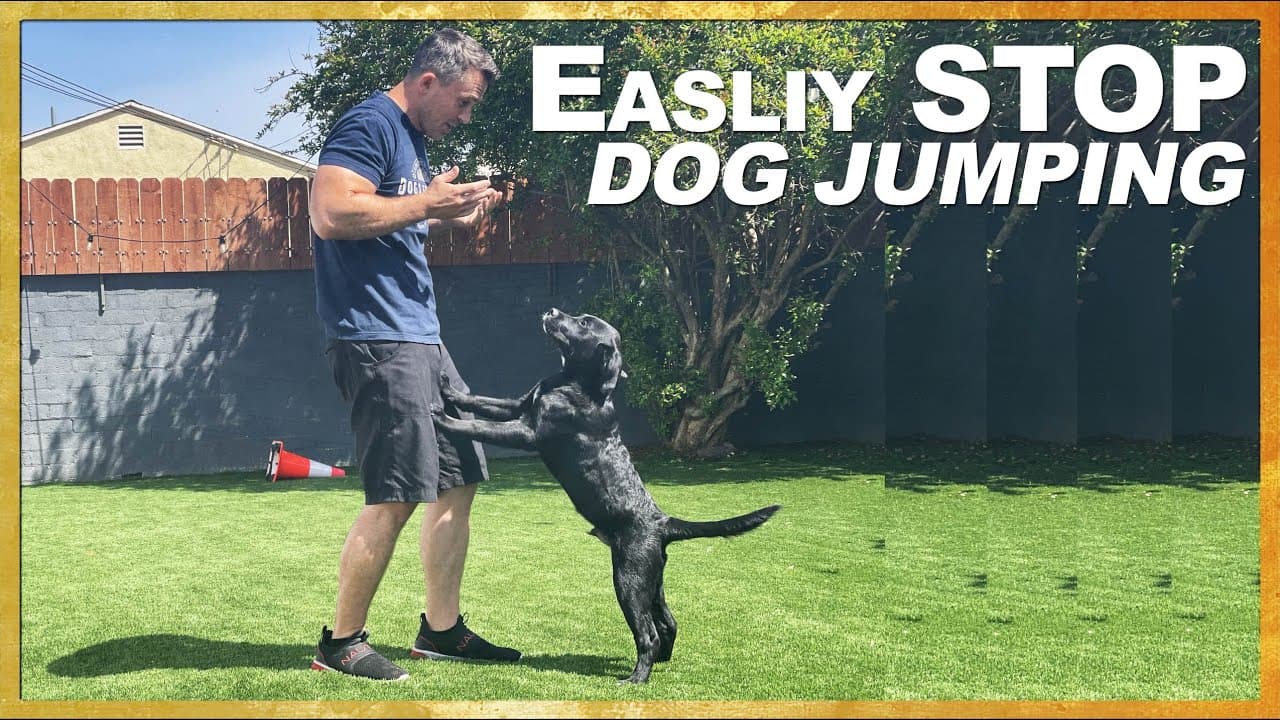
Easily and Quickly Teach Your Dog NOT to Jump on People
TL;DR
Learn how to train your dog not to jump on people.
Transcript
in today's video i'm going to explain and demonstrate how to teach your dog not to jump up on people this is a common issue that a lot of people run into and it's much easier to fix than you may think number one you want to make sure your dog understands the concept of leash pressure this is where they know to go with the leash in order to turn off... Read More
Key Insights
- Teaching dogs not to jump involves understanding leash pressure, which helps guide them to desired behaviors by turning off pressure when they comply.
- The training process involves using positive reinforcement and negative punishment, rewarding dogs when they behave correctly and removing rewards when they don't.
- Multiple people should be involved in the training to help the dog generalize the behavior across different situations and individuals.
- The training method uses three quadrants of operant conditioning: positive reinforcement, negative punishment, and negative reinforcement.
- The video demonstrates how to apply leash pressure when a dog jumps and release it when the dog complies, reinforcing the desired behavior.
- Dogs should not be punished immediately for jumping; instead, they should be shown the expected behavior to avoid fear or anxiety.
- For full reliability, the transition from negative reinforcement to positive punishment may be necessary once the dog understands the rules.
- Motivation plays a key role in dog behavior, where dogs are encouraged to access pleasant experiences or avoid unpleasant ones.
Install to Summarize YouTube Videos and Get Transcripts
Explore YouTube Video Summarizer or Get YouTube Transcript Extractor
Questions & Answers
Q: How do you teach a dog not to jump on people?
Training a dog not to jump involves using leash pressure to guide them, rewarding them when all four paws are on the ground, and removing rewards when they jump. This method uses operant conditioning techniques, including positive reinforcement and negative punishment, to reinforce the desired behavior.
Q: What role does leash pressure play in dog training?
Leash pressure plays a crucial role in dog training by providing clear guidance to the dog. It helps the dog understand the desired behavior by applying pressure when they jump and releasing it when they comply, reinforcing the correct behavior and making it easier for them to learn.
Q: Why is it important to involve multiple people in the training process?
Involving multiple people in the training process is important because it helps the dog generalize the behavior across different situations and individuals. This ensures that the dog understands the rules apply to everyone, not just a single person, making the training more effective and reliable.
Q: What are the operant conditioning quadrants used in this training method?
The training method uses three quadrants of operant conditioning: positive reinforcement (rewarding desired behavior), negative punishment (removing rewards when the dog jumps), and negative reinforcement (applying leash pressure when the dog jumps and releasing it when they comply).
Q: How should you respond if a dog bites the leash during training?
If a dog bites the leash during training, you should calmly pop the leash out of their mouth to remove the enjoyment or fun associated with biting. This helps the dog understand that biting the leash is not acceptable behavior and reinforces the focus on the training task.
Q: What is the significance of motivation in dog behavior?
Motivation is significant in dog behavior as it influences their actions. Dogs are motivated to access pleasant experiences or avoid unpleasant ones. By understanding and utilizing motivation, trainers can effectively guide dogs to exhibit desired behaviors and discourage unwanted actions.
Q: When should you transition from negative reinforcement to positive punishment?
Transitioning from negative reinforcement to positive punishment should occur once the dog understands the rules and expectations. This transition provides reliability in training by introducing corrections when the dog jumps, reinforcing that the behavior is undesirable and should be avoided.
Q: What is the overall goal of this dog training method?
The overall goal of this dog training method is to teach dogs not to jump on people by using a clear, structured approach that involves leash pressure, operant conditioning techniques, and motivation. The method aims to create a well-behaved dog that understands and complies with expected behaviors when meeting new people.
Summary & Key Takeaways
-
The video demonstrates a method to teach dogs not to jump on people by using a combination of leash pressure and operant conditioning techniques. This approach involves rewarding desired behavior and removing rewards when the dog jumps.
-
The training process requires multiple people to help the dog generalize the behavior, and it emphasizes the importance of not punishing the dog immediately but rather showing them the expected behavior.
-
For effective training, dogs should understand leash pressure, which guides them to comply with desired behaviors by turning off pressure when they follow instructions, and motivation is crucial in influencing their behavior.
Read in Other Languages (beta)
Share This Summary 📚
Summarize YouTube Videos and Get Video Transcripts with 1-Click
Try YouTube Summary with ChatGPT & Claude or YouTube Transcript Generator
Explore More Summaries from Nate Schoemer 📚




Summarize YouTube Videos and Get Video Transcripts with 1-Click
Try YouTube Summary with ChatGPT & Claude or YouTube Transcript Generator