Nanotubes + ink + paper = instant battery

Transcript
Read and summarize the transcript of this video on Glasp Reader (beta).
Install to Summarize YouTube Videos and Get Transcripts
Explore YouTube Video Summarizer or Get YouTube Transcript Extractor
Summary
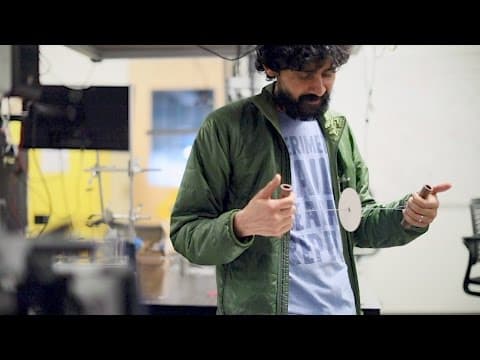
In this video, Stanford University researchers discuss a process that allows them to create paper batteries using a simple and low-cost method. They explain how the paper is transformed from an insulating piece into a conducting paper by adding carbon nanotubes. These paper batteries have the potential to revolutionize energy storage and could be used in various applications such as connecting with solar cells and lithium-ion batteries.
Questions & Answers
Q: What are some key advantages of the process to create paper batteries?
The process to create paper batteries is simple, low-cost, and easy to do. It can potentially change the way people use batteries, making them more accessible and versatile.
Q: How do you create the conducting paper for the batteries?
You start with a piece of paper, such as printer paper or copy machine paper. Then, you add carbon nanotubes, which give the paper a black color. This can be done by dipping the paper into a solution or by printing onto the paper.
Q: What happens to the paper after the carbon nanotubes are added?
The paper, which initially is an insulating white color, undergoes a transformation. It is placed in an oven where all the water is baked out. This process turns the paper into a highly conducting paper with black carbon nanotubes.
Q: What are some unique properties of the paper batteries?
The paper batteries are not only highly conducting but also lightweight. This makes them an excellent choice for applications that require a lot of energy but need to be lightweight, such as electric cars or portable devices.
Q: How can these paper batteries be used for energy storage?
The paper batteries have the potential to revolutionize large-scale energy storage. They can be used as connectors between energy storage devices, such as lithium-ion batteries, solar cells, or wind farms. These paper conductors can help smooth out electricity fluctuation and provide more efficient energy storage solutions.
Q: What are the benefits of using paper batteries in electric cars?
One major benefit is that the dead weight of the batteries can be reduced by using paper batteries. This can make electric cars lighter and more energy-efficient, helping to improve their overall performance.
Q: Are there any other potential applications for paper batteries?
Yes, paper batteries have a wide range of potential applications. They can be used in various energy storage devices, such as batteries for smartphones, laptops, or even larger-scale storage solutions for buildings or power grids.
Q: How do paper batteries contribute to the energy landscape?
Paper batteries have the potential to change the energy landscape by providing more accessible and versatile energy storage solutions. They can make energy storage more efficient and help integrate renewable energy sources more effectively.
Q: What is the significance of this research?
This research opens up new possibilities for energy storage and demonstrates the potential of using unconventional materials for battery production. It shows that simple and low-cost methods can have a significant impact on advancing energy technologies.
Q: Where can I find more information about this research?
For more information about this research on paper batteries and other innovative projects, please visit Stanford University's website at stanford.edu.
Takeaways
The process of creating paper batteries using carbon nanotubes is simple, low-cost, and can transform an initially insulating white paper into a highly conducting black paper. These paper batteries have various advantages, including their lightweight nature and potential for large-scale energy storage. They can be used in applications such as lithium-ion batteries for electric cars, connecting with solar cells or wind farms, and providing efficient energy storage solutions. This research highlights the potential of unconventional materials and low-cost methods to revolutionize the energy landscape. To learn more about this research and other innovative projects, visit stanford.edu.
Read in Other Languages (beta)
Share This Summary 📚
Summarize YouTube Videos and Get Video Transcripts with 1-Click
Try YouTube Summary with ChatGPT & Claude or YouTube Transcript Generator
Explore More Summaries from Stanford 📚

Summarize YouTube Videos and Get Video Transcripts with 1-Click
Try YouTube Summary with ChatGPT & Claude or YouTube Transcript Generator