How To Convert Decimal to Hexadecimal
TL;DR
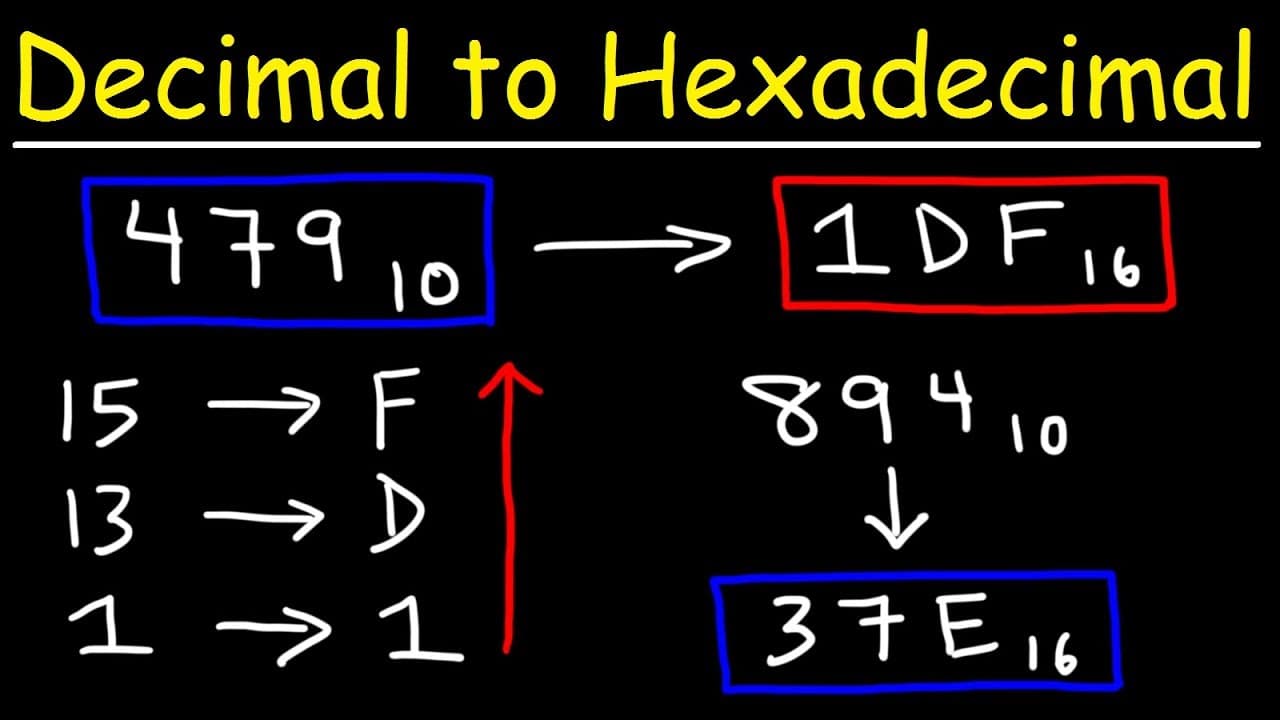
Learn how to convert decimal numbers to hexadecimal using a calculator and long division method.
Transcript
in this video we're going to talk about how to convert a decimal number to a hexadecimal number so how can we do this well first you need to understand that the decimal number is based on a base 10 system for example let's say if we have the digit 49 the first digit can be anything from 0 to 9 0 1 2 3 4 5 6 7 8 9 and the same is true for the second... Read More
Key Insights
- ⚾ Decimal numbers are based on a base 10 system, while hexadecimal numbers are based on a base 16 system.
- 💌 The conversion from decimal to hexadecimal is straightforward once you understand the corresponding digits and letters in each system.
- 😒 You can use a calculator for quick conversion or the long division method if calculators are not allowed.
- 🤩 The key to converting without a calculator is to use long division, finding the quotient and remainder at each step.
- 😀 Remember to convert remainder values 10-15 to the corresponding hexadecimal letters (A-F).
- #️⃣ The most significant digit in a hexadecimal number is written first, while the least significant digit is written last.
Install to Summarize YouTube Videos and Get Transcripts
Explore YouTube Video Summarizer or Get YouTube Transcript Extractor
Questions & Answers
Q: What is the difference between decimal and hexadecimal numbering systems?
The decimal system is based on a base 10 system, while the hexadecimal system is based on a base 16 system. In the decimal system, there are 10 digits (0-9), while in the hexadecimal system, there are 16 digits (0-9 and A-F).
Q: How do you convert decimal numbers to hexadecimal using a calculator?
To convert decimal to hexadecimal using a calculator, divide the decimal number by 16 and find the remainder. Write down the remainder as the least significant digit. Repeat the process with the quotient until you reach a quotient of 0, writing down the remainders from right to left as the digits of the hexadecimal number.
Q: What is the long division method for converting decimal numbers to hexadecimal?
The long division method involves dividing the decimal number by 16 and finding the quotient and remainder. Write down the remainder as the least significant digit. Repeat the process with the quotient until you reach a quotient of 0, writing down the remainders from right to left as the digits of the hexadecimal number.
Q: How do you convert the remainder values to hexadecimal digits?
For remainder values 10-15 in the decimal system, you will use the corresponding letters A-F in the hexadecimal system. For example, a remainder of 10 corresponds to A, 11 corresponds to B, and so on.
Summary & Key Takeaways
-
Decimal numbers are based on a base 10 system, while hexadecimal numbers are based on a base 16 system.
-
For decimal numbers 1-9, the corresponding hexadecimal values are the same. For numbers 10-15, decimal numbers have corresponding letters in the hexadecimal system (A-F).
-
To convert decimal to hexadecimal using a calculator, divide the decimal number by 16 and find the remainder. Repeat the process until you reach a remainder of 0.
-
To convert decimal to hexadecimal without a calculator, use long division to find the quotient and remainder at each step.
Read in Other Languages (beta)
Share This Summary 📚
Summarize YouTube Videos and Get Video Transcripts with 1-Click
Try YouTube Summary with ChatGPT & Claude or YouTube Transcript Generator
Explore More Summaries from The Organic Chemistry Tutor 📚



Summarize YouTube Videos and Get Video Transcripts with 1-Click
Try YouTube Summary with ChatGPT & Claude or YouTube Transcript Generator