Synthetic Biology: Mechanistic Insights into Engineered Riboswitches - Beatrix Suess
TL;DR
Riboswitches regulate gene expression by binding specific ligands.
Transcript
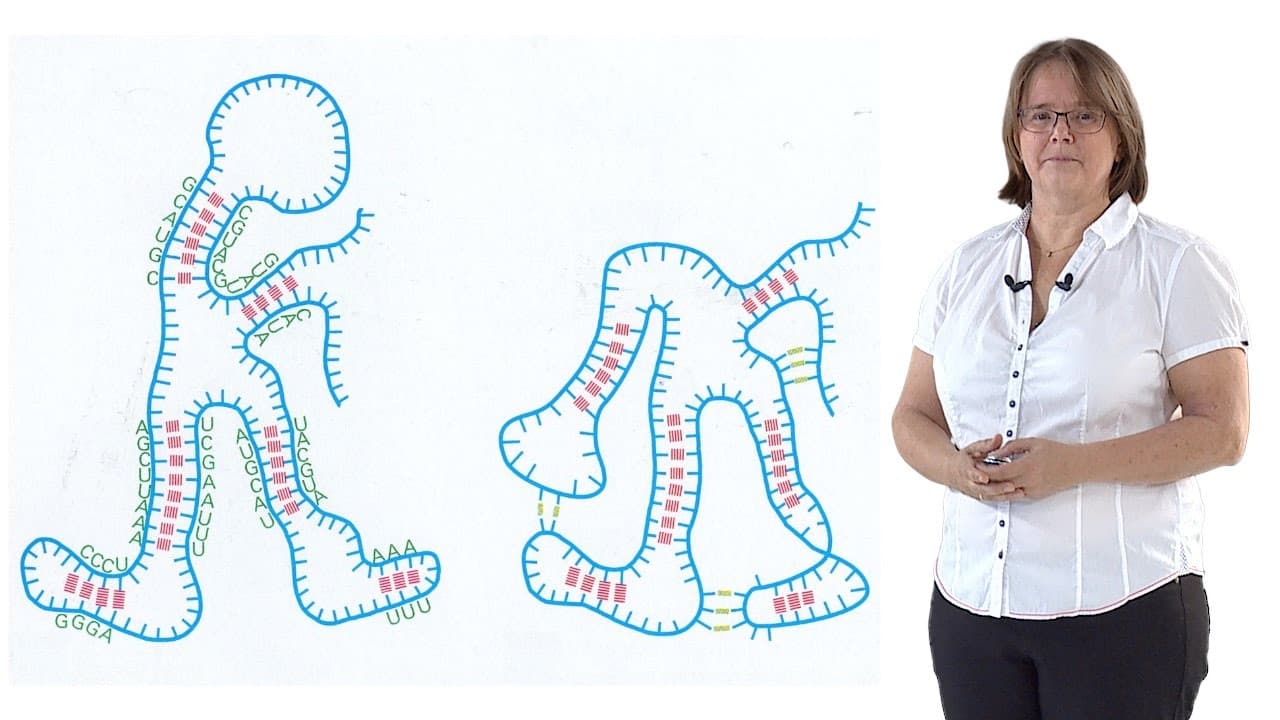
Hi, I'm Beatrix Suess and I will talk about engineered riboswitches. RNA is a very interesting and very fascinating molecule due to its internal flexibility it can adapt different conformation or alternative structures. And nature uses this for control of gene expression. And these are the so-called riboswitches. Riboswitches are structured RNA ele... Read More
Key Insights
- Riboswitches are structured RNA elements in bacterial mRNAs that regulate gene expression by binding ligands with high specificity, affecting transcription or translation initiation.
- The aptamer domain of a riboswitch recognizes ligands with high affinity, while the expression platform interprets the binding state to regulate gene expression.
- Engineered riboswitches can be constructed using in vitro selection (SELEX) to identify aptamers that bind specific targets, such as small molecules, peptides, or proteins.
- Synthetic riboswitches can control gene expression in various organisms, including yeast and human cells, by integrating aptamers into the 5' UTR of mRNAs.
- Aptamers can be designed to regulate essential genes, as demonstrated by the tetracycline aptamer controlling NOP14 protein expression in yeast.
- Riboswitches can also regulate splicing by integrating aptamers near splice sites, affecting spliceosome access and gene expression.
- Aptamers can be used to control mRNA degradation by interfering with ribozyme activity, stabilizing mRNA, and increasing gene expression upon ligand binding.
- Active aptamers undergo conformational changes upon ligand binding, which is crucial for their regulatory function, as shown in the neomycin aptamer study.
Install to Summarize YouTube Videos and Get Transcripts
Explore YouTube Video Summarizer or Get YouTube Transcript Extractor
Questions & Answers
Q: What are riboswitches and how do they function?
Riboswitches are structured RNA elements located in the 5' untranslated region of many bacterial mRNAs. They function by binding specific ligands with high affinity and specificity, leading to changes in gene expression. The riboswitch consists of an aptamer domain that recognizes the ligand and an expression platform that interprets the binding state to regulate gene expression, either by terminating transcription or inhibiting translation initiation.
Q: How can engineered riboswitches be constructed?
Engineered riboswitches can be constructed using a method called in vitro selection or SELEX. This process involves starting with a large library of different RNA species and selecting for aptamers that bind a specific target. The selected aptamers are then integrated into the 5' UTR of mRNAs to control gene expression in response to ligand binding. This approach allows for the creation of riboswitches that can regulate gene expression conditionally, based on the presence of specific ligands.
Q: What are some applications of synthetic riboswitches?
Synthetic riboswitches have various applications in controlling gene expression across different organisms, including yeast and human cells. They can be used to regulate essential genes, control splicing by altering splice site accessibility, and modulate mRNA degradation by affecting ribozyme activity. These applications demonstrate the versatility of riboswitches as regulatory devices in synthetic biology, allowing precise control over cellular processes in response to specific ligands.
Q: How do aptamers contribute to the function of riboswitches?
Aptamers are crucial components of riboswitches, responsible for ligand recognition with high affinity and specificity. Upon ligand binding, aptamers undergo conformational changes that are essential for the regulatory function of riboswitches. These structural changes enable the expression platform of the riboswitch to interpret the binding state and modulate gene expression accordingly. The ability of aptamers to undergo such changes is vital for their role in engineered riboswitches.
Q: What role do conformational changes play in aptamer function?
Conformational changes in aptamers are critical for their function as part of riboswitches. Upon ligand binding, aptamers undergo structural alterations that enable them to regulate gene expression effectively. These changes allow the aptamer to interact with the expression platform of the riboswitch, resulting in transcription termination or translation inhibition. The study of the neomycin aptamer highlights the importance of these changes, showing that active aptamers exhibit significant conformational alterations compared to inactive ones.
Q: How can riboswitches be used to regulate mRNA degradation?
Riboswitches can regulate mRNA degradation by incorporating aptamers that interfere with ribozyme activity. By attaching an aptamer to a ribozyme within an mRNA, the ribozyme's cleavage activity can be controlled. Upon ligand binding, the aptamer undergoes conformational changes that prevent the ribozyme from cleaving the mRNA, leading to stabilization and increased gene expression. This approach demonstrates the potential of riboswitches to modulate mRNA stability in response to specific ligands.
Q: What challenges exist in identifying active aptamers for riboswitches?
Identifying active aptamers for riboswitches can be challenging due to the need for aptamers to undergo significant conformational changes upon ligand binding. In some cases, active aptamers may be underrepresented in the initial selection pool, requiring additional screening steps to identify them. The neomycin aptamer study illustrates this challenge, where in vivo screening was necessary to find an aptamer that exhibited the desired regulatory activity, highlighting the complexity of aptamer selection and characterization.
Q: What insights were gained from the neomycin aptamer study?
The neomycin aptamer study provided valuable insights into the structural changes required for aptamer activity. It revealed that active aptamers undergo significant conformational alterations upon ligand binding, forming a stable helix that can interfere with cellular processes. The study also highlighted the importance of an asymmetric bulge in the aptamer structure, which keeps the ground state open and facilitates ligand-induced changes. These findings underscore the complexity of aptamer design and the need for detailed structural analysis to understand their regulatory mechanisms.
Summary & Key Takeaways
-
Riboswitches are RNA elements in bacterial mRNAs that regulate gene expression by binding ligands. They consist of an aptamer domain for ligand recognition and an expression platform for gene regulation. Engineered riboswitches can be created using SELEX to select aptamers for specific targets, enabling conditional gene expression control.
-
Synthetic riboswitches can be integrated into the 5' UTR of mRNAs to control gene expression in various organisms. They can regulate essential genes like NOP14 in yeast, affect splicing by altering splice site accessibility, and control mRNA degradation by modulating ribozyme activity.
-
Active aptamers undergo structural changes upon ligand binding, essential for their regulatory activity. The neomycin aptamer study highlights the importance of conformational changes in aptamer function, with active aptamers showing significant structural alterations compared to inactive ones.
Read in Other Languages (beta)
Share This Summary 📚
Summarize YouTube Videos and Get Video Transcripts with 1-Click
Try YouTube Summary with ChatGPT & Claude or YouTube Transcript Generator
Explore More Summaries from iBiology Techniques 📚



Summarize YouTube Videos and Get Video Transcripts with 1-Click
Try YouTube Summary with ChatGPT & Claude or YouTube Transcript Generator