Why Is the Texas Abortion Law Bad for Women’s Rights?
TL;DR
The Texas abortion law, allowing abortions only until six weeks, undermines women's rights by empowering private citizens to sue anyone who aids in obtaining an abortion for a $10,000 bounty. The Supreme Court's decision to let this law stand, despite its apparent unconstitutionality, fosters significant legal uncertainty and signals a potential reversal of established abortion rights protections like Roe vs. Wade and Planned Parenthood vs. Casey.
Transcript
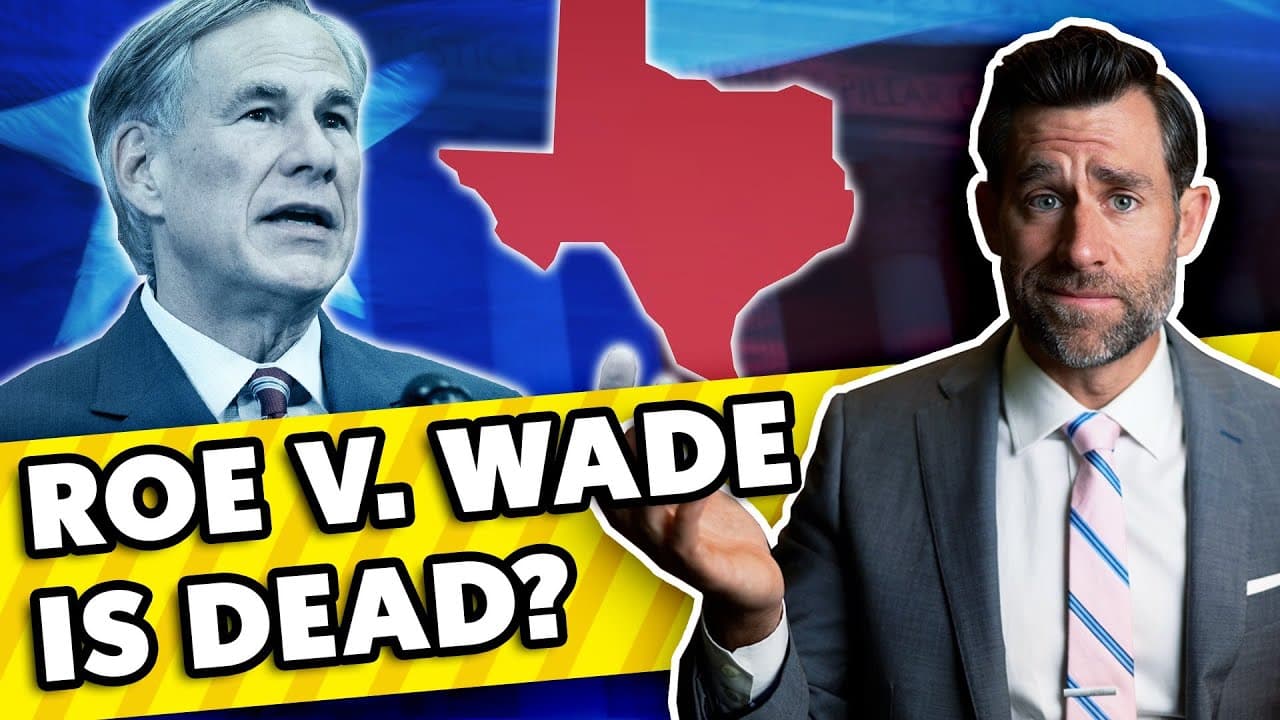
- The headline is Roe vs. Wade is dead, but is that true? Well, that is mostly the case, but the reality of this particular situation is so much worse than that headline makes it seem. And I'm not talking about that from a political standpoint of the idea that the constitutional enshrinement of a woman's right to choose may be dead in America, but ... Read More
Key Insights
- 🤨 The Texas abortion law's procedural complexities raise questions of state enforcement and individual rights, challenging the traditional legal framework.
- 🗯️ The Supreme Court's decision on the law undermines established precedents and signals potential changes in abortion rights protection.
- 🗯️ The DOJ's lawsuit against Texas seeks to address federal interests and constitutional rights infringements, challenging the legality of the enforcement mechanisms in the law.
Install to Summarize YouTube Videos and Get Transcripts
Explore YouTube Video Summarizer or Get YouTube Transcript Extractor
Questions & Answers
Q: What procedural machinations led to the Supreme Court's decision on the Texas abortion law?
The Texas law allowed private citizens to enforce the ban on abortions, circumventing the traditional state involvement, creating uncertainty and challenges to legal procedures.
Q: How does the Texas law allow private citizens to challenge abortion rights?
The law permits individuals to sue anyone aiding in an abortion and collect a $10,000 bounty, making it challenging for providers and creating a legal enforcement mechanism outside traditional channels.
Q: What implications does the Supreme Court's decision have on established abortion rights?
The decision signals a potential overruling of precedents like Roe vs. Wade and Planned Parenthood vs. Casey, putting abortion rights in the US at risk and allowing for state-level restrictions.
Q: How does the DOJ's lawsuit against Texas aim to challenge the abortion law?
The DOJ asserts that the law infringes on federal interests and violates constitutional rights, aiming to challenge the legality of the law's enforcement mechanisms and state-level regulations.
Summary & Key Takeaways
-
The Supreme Court allowed a Texas law banning abortion after six weeks to go into effect without a judge signing the decision, leading to uncertainty and challenges to the rule of law.
-
This law allows private citizens to sue anyone aiding in an abortion and collect a $10,000 bounty, creating a legal and ethical minefield.
-
The Supreme Court's decision signals a potential overruling of Roe vs. Wade and Planned Parenthood vs. Casey, impacting abortion rights in the US.
Read in Other Languages (beta)
Share This Summary 📚
Summarize YouTube Videos and Get Video Transcripts with 1-Click
Try YouTube Summary with ChatGPT & Claude or YouTube Transcript Generator
Explore More Summaries from LegalEagle 📚





Summarize YouTube Videos and Get Video Transcripts with 1-Click
Try YouTube Summary with ChatGPT & Claude or YouTube Transcript Generator