Nature of Genius 322 PolyMaths
TL;DR
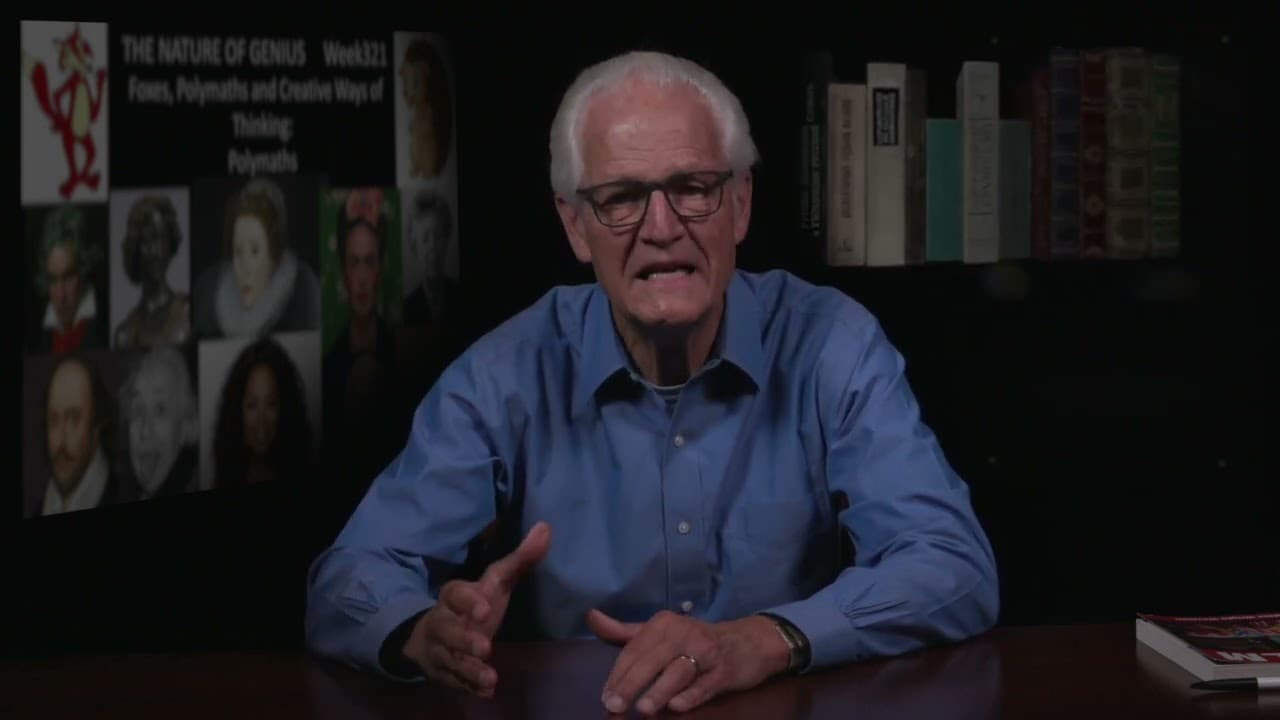
The content explores the concept of polymaths throughout history, highlighting figures such as Leonardo da Vinci, Hildegard of Bingen, Benjamin Franklin, and modern geniuses like Lady Gaga, Jeff Bezos, Elon Musk, and Bill Gates, emphasizing their wide range of knowledge and innovative contributions.
Transcript
at the end of the preceding lesson I used the word polymath it's a word of Greek origin but rather recent Greek origin polymathis polymath well one was first used around 1620 in polymathia from the 1640s both mean Having learned much or many things we also have a related term renaissance man that's a 20th century expression invented by historians t... Read More
Key Insights
- 🎁 Polymaths, individuals with extensive knowledge in diverse fields, have existed throughout history, from ancient Greece to the present day.
- 🕵️♀️ Hildegard of Bingen, a medieval Benedictine nun, challenges the traditional notion of the Renaissance Man, excelling in various fields and initiating the tradition of female mysticism.
- 🤕 Leonardo da Vinci, Benjamin Franklin, and modern polymaths like Lady Gaga, Jeff Bezos, Elon Musk, and Bill Gates exemplify the power of polymaths in making significant contributions and changing the world.
Install to Summarize YouTube Videos and Get Transcripts
Explore YouTube Video Summarizer or Get YouTube Transcript Extractor
Questions & Answers
Q: Who is considered the archetype of the Renaissance Man?
Leonardo da Vinci is overwhelmingly considered the archetype of the Renaissance Man due to his extensive knowledge and mastery in various fields such as art, science, engineering, and music.
Q: Why is the term "Renaissance Man" problematic?
The term "Renaissance Man" is considered gender biased and historically misleading as it solely focuses on male figures. It undermines the contributions and achievements of women like Hildegard of Bingen, who can be considered the first Renaissance Man.
Q: What were some of the areas in which Hildegard of Bingen excelled?
Hildegard of Bingen was a genius and a polymath in numerous fields. She excelled in preaching, poetry, painting, politics, theology, music, biology, zoology, botany, and astronomy. She also wrote three theological works, which initiated the tradition of female mysticism.
Q: How did Benjamin Franklin approach education and learning?
Benjamin Franklin believed in a practical and wide-ranging education. His curriculum for the University of Pennsylvania emphasized subjects useful for worldly businessmen, such as physics, engineering, economics, accounting, and modern languages. He aimed to bring wisdom and riches to his students.
Summary & Key Takeaways
-
The content discusses the origins of the term "polymath" and the related term "Renaissance Man."
-
It highlights the lesser-known polymath, Hildegard of Bingen, a medieval Benedictine nun who excelled in various fields such as preaching, painting, politics, theology, and music.
-
The content also explores the diverse interests and accomplishments of Leonardo da Vinci, Benjamin Franklin, and modern polymaths like Lady Gaga, Jeff Bezos, Elon Musk, and Bill Gates.
Read in Other Languages (beta)
Share This Summary 📚
Summarize YouTube Videos and Get Video Transcripts with 1-Click
Try YouTube Summary with ChatGPT & Claude or YouTube Transcript Generator
Explore More Summaries from YaleCourses 📚

Summarize YouTube Videos and Get Video Transcripts with 1-Click
Try YouTube Summary with ChatGPT & Claude or YouTube Transcript Generator