Current State of Quantum Computing - Computerphile
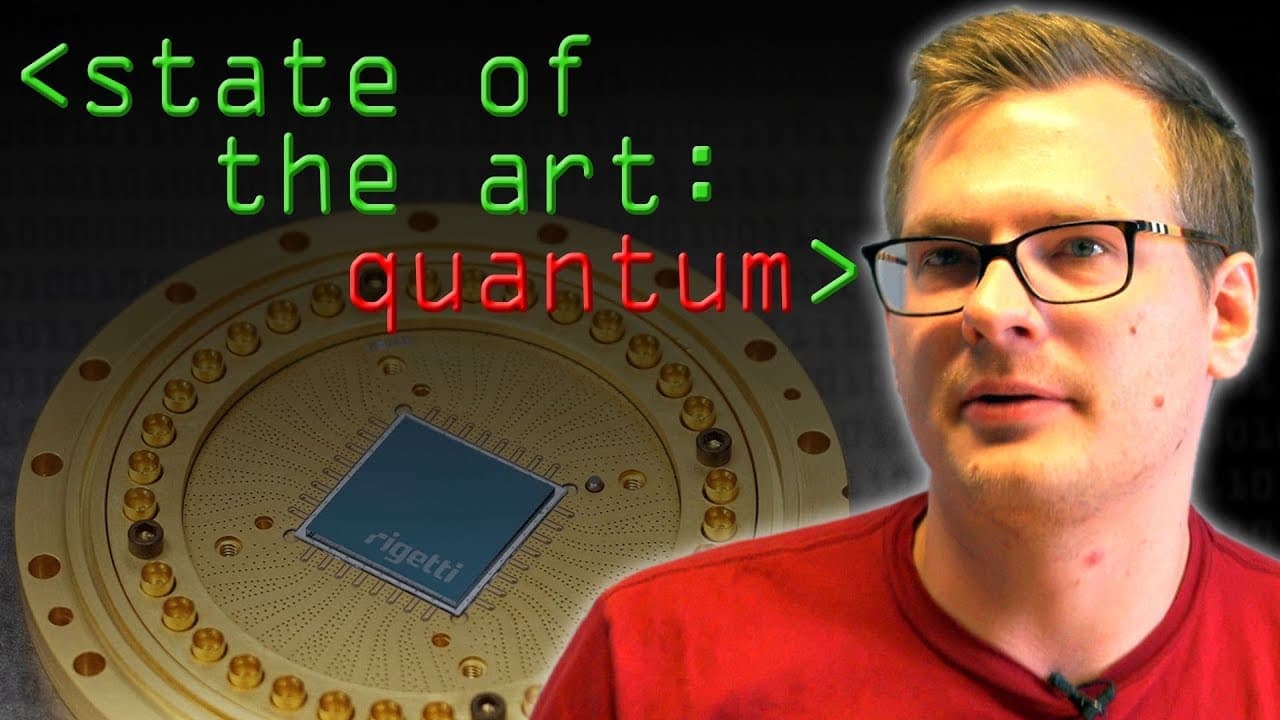
TL;DR
Quantum computing is a special-purpose machine that can solve certain problems better than existing computers, with applications in molecular simulations and optimization. However, current quantum computers are noisy and require customization and stability improvements.
Transcript
Well, brief mentions in other videos about the Q-word, Laughs you know, the magic computers that are going to break all encryption and beat everyone at their own game and be the next big thing and be on all our smartphones. Should we put some reality on this? Where are we at with quantum computing? I Work at a company called Righetti computing. W... Read More
Key Insights
- 🫵 Quantum computers are best viewed as specialized machines designed to solve specific problems more efficiently.
- 😶🌫️ Access to quantum computers is available through cloud-based platforms, making them accessible to users worldwide.
- ✊ The number of qubits determines the capacity of a quantum computer, with each qubit doubling the computational power.
- 💻 Quantum computers excel in simulating complex molecular interactions and solving optimization problems.
- 👍 The presence of noise and errors in quantum computers is an active area of research, with some problems proving more robust to these challenges than others.
- 🏛️ Building quantum computers involves using existing components, and customization efforts are ongoing.
- 💻 Quantum computers are still in the early stages of development and are susceptible to environmental disturbances.
Install to Summarize YouTube Videos and Get Transcripts
Explore YouTube Video Summarizer or Get YouTube Transcript Extractor
Questions & Answers
Q: How should quantum computers be perceived in relation to traditional computers?
Quantum computers should be seen as special-purpose machines that excel at solving specific problems, rather than replacing traditional computers altogether.
Q: What is the current size of quantum computers?
Current quantum computers are large and fill entire rooms, unlike regular computers. However, they can be connected to and accessed through laptops and other devices.
Q: What are some areas of application where quantum computers excel?
Quantum computers are particularly effective in simulating complex molecular interactions and solving optimization problems.
Q: How do quantum computers handle errors and noise?
Quantum computers currently face challenges with noise and errors, which limit their capabilities. Research is ongoing to determine which algorithms and problems are robust to this noise.
Q: How are quantum computers constructed?
Quantum computers are built using off-the-shelf components, including racks of analog electronics. Customized electronics and improvements in stability are still being developed.
Q: Can quantum computers replace traditional encryption-breaking methods?
No, quantum computers are not yet robust enough to break encryption algorithms effectively. Breaking encryption remains a difficult problem due to noise and errors.
Q: Are quantum computers similar to early computers in terms of stability and maintenance?
Quantum computers require careful handling and are susceptible to environmental changes, similar to the early computers. Components are often replaced or modified to ensure stability.
Q: Are quantum smartphones a possibility in the near future?
Quantum smartphones are still a distant possibility as the cooling requirements for quantum chips are extremely low, requiring complex refrigeration systems.
Summary & Key Takeaways
-
Quantum computers should be thought of as an augmentation of existing computing infrastructure, solving specific problems more effectively.
-
Quantum computers are accessible on the cloud and use qubits as the fundamental unit of resource, with each qubit doubling the capacity of the computer.
-
Areas of application for quantum computing include molecular simulations and optimization problems.
Read in Other Languages (beta)
Share This Summary 📚
Summarize YouTube Videos and Get Video Transcripts with 1-Click
Try YouTube Summary with ChatGPT & Claude or YouTube Transcript Generator
Explore More Summaries from Computerphile 📚




Summarize YouTube Videos and Get Video Transcripts with 1-Click
Try YouTube Summary with ChatGPT & Claude or YouTube Transcript Generator