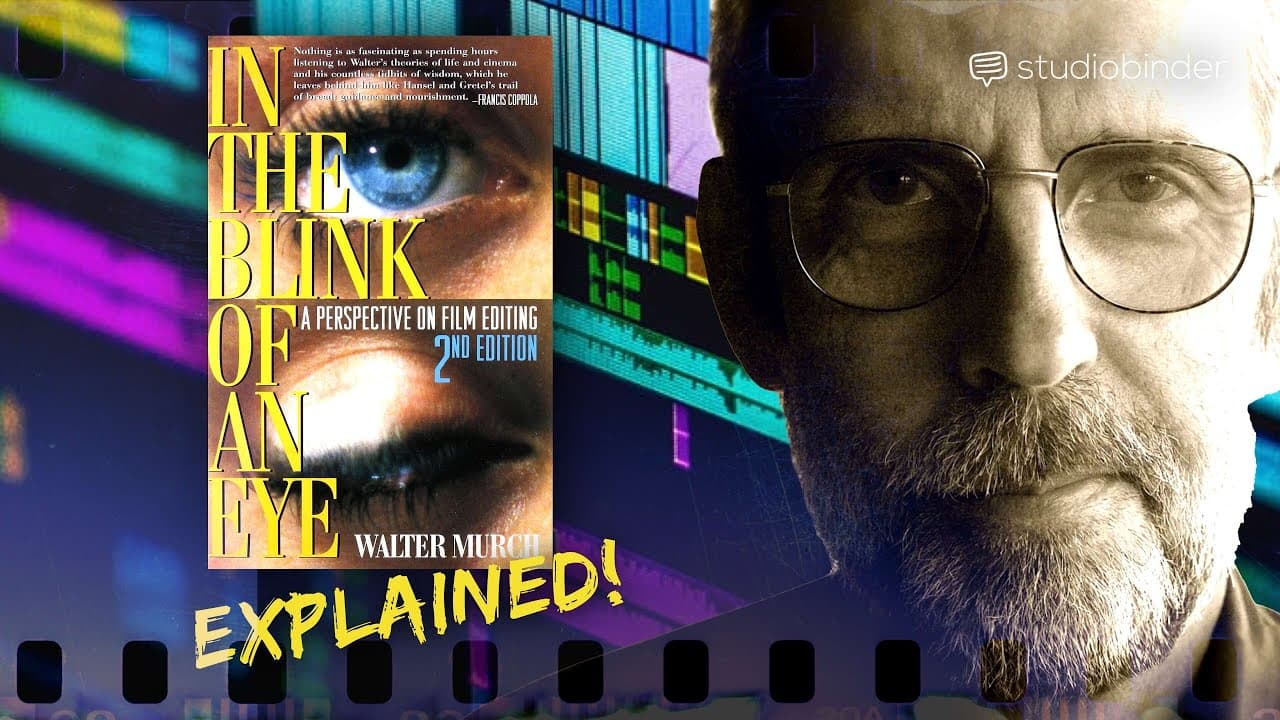
The Book Every Editor Has to Read — Walter Murch and In the Blink of an Eye
TL;DR
Walter Murch's editing insights remain crucial for modern filmmakers.
Transcript
that's what the cut is the cut is a link in between two focuses of attention Walter merch is one of the most respected film editors of all time and his book in the blink of an ie is a seminal text for anyone who wants to better understand the art of editing in this video we'll look at Walter merch's editing philosophy and ex... Read More
Key Insights
- Walter Murch is a pioneering film editor known for his work during the New Hollywood movement, establishing the role of sound designer.
- His book, 'In the Blink of an Eye,' is a foundational text on film editing, emphasizing the art and philosophy behind cuts.
- Murch's theory suggests that cuts in film mimic natural blinks, helping audiences process information seamlessly.
- He introduces the 'Rule of Six,' prioritizing emotion, story, rhythm, eye trace, 180-degree rule, and spatial continuity in editing decisions.
- Murch emphasizes the collaborative nature of editing, working closely with directors while maintaining an objective viewer's perspective.
- He advocates for editing while standing, likening the process to a dance to better internalize visual rhythms.
- Murch discusses the importance of test screenings, noting that audience feedback often highlights issues that need addressing.
- The transition from analog to digital editing is explored, illustrating how Murch's philosophies remain relevant across different technological eras.
Install to Summarize YouTube Videos and Get Transcripts
Explore YouTube Video Summarizer or Get YouTube Transcript Extractor
Questions & Answers
Q: What is the significance of Walter Murch in film editing?
Walter Murch is a groundbreaking film editor and sound designer whose work during the New Hollywood movement in the 1970s revolutionized editing practices. He was the first person to be credited as a sound designer and has won multiple Academy Awards, making him a key figure in the evolution of film editing.
Q: Why is 'In the Blink of an Eye' considered a seminal text for editors?
Murch's book 'In the Blink of an Eye' is considered seminal because it provides deep insights into the art and philosophy of film editing. It explains why cuts work, introduces the 'Rule of Six,' and offers practical advice for editors, making it a vital resource for both aspiring and experienced filmmakers.
Q: What is Murch's theory about cuts and blinks?
Murch theorizes that cuts in film mimic the natural process of blinking, which helps audiences process visual information without confusion. He argues that just as we blink to punctuate thoughts in conversation, cuts in film serve to separate and emphasize ideas, making the viewing experience more coherent.
Q: What is the 'Rule of Six' in editing?
The 'Rule of Six' is Murch's hierarchy of considerations for making cuts in film. It prioritizes emotion, story advancement, rhythm, eye trace, adherence to the 180-degree rule, and spatial continuity. Murch emphasizes that satisfying higher-order elements like emotion and story can often overshadow issues with lower-order elements.
Q: How does Murch view the collaboration between editors and directors?
Murch views the collaboration between editors and directors as crucial. He believes editors should help realize the director's vision while also bringing their own ideas to the table. Editors should maintain an objective perspective, focusing on what's on screen rather than preconceived notions from the set.
Q: Why does Murch edit while standing?
Murch edits while standing because he likens the process to a dance. Standing allows him to better internalize the visual rhythms of the film, ensuring that the editing process is dynamic and responsive. This method helps him maintain an active engagement with the material.
Q: How should editors handle feedback from test screenings?
Murch advises that editors should pay attention to test audience feedback, as it often highlights areas that need improvement. However, he cautions against taking feedback at face value, suggesting that the underlying issues may not always be the scenes audiences dislike but rather missing context or information.
Q: What impact has digital editing had on Murch's philosophies?
While digital editing has transformed the technical aspects of the vocation, Murch's core philosophies remain relevant. His focus on the art and emotion of editing transcends technological changes, proving that the fundamental principles of storytelling and audience engagement are timeless in the editing process.
Summary & Key Takeaways
-
Walter Murch is a legendary film editor whose work in the 1970s helped define modern editing practices. His book, 'In the Blink of an Eye,' remains a crucial resource for understanding the theoretical and practical aspects of film editing.
-
Murch's editing philosophy includes the idea that cuts mimic natural blinks, helping audiences process visual information. His 'Rule of Six' prioritizes emotion, story, rhythm, eye trace, 180-degree rule, and spatial continuity in editing decisions.
-
Collaboration with directors is key to Murch's approach, as is maintaining an objective viewer's perspective. Despite technological advances, his insights into editing remain relevant, highlighting the enduring nature of his theories.
Read in Other Languages (beta)
Share This Summary 📚
Summarize YouTube Videos and Get Video Transcripts with 1-Click
Try YouTube Summary with ChatGPT & Claude or YouTube Transcript Generator
Explore More Summaries from StudioBinder 📚



Summarize YouTube Videos and Get Video Transcripts with 1-Click
Try YouTube Summary with ChatGPT & Claude or YouTube Transcript Generator