Take a Trip Through Space!
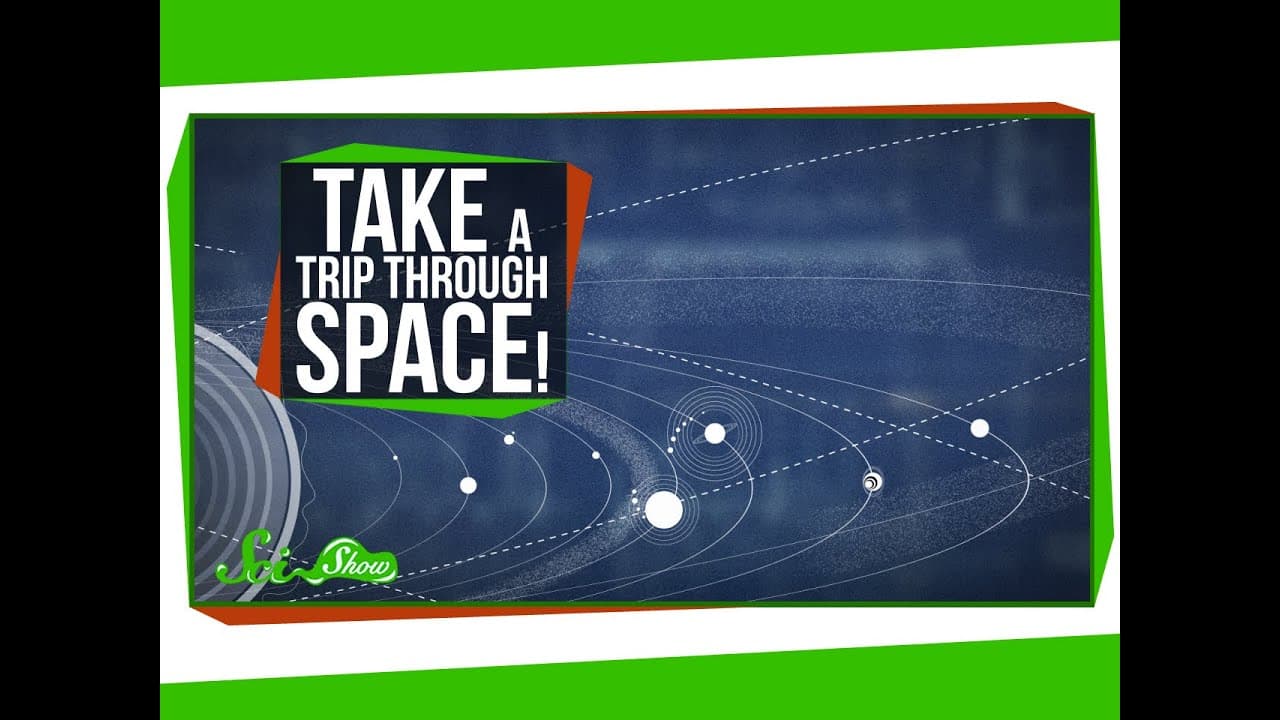
TL;DR
Hank talks about how things work using simple language, inspired by Randall Munroe's book that explains complex concepts using only the most common words.
Transcript
Hello, I'm Hank and I talk about how things work for my job. When I do this, I use a lot of big words . Sometimes I have to, but other times I think maybe we only do that to sound like we know lots of things. Randall Munroe of XKCD has written a whole book explaining how things work using only the ten hundred most used words. I really like that boo... Read More
Key Insights
- 🤩 In our star area, there are many worlds that go around the sun, including our own.
- 💦 The Red World may have had water and potentially supported life in the past.
- 👱 The Big Worlds are predominantly made up of air and have intriguing features like massive storms and unique moons.
- 📔 Hank's book, "Thing Explainer," is now available for purchase.
- ❓ Simplifying complex concepts using common language can make them more accessible to a broader audience.
- 🤩 The exploration of different worlds in our star area is a significant area of scientific interest.
- 👾 Sending space probes to various worlds provides valuable information and captivating images.
Install to Summarize YouTube Videos and Get Transcripts
Explore YouTube Video Summarizer or Get YouTube Transcript Extractor
Questions & Answers
Q: What inspired Hank to explain things using simple language?
Hank was inspired by Randall Munroe's book, which explained complex concepts using only commonly used words. He wanted to adopt a similar approach to make things more accessible.
Q: How does Hank describe our world in comparison to the sun?
Hank explains that our world is much smaller than the sun, and it is closer to the sun compared to other worlds. He also mentions that our world has a moon.
Q: What is the Red World, and why is it interesting?
The Red World is a planet that used to have water like our world when it was young. Although it is now cold and dry, scientists speculate that it may have once hosted life.
Q: How do the Big Worlds differ from other worlds in our star area?
The Big Worlds have a significant amount of air, and they are made up mostly of gases. They also have large storms and fascinating moons, such as the ice water moon.
Summary & Key Takeaways
-
Hank explores our star area using only the ten hundred most used words in our language.
-
He explains that our world is just one of many worlds that orbit the sun.
-
Hank discusses different worlds in our star area, such as the heavy rock world, the hot sky world, our world with the moon, the Red World, and the Big Worlds.
Read in Other Languages (beta)
Share This Summary 📚
Summarize YouTube Videos and Get Video Transcripts with 1-Click
Try YouTube Summary with ChatGPT & Claude or YouTube Transcript Generator
Explore More Summaries from SciShow 📚




Summarize YouTube Videos and Get Video Transcripts with 1-Click
Try YouTube Summary with ChatGPT & Claude or YouTube Transcript Generator