What’s Your Brain’s Role in Creating Space & Time?
TL;DR
The brain's perception of space and time may be mental constructs.
Transcript
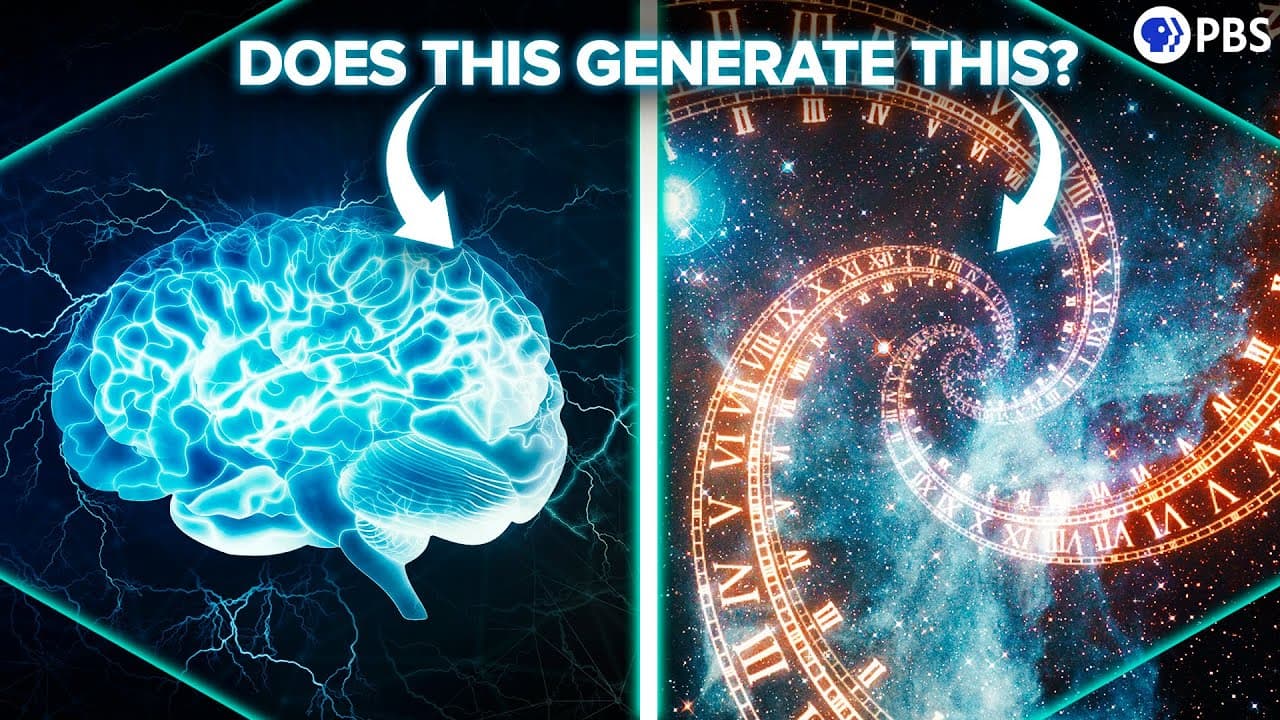
Physics is the business of figuring out the structure of the world. So are our brains. But sometimes physics comes to conclusions that are in direct conflict with concepts fundamental to our minds, such as the realness of space and time. How do we tell who’s correct? Are time and space objective realities or human-invented concepts? There’s bee... Read More
Key Insights
- Physics and the brain both aim to understand the world's structure, but their conclusions on space and time can conflict.
- Space and time have been viewed differently throughout history, with Newton's absolute view and Leibnitz's relational perspective.
- Einstein suggested that space and time are human constructs, tools to relate experiences, not absolute entities.
- The brain's cognitive map, involving place and grid cells, represents space, suggesting an absolute, Newtonian model.
- Neuroscience shows that the brain models time through various internal clocks, but these are relational and malleable.
- Place cells in the brain can track sequences, potentially representing space, time, or abstract thought processes.
- The brain's mechanisms for space and time may be general algorithms for tracking sequences and mapping variable relationships.
- The perception of space and time might be the brain's efficient way of organizing the world, not necessarily reflecting external reality.
Install to Summarize YouTube Videos and Get Transcripts
Explore YouTube Video Summarizer or Get YouTube Transcript Extractor
Questions & Answers
Q: What is the main conflict between physics and the brain regarding space and time?
The main conflict lies in whether space and time are objective realities or constructs of the mind. Physics often presents conclusions that conflict with fundamental concepts of our minds, such as the realness of space and time, leading to questions about their true nature and existence.
Q: How did historical figures view space and time differently?
Newton viewed space and time as absolute entities existing independently of objects, while Leibnitz and Descartes saw them as relational, based on distances between objects or events. Kant initially sided with Newton but later considered space and time as constructs of the mind, organizing experiences.
Q: What role do place and grid cells play in the brain's perception of space?
Place cells in the hippocampus represent specific locations in an environment, while grid cells in the entorhinal cortex create a hexagonal grid pattern over space. Together, they form a cognitive map, suggesting an absolute representation of space in the brain, akin to Newton's view.
Q: How does the brain perceive time, according to neuroscience?
The brain perceives time through various internal mechanisms, such as rhythmic neuronal activity and circadian rhythms. These internal clocks allow the brain to track time relationally, with perception influenced by experiences and activities, rather than adhering to an absolute, external clock.
Q: What is the significance of the brain's ability to track sequences?
The brain's ability to track sequences, through place cells and other mechanisms, suggests a more general function beyond space and time. It may represent abstract thought processes or logical reasoning, indicating that these mechanisms evolved to help navigate both physical and mental spaces.
Q: How might the brain's perception of space and time differ from external reality?
The brain's perception of space and time, as mental constructs, may not directly reflect external reality. Instead, these dimensions could be the brain's most efficient way to organize experiences, suggesting that our familiar experience of space and time arises within the mind, not from the external world.
Q: What are the implications of viewing space and time as mental constructs?
Viewing space and time as mental constructs implies that our understanding of these dimensions is shaped by the brain's organization of experiences. This perspective challenges the notion of space and time as fundamental entities, prompting further exploration into the underlying structures that give rise to these perceptions.
Q: How do current neuroscience findings relate to historical philosophical views on space and time?
Current neuroscience findings support the idea that space and time are mental constructs, aligning with the views of philosophers like Leibnitz, Kant, and Einstein. These thinkers proposed that our perception of space and time arises from the brain's organization of experiences, rather than reflecting absolute external realities.
Summary & Key Takeaways
-
This content explores the relationship between physics and the brain's perception of space and time, questioning whether these are objective realities or constructs of the mind. Historical perspectives, including those of Newton, Leibnitz, and Einstein, are discussed, highlighting the evolving understanding of these dimensions.
-
Neuroscience findings on the brain's cognitive map, involving place and grid cells, suggest a Newtonian model of space. However, the brain's perception of time appears relational and malleable, influenced by internal clocks and rhythms. These insights contribute to the debate on the reality of space and time.
-
The brain's mechanisms for tracking space and time may be general algorithms for understanding sequences and relationships. This suggests that our perception of space and time could be the brain's way of organizing the world efficiently, rather than reflecting an external reality.
Read in Other Languages (beta)
Share This Summary 📚
Summarize YouTube Videos and Get Video Transcripts with 1-Click
Try YouTube Summary with ChatGPT & Claude or YouTube Transcript Generator
Explore More Summaries from PBS Space Time 📚






Summarize YouTube Videos and Get Video Transcripts with 1-Click
Try YouTube Summary with ChatGPT & Claude or YouTube Transcript Generator